

Economic citizenship is a legal way to become a citizen of another country through investment. «Golden passports» can be obtained in just 2–12 months without the need to relocate or learn a new language, while maintaining your current citizenship.
Citizenship by investment has become increasingly popular amid geopolitical uncertainty. Entrepreneurs, investors, and families are seeking greater travel freedom, asset protection, and a secure place to live. In many countries, residence and citizenship by investment programs provide a clear path to dual citizenship, with entry thresholds that are accessible to a wide range of applicants. Some programs start from as little as USD 90,000.
Economic citizenship, golden passport, and residence permit: the differences
Citizenship by Investment (CBI) programs go by many names, including economic citizenship, investment citizenship, golden citizenship, and golden passport. Residence by Investment (RBI) programs are often mistakenly included in this category. However, obtaining an RBI does not automatically make a person a citizen. Rather, this status merely facilitates the path to a second citizenship, allowing immigrants and applicants to apply for a passport under standard conditions.
When launching golden passport programs, countries typically pursue several goals:
- economic stimulation: some Caribbean and African countries are investing in tourism and renewable energy;
- job creation to reduce unemployment. For example, Turkey offers investors the opportunity to employ at least 50 residents in exchange for a passport;
- income diversification to avoid dependence on a single source of budget revenue;
- attracting entrepreneurs: registering new companies increases business activity in the region.
Obtaining a golden passport requires careful preparation. Before granting citizenship, the authorities conduct a due diligence assessment. A special commission verifies the legality of the investor’s funds, whether the investor is law-abiding, and the investor’s motives for obtaining a second citizenship. Therefore, it is important to prepare your application and dossier with experienced lawyers who specialize in CBI and RBI programs.
- Programs that actually work
- Complete cost estimate for registration
- Comprehensive legal support
Economic citizenship and investment
It is not possible to buy a golden passport directly. Investors are required to invest in specific areas:
- Real estate. Purchase or lease options may be available. Minimum ownership periods are often limited. For example, in Egypt and Antigua and Barbuda, the minimum ownership period is 5 years. St. Kitts and Nevis only allows real estate investment in specific properties.
- Securities. These include government bonds, pension fund shares, and venture capital funds. Restrictions may apply. For instance, St. Lucia only offers interest-free bonds with a 5-year maturity. However, in Turkey, yields reach 44%, and sales are possible after 3 years.
- Business. In Jordan, for instance, an economic passport can be obtained by purchasing a company or a stake in an enterprise, establishing a manufacturing facility, or supporting the healthcare sector.
- Deposits.. In Turkey and Egypt, funds must be held in an account for 3 years. Typically, the funds can be withdrawn with interest after taxes.
- Jobs. Essentially, the investor needs to create a business that provides employment for the local population and maintains it for a period of time.
- Gold. Sierra Leone offers fast-track citizenship for a donation of at least USD 65,000 and the purchase of at least 1 kilogram of gold. The investor can later sell the gold bar.
- Donation. The entry threshold is usually lowest in this case. For example, in São Tomé and Príncipe, it’s only USD 90,000. Vanuatu allows investors to receive a return of USD 50,000 of the total investment (USD 165,000) after 5 years.
If a country offers multiple programs, investors can often switch between them. For instance, in Turkey, an investor can initially invest in real estate, sell it after a year, and then invest the proceeds in a business or deposit account, all while meeting the minimum contribution threshold. The key is that the money remains in the economy for 3 years.
Investing in cryptocurrency is also possible, though currently, only El Salvador offers this option. However, the program is not in demand due to the high minimum investment requirement of USD 1 million in Bitcoin or USDt.
Specifics of obtaining a passport by investment
Minimum and actual thresholds. Typically, the minimum threshold is the contribution amount for the investor and their family of up to 4 people. Costs may increase if additional relatives are added to the application or due to additional payments.
Due Diligence. The investor’s name is checked against Interpol databases and their criminal record. The legality of their business and the source of their capital are verified, as are the cleanliness of their banking records and the income of their family members. The reasons for obtaining a second passport are also verified.
Non-refundable funds. It is important to consider whether all or part of the investment will be a donation when choosing a program. Even if you choose tangible investments, such as real estate, they may lose value, so you may not be able to get a 100% return on your investment.
Which countries offer citizenship by investment in 2026?
In 2026, investment passports can be obtained in no more than 20 countries worldwide. Overall, there has been a trend toward the closure of some CBI programs. Over the past 3-5 years, all investment passport options have ceased operating in EU member and candidate countries: Bulgaria, Moldova, Montenegro, Cyprus, and Malta. This is due to pressure from the European Union, which views CBI programs as a risk for money laundering and as a means of issuing passports to unscrupulous individuals. Furthermore, Portugal removed real estate from its RBI program, and Spain closed its program entirely in 2025.
At the same time, new citizenship-by-investment programs are emerging, and existing programs are being updated:
- in 2023, for example, Egypt lowered the minimum investment amount for real estate from USD 500,000 to USD 300,000;
- that same year, El Salvador began issuing passports in exchange for cryptocurrency investments;
- in 2024, Sierra Leone launched a citizenship-by-gold program;
- in 2025, São Tomé and Príncipe launched its most affordable program;
- botswana’s CBI program is expected to launch in 2026 and promises to be more accessible than São Tomé and Príncipe’s program.
Key requirements for investors:
- legal origin and transparency of income;
- age of majority;
- an impeccable reputation with no outstanding criminal records or sanctions;
- good health, confirmed by medical examination results.
If an investor plans to obtain citizenship in Dominica but has previously been denied visas to countries with which Dominica has visa-free travel agreements, their application may be rejected. A visa must be successfully issued at the time of application.
All adults can attend an interview, which is often conducted online with the assistance of a translator. Representatives from the CBI program may request personal information and inquire about your reasons for seeking a second citizenship, so it’s best to prepare for the interview with legal counsel.
One key feature of citizenship by investment programs is that applications often include not only children under 18, but also adults, as well as spouses and an unlimited number of relatives.
The fastest and simplest programs are available in Vanuatu, the Caribbean, and Africa. You can obtain a passport in as little as 2 months without visiting the chosen country.
- No language proficiency requirements
- Processing time: 2 months
- You do not need to live in or visit the country
Golden passports of Caribbean countries
Caribbean golden passports allow visa-free entry to more than 136 countries, including the Schengen Area, virtually all of Latin America, and, in the case of Antigua and Barbuda, Grenada, and Dominica, China. Although these countries are members of the Common Reporting Standard (CRS), they only exchange financial information with a limited number of countries. Therefore, it’s highly unlikely that the tax authorities in your home country will receive information about your accounts in Caribbean countries.
Starting July 1, 2024, Caribbean countries set a minimum investment of USD 200,000. Applications are accepted remotely through a licensed agent.
Antigua and Barbuda offers investors 4 programs:
- a donation of USD 230,000 to the National Development Fund;
- a non-refundable donation of at least USD 260,000 to a university fund;
- investing at least USD 300,000 in real estate in approved projects, which can be sold after 5 years;
- investing USD 1.5 million or more in a business. Joint investments are permitted.
An additional fee of USD 18,500 is charged for application processing and due diligence.
Processing time is approximately 3 months.
Antigua and Barbuda imposes no tax on worldwide income, inheritance, capital gains, or investments. Citizenship may be revoked if the investor fails to spend at least 5 days in the country within the first 5 years.
Dominica allows investors to invest at least USD 200,000 in:
- the Economic Diversification Fund, which supports the development of medicine, education, tourism, and agriculture;
- real estate, including only approved resorts and tourist villas, which can be sold after 3 years.
Property buyers also pay a fee of USD 75,000. Other fees may apply.
Processing time is 3-4 months.
A Dominica passport is particularly beneficial for businesspeople, who can receive tax benefits and be exempt from import duties.
Grenada offers 2 programs with investment opportunities starting from:
- USD 235,000 to the National Transformation Fund, which is a non-refundable contribution;
- USD 270,000 in government-approved tourist real estate.
Additional fees start at USD 9,000.
Processing time is 60 business days.
A Grenada passport allows you to apply for a U.S. E-2 investor visa, which is not available to citizens of all countries. Additionally, there is no tax on worldwide income or capital gains.
Saint Lucia offers 4 programs with contributions starting from:
- USD 240,000 non-refundable contribution to the National Economic Fund for improving infrastructure and public services;
- USD 250,000 in enterprise projects, such as restaurants, cruise ports, and factories;
- USD 300,000 in interest-free national bonds, which are sellable after 5 years;
- USD 300,000 for approved hotels, resorts, and luxury boutiques.
Application processing and due diligence fees start at USD 10,000, plus administrative fees.
Processing time is up to 3 months.
Saint Lucia has no worldwide income or capital gains tax, making it an attractive tourism destination.
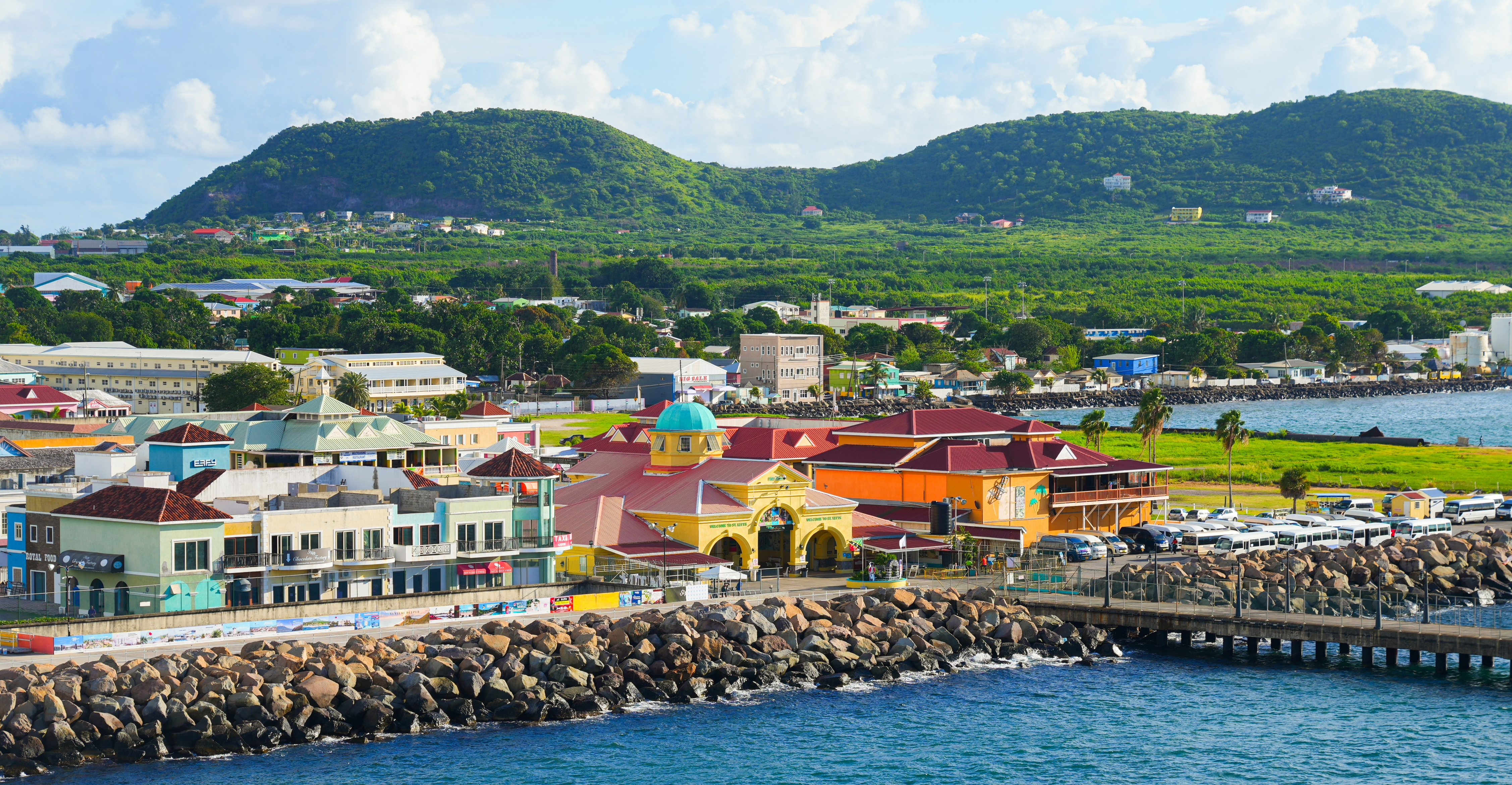
Saint Kitts and Nevis offers 2 investment thresholds:
- USD 250,000 for sustainable development or a national assistance program (non-refundable);
- USD 325,000 for private real estate (apartments or houses), which can be sold after seven years, or for developer projects.
Due diligence fees start at USD 10,000, plus family surcharges.
Processing time is 4–6 months.
There is no income tax in Saint Kitts and Nevis. The country allows for financial privacy.
Economic citizenship programs in European countries
In Europe, you can only obtain a golden passport through a temporary or permanent residence permit. EU countries offer attractive programs because their residents can travel freely within the Schengen Area. A temporary residence permit is typically valid for as long as the investment remains in the country’s economy.
In Europe, there are virtually no donation options, so the investment can be returned over time:
- Cyprus. The minimum investment threshold is EUR 300,000. Direct investments can be made in residential or commercial real estate, shares of Cypriot companies, or investment fund units. Investors receive permanent residence and can include family members in the application immediately. Naturalization is possible after 8 years.
- Malta. Real estate investments can be made starting from EUR 375,000, and rental income is permitted starting from EUR 14,000 per year. Additional requirements include a contribution of EUR 2,000, a non-refundable fee of EUR 60,000, and a duty of EUR 37,000. A foreigner and his or her family receive permanent residency. Naturalization is granted after 5 years.
- Greece. Investments of at least EUR 500,000 in a business, government bonds, or a deposit, or at least EUR 250,000 in real estate or a startup are required. Property rentals and timeshares are available for 10 years. The foreigner receives a residence permit for 5 years. Relatives can relocate through family reunification. Citizenship is granted after 7 years.
- Portugal. The minimum investment is EUR 250,000 in the cultural sector. Alternatively, at least EUR 500,000 can be invested in research, investment company shares, or business registration. Alternatively, the investor can create at least 10 jobs. The investor receives a residence permit and is exempt from permanent residency requirements. The foreigner’s family can relocate with them. Citizenship is granted after 5 years.
- Italy. Investors can invest EUR 250,000 in an approved startup, EUR 500,000 in a business, EUR 1 million through a donation, or EUR 2 million through bonds. In return, investors receive a 2-year residence permit, renewable for three years. Family reunification is available for relatives. Naturalization is possible after 10 years.
- Hungary. A minimum investment of EUR 250,000 in an investment unit or a minimum donation of EUR 1 million to a university is required. A residence permit will be issued for 10 years. Investors can obtain residency for their family members. After 8 years, a passport is issued.
- Serbia. Residence permits are available to entrepreneurs and property owners in Serbia. There are no investment requirements. Family members can relocate to join the investor. A passport is issued after 3 years.
- Montenegro. Residence permits can be obtained through investment in business or real estate with no minimum investment requirement. Family reunification is available. Citizenship is granted after 10 years.
To obtain citizenship through RBI, investors must meet standard naturalization requirements, such as passing language and proficiency tests in the country’s laws.

Economic citizenship in African countries
In 2026, it is possible to obtain a golden passport in São Tomé and Príncipe, Sierra Leone, and Egypt. The advantage of economic citizenship programs in the region is lower investment costs, while the disadvantage is weaker passports. These programs are of interest to investors who want to do business in the region and take advantage of local tax incentives.
São Tomé and Príncipe issues passports in exchange for a USD 90,000 donation. Additional costs apply if more than 4 family members apply for citizenship. The government fee is USD 5,750.
The processing time is 2 months, and the entire process can be completed remotely.
A São Tomé and Príncipe passport allows visa-free travel to 70 countries. The country offers a low income tax rate of 0 to 25%.
Sierra Leone offers 3 programs to investors:
- Fast Track — from USD 140,000, passport issued in 3 months;
- upgrade — from USD 65,000 plus the purchase of 1 kg of gold, which allows you to obtain permanent residency and apply for citizenship in 2 months;
- heritage – only for investors of African descent. Requires a contribution of USD 100,000. Processing takes 2 months.
An additional due diligence fee of at least USD 5,000 is required.
A Sierra Leone passport allows visa-free entry to 66 countries. Sierra Leone is a member of the Economic Community of West African States (ECOWAS), meaning its citizens can live, work, and do business freely throughout the union. Investors also receive a 2% discount on gold purchases.
Egypt offers gold passports for investments starting from:
- USD 250,000 as a donation;
- USD 300,000 for real estate purchases that can be sold after 5 years;
- USD 350,000 for an investment project that can be closed after 5 years;
- USD 500,000 deposited in a local bank for at least 3 years.
The investor typically submits the application and pays a fee of $10,000. Only children under the age of 21 can be included in the application. After approval, a six-month residence permit is issued. A passport is issued once the investment is made.
The processing time is up to 12 months.
An Egyptian passport allows for visa-free travel to 62 countries and 100% ownership of a company within the country.
Investing in Vanuatu
Vanuatu is one of the most popular and accessible citizenship by investment countries. There are 2 main investment options:
- a non-refundable contribution of USD 135,000;
- a donation of USD 115,000 plus an additional USD 50,000 to an investment fund, which is refundable after 5 years. The program was suspended in 2025, but a restart is planned.
Additional fees start at USD 5,000.
Processing time is 2 months.
Currently, a Vanuatu passport allows visa-free travel to 94 countries. Visa-free travel to the EU is expected to resume as the government aligns some foreign investment programs with EU requirements. Vanuatu citizenship is particularly beneficial for reducing tax burdens because there are no income or corporate taxes. Consult with immigration specialists to learn more about the benefits of Vanuatu and its citizenship by investment program.
Get advice
Cost of a golden passport and hidden costs
In addition to the main investment, applying for a golden passport typically involves application fees and due diligence costs. Many investment programs do not require applicants to pay extra government fees for a spouse and minor children included in the same application. However, adding additional relatives often requires a supplemental contribution of at least USD 10,000 per person, depending on the specific country’s rules.
To avoid surprises with the final cost of second citizenship, it’s crucial to thoroughly research your chosen program’s specifics. Consult with immigration lawyers who can help you calculate all fees, document preparation costs, and other obvious and hidden expenses.
| Country | Program type (CBI / RBI) | Minimum investment | Time to obtain citizenship/passport |
|---|---|---|---|
| Antigua and Barbuda | CBI | $230,000 | 3 months |
| Dominica | CBI | $200,000 | 3–4 months |
| Grenada | CBI | $235,000 | 2,5 months |
| Saint Lucia | CBI | $240,000 | 3 months |
| Saint Kitts and Nevis | CBI | $250,000 | 4–6 months |
| São Tomé and Príncipe | CBI | $90,000 | 2 months |
| Sierra Leone | CBI | $140,000 | 3 months |
| Egypt | CBI | $250,000 | 12 months |
| Vanuatu | CBI | $135,000 | 2 months |
| Cyprus | RBI | €300,000 | 8 years |
| Malta | RBI | €169,000 | 5 years |
| Greece | RBI | €250,000 | 7 years |
| Portugal | RBI | €250,000 | 5 years |
| Italy | RBI | €250,000 | 10 years |
| Hungary | RBI | €250,000 | 8 years |
| >Serbia | RBI | Not specified | 6 years |
| Montenegro | RBI | Not specified | 10 years |
The process for obtaining economic citizenship
The citizenship-by-investment process varies by country but typically involves collecting documents, submitting an application, completing due diligence, and receiving a passport:
- Legal consultation and preliminary assessment. Lawyers will select a program tailored to your needs, taking into account family size, available funding, timeframe, and plans. Specialists will also conduct a preliminary review to identify and address any risks in your application.
- Prepare your application documents. It’s important to prepare your application based on both the program’s requirements and your individual situation. For example, this would apply if you have been denied visas to certain countries or have criminal convictions that need to be expunged.
- Submit your application and complete due diligence. You can often submit your application online. After a preliminary review, due diligence is scheduled. There are fees for submitting your application and conducting due diligence.
- Pay the full investment amount. Once due diligence has concluded and your candidacy has been positively assessed, you will need to invest. You can confirm the transfer of funds with documents such as a property title deed and purchase agreement indicating its value, bank statements showing the opening of a deposit or bond purchases.
- Become a citizen. After your citizenship application is approved and all fees are paid, a date for the oath of allegiance will be set, usually via video call. After this, the completed passports are mailed.
Advantages of economic citizenship
The main advantages are the quick processing times, the option to include family members in the application, and the absence of complex requirements, such as language proficiency. A second passport also:
- allows for greater freedom of travel;
- grants the right to reside in a safe country, which is a valuable backup plan in case of instability;
- allows you to optimize taxes by choosing a country where they are not applicable;
- opens up new business opportunities, for example, through the country’s participation in various economic unions.
Many people cite the high investment threshold as a disadvantage of economic citizenship. However, these investments can often be repaid with interest when purchasing real estate, registering a business, or opening a deposit account. To maximize the benefits of the CBI program, it’s important to select the best option carefully.
Taxes and economic citizenship
Obtaining economic citizenship does not automatically change your tax residency. To do so, you must reside in another country for at least 183 days per year, which is easier to accomplish with a passport.
Many investors choose golden citizenship specifically based on a particular country’s tax policies. One of the most attractive destinations is Vanuatu, which has no income, capital gains, dividends, wealth, or inheritance taxes. Vanuatu companies only pay a 15% VAT and a license fee.
Many also choose Caribbean countries to reduce their tax burden because worldwide income and capital gains taxes are often waived there. Antigua and Barbuda, Grenada, and St. Kitts and Nevis offer financial privacy.
Specialists can advise you on the advantages of CBI in different countries and help you prepare your file and pass background checks. Legal assistance will expedite the passport application process and help you avoid unexpected expenses. Fill out the form with your contact information, and we will contact you for a personal consultation.
Citizenship and Residence Permits through investment
- Live freely and travel the world
- Expand the horizons of your business
- Give your children an education at the world’s best universities

Leave an application and get a consultation specialist