
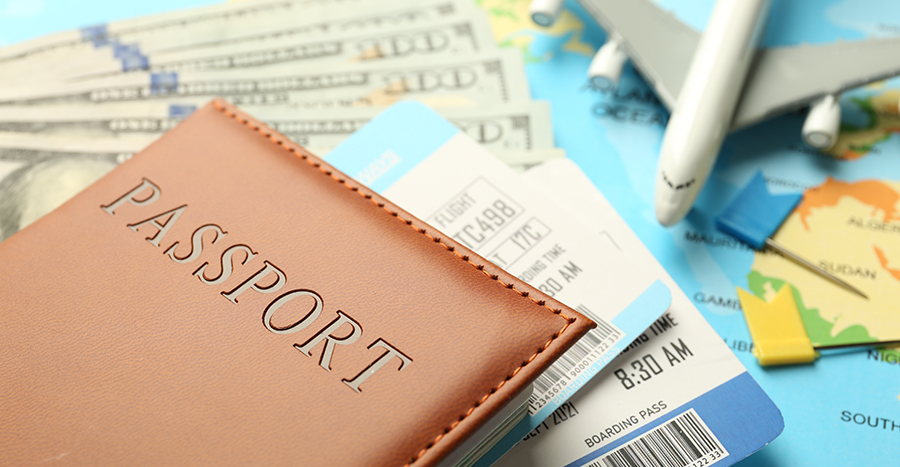
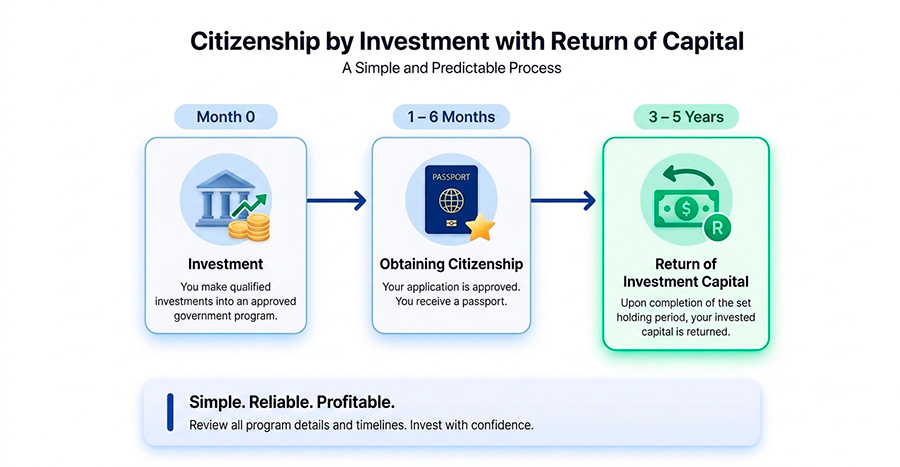
Citizenship by investment with a refundable investment allows individuals to obtain a second passport through an official investment program while retaining the possibility of recovering part or all of their investment over time. For example, an investor may acquire citizenship through a real estate purchase and later sell the property while keeping their citizenship status. Eligible investments can include real estate, government bonds, businesses, bank deposits, investment funds, or job creation. In many cases, these options can also generate returns during the holding period, such as rental income from property or interest earned on a deposit.
Some countries offer citizenship through a non-refundable contribution (donation). These programs typically have a lower threshold but do not offer a refund. Vanuatu, for instance, offers citizenship for a USD 130,000 donation, whereas the partial refund option requires USD 165,000.
The advantage of citizenship-by-investment programs is the rapid processing of a second passport, typically within 2 months. Investors don’t need to learn the language or immigrate to a new country, and citizenship can be obtained remotely.
Returnable investment options for citizenship
Citizenship-by-investment (CBI) programs with refundable investments can allow investors to recover their capital and, in some cases, earn additional returns. This is particularly common with investments in real estate, securities, interest-bearing deposits, or profitable businesses.
In addition to traditional investment programs, there is also a «Golden Visa» naturalization option. With this option, a person first receives a temporary or permanent residence permit through investment. After 3-7 years, they can apply for a passport. The funds can be returned immediately after receiving citizenship.
However, the return on investment is not always complete. For instance, Vanuatu’s CIIP program requires a USD 165,000 investment and allows you to receive USD 50,000 back with interest. In Sierra Leone, you can obtain permanent residency and a passport by donating USD 65,000 plus purchasing 1 kg of gold, which remains the investor’s property and can be resold forever.
To maximize your return on investment and profit after obtaining a second passport, carefully weigh the terms of the various CBI programs. Consider consulting an .
Almost all countries with CBI programs allow you to recoup your investment. The exceptions are African countries, where donations are often required. This applies to São Tomé and Príncipe (minimum threshold: USD 90,000) and Botswana’s program, which launched in early 2026 (minimum investment: USD 75,000). Sierra Leone offers citizenship by donation and the option of purchasing gold. Egypt is an exception to this rule, offering a variety of investment options, including repayable ones.
Real estate purchase with the option to resell
Purchasing real estate is a popular way to obtain citizenship by investment because it often yields rental income and price appreciation. Anyone can buy a home, and no business or stock trading experience is required.
The payback period for real estate investments ranges from 3 to 7 years. For instance, you can sell a property in Turkey or Dominica after 3 years, in Vanuatu, Egypt, Antigua and Barbuda, Saint Lucia, or Grenada after 5 years, and in Saint Kitts and Nevis after 7 years. However, there are exceptions. For instance, you can only sell a property in Dominica after 5 years if the buyer is applying for a passport through the investment program.
You can often sell property earlier than the specified period, but you must immediately buy another property at a suitable price. This option is available in Antigua and Barbuda. If you sell your property in Egypt before 5 years have passed, you must donate USD 250,000 to keep your passport.
Some countries impose restrictions on the type of property that can be purchased or only allow purchases of approved projects. For instance, Saint Lucia and Dominica only permit the purchase of hotels, resorts, and luxury boutiques.
Fix-term investment in sovereign wealth funds
This option involves investing in fund units or shares, such as real estate, venture capital, or pension funds, as well as in government securities.
Shares and bonds can be sold after 3-5 years, but interest accrual is not guaranteed. Saint Lucia, for example, offers interest-free government bonds that can be sold after 5 years. In Turkey, however, the annual yield on government bonds is 40%, and they can be sold after 3 years.
Equity participation in approved projects
Typically, this involves purchasing a share in real estate, such as a hotel or resort. In Saint Kitts and Nevis, however, it is possible to purchase shares in private homes. Investors often have to choose projects from an approved list.
Equity participation can generate income for the entire term of property ownership: if the property is a hotel, income comes from accommodating guests. A sale is usually possible after 5-7 years.
Business investment
Citizenship can be obtained through a repayable investment, such as purchasing shares or investing in a company’s authorized capital. Shares generate dividends from day one, and the more successful the business, the higher the income. Such investments can typically be recouped in 3 years in Turkey or 5 years in Antigua and Barbuda.
Often, you can invest in any business within the country. However, in St. Kitts and Nevis, for example, you can only choose from approved business projects. Greece also offers a startup investment option for its «golden visa». Cyprus has additional requirements: The company must have a physical presence in the country and employ a minimum of 5 people.
Antigua and Barbuda allows collective investments, which reduces the financial burden. One investor must invest at least USD 1.5 million, and several investors must invest at least USD 400,000. The total amount invested must exceed USD 5 million. Funds can usually be transferred personally or through a legal entity, and this option is available in Turkey.

Opening a deposit
Depositing money into a bank account is one of the simplest investment options for obtaining a second citizenship. To do so, you must sign an agreement, transfer the funds, and receive confirmation from the bank to begin processing your citizenship application. The deposit is typically opened for 3-5 years (this applies to Turkey and Egypt), after which the money can be withdrawn.
Job creation
Job investments are distinguished by the fact that the government typically doesn’t set a minimum financial threshold, only a minimum number of people required for employment. In Turkey, the threshold is 50 employees, while in Portugal it is 10. You can achieve job creation through your own company or by investing in an existing one.
Top countries with high returns on investment
More than 10 countries worldwide offer citizenship by investment, including Vanuatu, Turkey, the Caribbean, and African countries, which offer refundable investment options. Many countries also offer temporary or permanent residence permits that can lead to passport acquisition. In Greece, for example, investors are granted a temporary residence permit and can apply for citizenship by naturalization after 7 years. Investments can be returned immediately upon receiving a Greek passport.
The difference between CBI programs and investor residence permit programs is that with CBI programs, citizenship is obtained immediately, while with investor residence permit programs, citizenship is obtained after 3–10 years of residence. Furthermore, many more countries offer residency by investment. For instance, this option exists in the EU, despite the closure of all Commonwealth CBI programs.
To recoup your investment in citizenship or residency, you must sell assets such as real estate, stocks, or bonds, or close your deposit. If you experience capital gains, you will need to pay taxes.
However, a refund is not possible in all countries. Even if the program is called an investment program, your contributions may legally qualify as donations, fees, or other payments to the government.
Vanuatu
In 2026, Vanuatu offers 2 options for repaying investments starting at USD 165,000:
- CIIP: a USD 115,000 donation and an additional USD 50,000 investment. The USD 50,000 can be withdrawn after 5 years;
- REO: purchase of approved real estate valued at least USD 200,000.
Additional costs for the CIIP include a non-refundable government fee of USD 8,000. The investment amount increases if family members are included in the application. The additional payment for each dependent beyond 3 is USD 25,000.
Benefits of Vanuatu’s programs include a completely remote process and a passport received in approximately 2 months. Vanuatu is a tax-free haven, and its citizens may be able to travel visa-free to the EU in the future.
Get advice
Turkey
Turkey offers 7 ways to obtain citizenship by investing at least USD 400,000, some of which are refundable:
| Investment type | Minimum amount, $ |
|---|---|
| Real estate | 400,000 |
| Business | 500,000 |
| Bank deposit | 500,000 |
| Government bonds | 500,000 |
| Turkish pension fund | 500,000 |
| Investment fund | 500,000 |
| Creation of 50 jobs | Not specified |
Additional costs include the price of purchasing real estate. Investors pay only USD 117.50 for a residence permit and citizenship application.
One advantage of Turkey’s program is that the entire family can obtain passports, and the country offers opportunities for increased investment. The process can take up to 1 year.
Antigua and Barbuda
2 of the country’s 4 citizenship programs allow investors to recoup their investments:
- real estate: from USD 300,000, but only in approved projects;
- business: from USD 1.5 million (for multiple investors: from USD 400,000).
The additional cost for one person in both cases is USD 18,500. This amount includes the processing fee and legal due diligence.
Investors enjoy several benefits in Antigua and Barbuda, including the opportunity to apply for a passport remotely, no tax on worldwide income or capital gains, and visa-free travel to 144 countries, including the EU.
New citizens must spend at least 5 days in the country within the first 5 years or risk revocation of their status.
Dominica
Citizenship of Dominica with a refundable investment can be obtained through the purchase of real estate valued at least USD 200,000. The property must be in a government-approved resort or villa.
Additional costs include a non-refundable application fee of USD 75,000, which increases if family members are included in the application. Other fees apply, such as application processing fees, legal due diligence fees, and more, starting at USD 10,000.
Dominica is attractive due to its virtually complete absence of taxes and import duties. Its citizens can travel visa-free to 136 countries, including those in the EU. Citizenship can be processed remotely within a few months.
Grenada
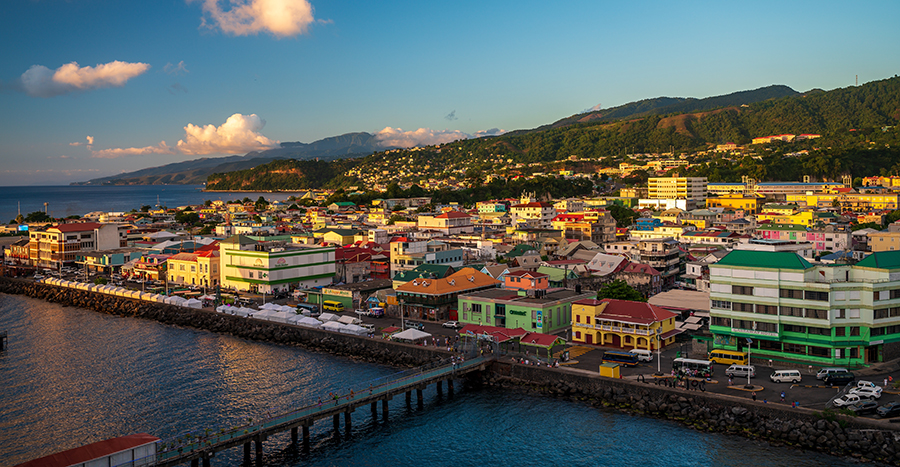
In Grenada, a passport can be obtained through a refundable investment in real estate valued at least USD 270,000. Only properties from an approved list can be purchased.
Additional costs start at USD 9,000. Additional fees may apply for family members. Property buyers are also required to make a non-refundable contribution of USD 50,000 USD.
A benefit of a Grenada passport is that it allows applicants to apply for a U.S. E-2 investor visa. There is no tax on worldwide income or capital gains. Grenadians can travel visa-free to 140 countries, including the EU and the UK. Applications for the CBI program are completed online.
St. Kitts and Nevis
In St. Kitts and Nevis, citizenship by investment can be obtained through the purchase of real estate valued at least USD 325,000. This can be a resale property or a property from a developer.
Additional costs for a single investor include a due diligence fee (USD 10,000) and a post-approval fee (USD 25,000). Additional fees apply for family members.
The appeal of St. Kitts and Nevis lies in its fully remote CBI program. Local residents pay no income tax. The country’s passport allows visa-free travel to 147 countries, including the EU.
Saint Lucia
Saint Lucia offers 3 citizenship-by-investment programs:
| Investment type | Minimum amount, $ |
|---|---|
| Infrastructure business | 250,000 |
| Interest-free government bonds | 300,000 |
| Tourism real estate | 300,000 |
Additional costs include an administrative fee ranging from USD 15,000 to USD 50,000, depending on the option selected by the investor. Processing and verification fees amount to USD 10,000. These amounts are higher when immigrating with a family.
Advantages of a Saint Lucia passport include visa-free travel to 139 countries and exemption from worldwide income tax while residing in the country.
Cyprus
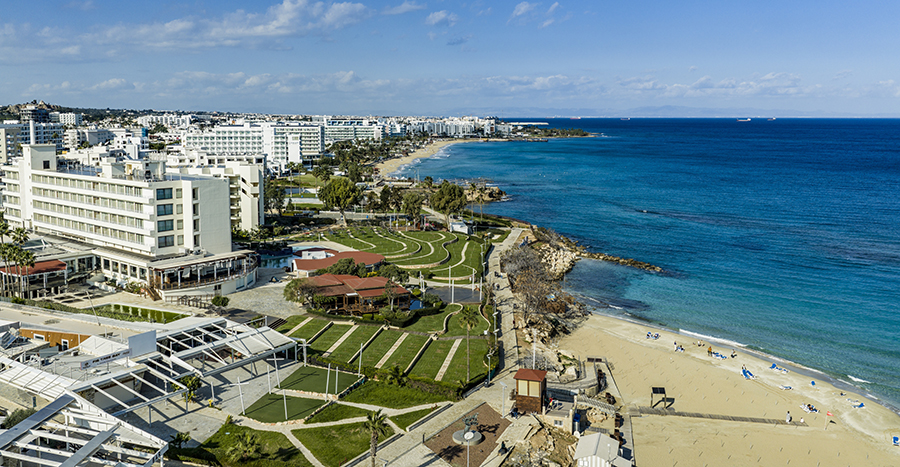
The Cyprus citizenship-by-investment program is no longer available; however, permanent residency is granted to the entire family upon investment of EUR 300,000. Investments can be made in real estate or investment funds.
Additional costs for obtaining permanent residency start at EUR 570. Investors must prove an annual income of at least EUR 50,000.
The benefit of the Cyprus program is the opportunity to become an EU resident and travel freely within the Schengen Area. Investors can transfer their funds from one property to another while maintaining their residency. Citizenship can be obtained after 8 years.
Greece
In Greece, investors can only obtain a residence permit for 5 years at a time. There are several investment options:
- EUR 250,000 in real estate or a startup;
- EUR 350,000 in a mutual fund;
- investing at least EUR 500,000 in a business, government bonds, or a bank deposit;
- EUR 800,000 in listed stocks or bonds.
Additional costs: EUR 2,000 for the application.
Advantages of the Greek Golden Visa: It is issued immediately upon entry to Greece with a Schengen visa or other residence permit. Residents of Greece can travel within the Schengen Area. Naturalization is available after 7 years.
One disadvantage of the program is that relatives can only relocate through family reunification.
Portugal
Portugal offers investors a 2-year «Golden Visa» that does not require permanent residency.
| Type of return on investment | Minimum amount, € |
|---|---|
| Business launch or investment in an existing company + creation of 5 jobs or retention of 10 jobs | 500,000 |
| Investment in collective investment fund units/shares | 500,000 |
| Creation of 10 jobs | Not specified |
Additional costs include a state fee of EUR 9,262.
Advantages of the Portuguese program include obtaining a residence permit with a Schengen visa and including family members in the application. Holders can live abroad and spend only 7 to 14 days per year in Portugal. Residents can travel within the Schengen area. Citizenship can be obtained after 5 years.
Serbia
Serbia offers investors a European residence permit with no minimum investment requirement. Investments are refundable through all residency options: real estate, business, or startups.
Additional costs are approximately EUR 196.50. Company registration may incur additional costs.
Advantages of an investment residence permit in Serbia include obtaining it within the country during a visa-free stay, with a validity period of up to 3 years. After 3 years, citizenship can be obtained, and once Serbia joins the EU, an EU passport will be issued.
One disadvantage is that family residency can only be transferred through family reunification. If you obtain a residence permit through real estate, you cannot rent it out.
Montenegro
Montenegro also has a «golden visa» program with refundable investments. Investors can obtain a residence permit through a business, and there is no minimum investment requirement. Another option is to purchase real estate worth at least EUR 150,000. The property can be residential or commercial, and rental is permitted.
Additional costs: approximately EUR 62. Expenses may be incurred for company registration or real estate purchase (a 3% purchase tax is levied on the value).
Advantages of the program: Residence permits can be obtained during a visa-free stay. Citizenship can be obtained after 10 years, and Montenegro is a candidate country for EU membership.
Disadvantages: You cannot immigrate with your family immediately. Residence permits are only granted for one year and must be renewed regularly.
Sierra Leone
In Sierra Leone, investments can only be partially refunded through the UPGRADE program. To qualify, you must donate at least USD 65,000 and purchase at least 1 kilogram of gold. You can sell the gold later.
Additional costs start at USD 5,000. If your entire family is applying for passports, the costs will be higher.
Advantages of the Sierra Leone program include remote application and the ability to grant citizenship to family members without residency requirements. New citizens can purchase up to 19 kg of gold at a discount. Applications are accepted without restrictions.
One disadvantage of the passport is limited travel freedom: only 67 countries allow visa-free entry.
Egypt
Egypt offers 3 investment options for citizenship:
- through real estate — starting at USD 300,000;
- through business investments — starting at USD 350,000 + a USD 100,000 non-refundable fee;
- by opening a bank account — starting at USD 500,000.
Additional costs include a USD 10,000 registration fee.
A benefit of an Egyptian passport is the opportunity to own 100% of companies within the country.
A disadvantage of the Egyptian program is the mandatory residency requirement before receiving a passport. First, the investor receives a 6-month residence permit, and then a passport is issued. Only children under 21 can be included in the citizenship application. Spouses will receive passports after 2 years.
Jordan
Jordan offers passports in exchange for refundable investments in 1 of 6 areas:
- shares in local companies — starting at USD 1.41 million;
- new production projects in Amman require an investment of at least USD 987,300 and the creation of at least 20 jobs. Outside the capital, the investment must be at least USD 705,200 + at least 10 jobs must be created;
- purchase of a company stake – USD 1.41 million + USD 705,200 in fixed assets + the employment of 20 specialists;
- systematic business development – if, over the past 3 years, your stake in the company has been at least USD 987,300 in Amman or half that amount in other locations;
- development of pharmaceutical, medical, and food logistics – USD 4.23 million minimum investment + hire at least 20 pharmacists in Amman or 10 outside the capital;
- employment of Jordanians – at least 150 in Amman or 100 outside the city.
Additional costs may apply for the application. Family members of the investor may also receive Jordanian passports.
The advantage of the Jordanian program is that it accepts applications from people of all nationalities.
A disadvantage is that only up to 500 investors can obtain citizenship per year. In many cases, a temporary passport is initially issued, and permanent citizenship is granted after 3 years.
North Macedonia
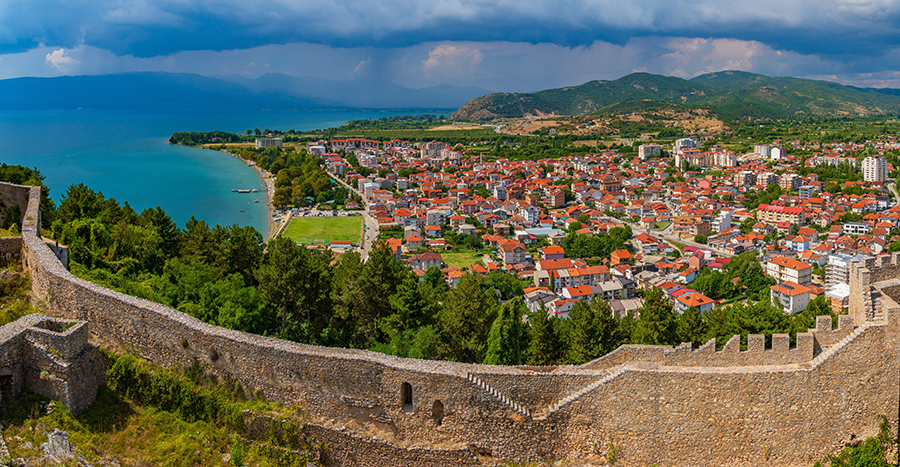
North Macedonia is practically the only country in Europe where you can obtain a passport by investing at least:
- EUR 200,000 in an investment fund;
- EUR 400,000 in companies that create at least 10 jobs.
Additional costs include EUR 20 for the application and EUR 80 for approval.
The advantage of North Macedonia’s investment passport program is that the country is a candidate for EU membership. However, applications can only be submitted in-country, and relatives cannot be included. In recent years, «golden passports» have not been issued, and the country will likely be forced to close the program due to pressure from the EU.
How much can you really recover: calculating an example
The return on investment depends on the country and how the money was invested—in real estate, securities, or a deposit. Typically, only the «investment body», or the principal contribution, is refundable, while various government fees and due diligence costs are not.
Let’s do some calculations using 2 popular investment countries as examples: Vanuatu (CIIP program) and Turkey (real estate).
The costs of obtaining a Vanuatu passport for a family of up to 4 are:
- Principal contribution: USD 165,000.
- Due diligence: USD 8,000.
Of the USD 165,000, USD 50,000 goes to the Coconut Oil Fund (CNO). Vanuatu offers a 5-year return guarantee on this portion of the investment. The return on such a fund is approximately 5% per year.
Since Vanuatu does not impose personal income or capital gains taxes, you can receive a net return on your investment. For example, with a USD 173,000 investment, you can receive a guaranteed USD 50,000 return after 5 years, plus up to USD 12,500 in income.
In Turkey, the costs for obtaining a passport through real estate are as follows:
- purchase of a home: USD 400,000;
- 2% transfer tax: USD 8,000;
- up to 4% realtor commission: USD 16,000;
- other transaction fees (the working fund fee and appraiser’s fees), cost approximately USD 800;
- obtaining an investor residence permit costs approximately USD 115;
- citizenship application fee: USD 2.50 per person.
Investors can earn money through rental income. With an average rent of USD 595 for a 2-bedroom apartment, you could earn approximately USD 18,200 after a 15% tax over 3 years (based on an income of TRY 58,000 per year, or approximately USD 1,317 per year).
Rising prices allow for increased investment, but not always. For example, from 2021 to 2025, housing prices in Turkey increased approximately tenfold in lira and doubled in US dollars. However, from 2023 to 2025, while prices in lira increased by 50%, prices in US dollars decreased by about 20%. Consequently, an investor could double their profits or lose a small amount:
| Direction | Purchase in 2021, sale in 2025, $ | Purchase in 2023, sale in 2025, $ |
|---|---|---|
| Total property and citizenship costs | 424,920 | 424,920 |
| Potential sale proceeds | 800,000 | 384,000 |
| Sale tax – 2% | 16,000 | 7,680 |
| Potential rental income during ownership | From 30,000 | From 18,000 |
| Total investment return | 814,000 | 394,320 |
| Investment profit/loss | 389,080 | -30,600 |
A return on investment in the CBI program does not always guarantee 100% returns. To select the most profitable and least risky investment option, it is important to consult with .
How long does it take to recoup your investment?
You can obtain citizenship with the right to return your investment within 2 to 12 months. If you apply for a «golden visa», you can obtain citizenship through naturalization after living in the country for 5 to 10 years.
| Country | Passport / Residency/th> | Processing time | Investment recovery period, years | Program features |
|---|---|---|---|---|
| Vanuatu | Passport | 2 months | 5 | No residence requirement, fully remote process, available for the whole family |
| Turkey | Passport | 12 months | 3 | Available for the whole family; application must be submitted in person |
| Antigua and Barbuda | Passport | 3 months | 5 | No residence requirement, fully remote process, available for the whole family |
| Dominica | Passport | 3–4 months | 3 | No residence requirement, fully remote process, available for the whole family |
| Grenada | Passport | 2,5 months | 5 | No residence requirement, fully remote process, available for the whole family |
| St. Kitts and Nevis | Passport | 4–6 months | 7 | No residence requirement, fully remote process, available for the whole family |
| St. Lucia | Passport | 3 months | 5 | No residence requirement, fully remote process, available for the whole family |
| Cyprus | Residency | 8 years | Any time | Available for the whole family; residence in the EU |
| Greece | Residency | 7 years | Any time | Residence in the EU |
| Portugal | Residency | 5 years | 5 | No mandatory residence requirement |
| Serbia | Residency | 6 years | Any time | No minimum investment threshold |
| Montenegro | Residency | 10 years | Any time | No minimum investment requirement for business investments |
| Sierra Leone | Passport | 2–3 months | 5 | No residence requirement, fully remote process, available for the whole family; only part of the investment is recoverable |
| Egypt | Passport | 6 months | 3–5 | Application must be submitted in-country; children can be included |
| Jordan | Passport | 6 months | 2–3 | No residence requirement, though a temporary passport may be issued |
| North Macedonia | Passport | 1 months | 1–2 | Risk of program closure |
But what if the investments are not returned?
Participating in the CBI program is as risky as investing in company shares or cryptocurrency. It is difficult to guarantee a return on investment because it depends on the liquidity of the asset, the market situation, and the program terms.
Examples of risks investors may face include:
- Illiquid real estate. In some Caribbean countries, for example, demand for real estate is low, so it can only really be sold to other citizenship applicants. For this reason, the return period may be extended. For example, in Dominica, regular buyers can sell after 3 years, while CBI participants can sell after 5. There is also the risk of oversaturation, which can lead to a drop in prices and investor interest.
- Restrictions on resale. Most programs impose a mandatory holding period during which investors cannot sell the asset, usually 3-7 years.
- Loss of asset value. Even a successful sale does not guarantee a full return on investment due to a decline in market value. After all, the real estate and stock markets are volatile, and predicting their fluctuations is virtually impossible.
- Hidden fees. Part of your investment can be lost due to non-refundable fees, taxes, property maintenance costs, or bank deposits.
- Incorrect program selection. Some CBI program options are essentially donations, although funds can technically be returned. This most often applies to investments in expensive hotels and boutiques in Caribbean countries, which are virtually impossible to sell, even though investors receive income from their operation.
- Economic and political risks. Changes in legislation or a political crisis in the country can lead to a drop in demand or real estate prices, triggering inflation.
To increase the likelihood of a return on investment, it is important to invest in:
- liquid markets — for example, in real estate, this is Turkey, where you can buy any type of home today, tourism is actively developing, and residence permits for digital nomads have become available;
- real estate in popular regions, such as the coast and islands of Greece and Cyprus—although it may be more expensive, it is easier to return and even increase the money here;
- a clear secondary market, less affected by price fluctuations, and always in demand among locals and foreigners.
You can receive a refund when participating in CBI programs, but it is crucial to choose the right country, investment type, and exit strategy. For this reason, it’s best to research the country and investment option with lawyers who specialize in citizenship by investment and are familiar with all the details.
- We’ll find a program that fits your budget
- Compare the requirements and advantages of different countries
- We’ll help you find the best path to a residence permit
Which is more advantageous: a non-refundable contribution or a refundable investment?
Both refundable and donation-based CBI programs can be advantageous. The choice depends on your goals and capabilities.
A passport in exchange for a donation is the best option for those primarily interested in quickly obtaining second citizenship rather than making money from investments. Other advantages:
- the lower barrier to entry makes it attractive to those on a budget;
- there’s no need to understand the risks and benefits of different investment options;
- citizenship can be obtained faster because there’s no need to search for real estate or register a business.
Citizenship through a repayable investment is ideal for individuals seeking a second passport as part of their personal investment strategy. This investment option is beneficial if:
- you want to create an asset that will grow;
- capital preservation is important;
- there is a willingness to wait, as the money cannot be withdrawn immediately.
Although these investments often require larger sums, investors can recover a significant portion of the funds upon successful sale. This significantly lowers the final cost of citizenship compared to a donation.
| Comparison criteria | Citizenship by donation | Citizenship through a repayable investment |
|---|---|---|
| Money returned | No | Yes |
| Passport processing time | Faster | May take longer |
| Entry threshold | Lower | Higher |
| Risks | None | Potential loss of invested funds |
| ROI (Return on investment ) | 0 % | 0–5 % for real estate and securities; potentially unlimited for business investments |
Your priorities determine whether a donation or a returnable investment is better. A donation is the better option if simplicity and a low entry barrier are important, while a returnable investment is the better option if capital preservation is the goal.
A step-by-step guide on how to obtain citizenship and return your investment
The process for obtaining a «golden passport» varies from country to country. It often includes submitting an application, passing background checks, paying a fee, and receiving a passport. Investments can usually be withdrawn within 1-5 years.
- Choose a program. To find the right program for you, consult with immigration specialists. They will also assess your chances of approval and help resolve any issues identified.
- Prepare your dossier. You will usually be required to provide personal and financial documents. It’s important that your dossier confirms the legal origin of your funds and that you have no criminal record. It’s best to entrust the preparation of the documents to lawyers because, in addition to general certificates, translations and legalization are often required.
- Application and Due Diligence. Many countries accept applications through authorized agents who submit the dossier to the relevant authorities. After reviewing the application, the government conducts a due diligence check, which may include a remote interview. Non-refundable application and due diligence fees are paid at this stage.
- Investment transfer. If the due diligence assessment is positive, the final step is to transfer the investment, e.g., to purchase real estate or shares. Your lawyers will submit the resulting contract to the government commission as proof of payment.
- Granting citizenship and passport. You may be invited to the authorized agent’s office to provide biometrics. You will also often be asked to take an online oath. Afterwards, you will be sent a package containing your citizenship certificate and passport.
- Capital refund. You can withdraw your investment immediately after the government-set deadline. For example, you can withdraw funds from a deposit or sell a business.
Although most countries do not officially accept such investments, you can also pay for participation in the CBI program with cryptocurrency. Therefore, you will need to exchange digital currency for fiat currency and then make a contribution. However, verifying the legal origin of the funds is somewhat more difficult in this case, so it is best to conduct such transactions in consultation with a lawyer.
Citizenship, a residence permit, or relocation anywhere in the world
- Live freely and travel the world
- Expand the horizons of your business
- Give your children an education at the world’s best universities

Leave an application and get a consultation specialist
What are the goals of citizenship by investment with a refundable investment?
Citizenship by investment with a refundable investment allows investors to enjoy greater travel freedom, capital diversification, and other benefits:
- Increased travel freedom. You will be able to visit more countries without a visa, and it will be easier to obtain entry permits to other countries, such as the United States or Canada;
- Diversification and capital growth. Investments protect money from inflation and political instability. Investments often generate profits, as is the case with business investments;
- Creation of a «backup plan». Many people obtain a passport just in case so that they can quickly emigrate if necessary;
- Tax optimization. Many countries, especially Vanuatu and those in the Caribbean, offer tax havens;
- Business opportunities. A second citizenship often makes it easier to register a business abroad and receive government benefits;
- Improved quality of life. You can live in another country indefinitely and enjoy its economy, infrastructure, and climate.
Once you’ve determined your goals for seeking a second citizenship, consult immigration lawyers to select the most suitable program. Different countries offer different advantages. For example, you might choose Vanuatu or Antigua and Barbuda to reduce your tax burden.

However, the latter option will also grant you visa-free travel to the EU. with document preparation, application submission, and fund transfers. If necessary, they can also help you register a company abroad. Take the first step toward second citizenship by scheduling a free consultation with iWorld.