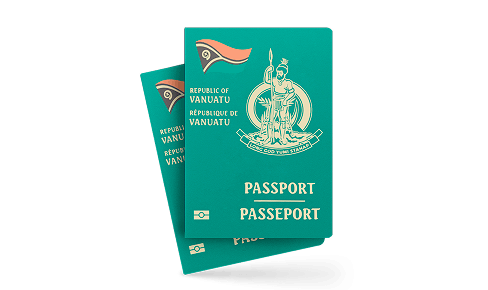


Vanuatu’s tax system is attractive for individuals as there are no taxes on income, capital gains, inheritance, wealth or dividends. Local companies benefit from an exemption from corporate tax, pay only 15% Value Added Tax (VAT), and incur annual license and registration fees. Only commercial banks pay turnover tax. Fees are charged for purchasing and renting real estate, but these are not always applied.
Living and working in a tax-free jurisdiction has many advantages for investors, entrepreneurs, and those looking to relocate. For this and other reasons, Vanuatu citizenship by investment program is popular.
Get advice
How Vanuatu’s tax system works
Vanuatu is one of the few countries in the world that can be considered a tax-free jurisdiction. VAT and various government fees are the main sources of tax revenue. In this regard, Vanuatu’s tax system is similar to those of the Bahamas, the Cayman Islands and Bermuda. It is also similar to the UAE, where there is no income tax and, under certain conditions, companies can pay no corporate tax.
| Tax | Rate | Who pays | Notes |
|---|---|---|---|
| Personal income tax | None | — | Vanuatu does not impose a standard personal income tax |
| Corporate tax | 0 % | Companies | Applies to both domestic and foreign-sourced income |
| VAT | 15 % | VAT-registered entities | Mandatory registration from annual turnover of $33,043 |
| Turnover tax | 5 % | Commercial banks | Turnover tax for most businesses was abolished in 2020 |
| Capital gains tax | None | — | No tax on profits from the sale of assets |
| Business license fee | From $83 to $8 260 | Local companies | Depends on business activity and annual turnover; paid annually |
| Registration fee | $300 | International companies | Annual fee |
| Customs duties | 0–50 % + VAT | Importers | Rate depends on the type of goods |
| Stamp duty on real estate transactions | 2 % of property value | Buyer | Same rate applies to nominal and market value transactions |
| Property transfer tax | 5 % of property value | Buyer | – |
| Rental income tax | 12,5 % or 15 % VAT | Landlord | Individuals pay 12.5% on income over $1,650 (per 6 months); companies registered for VAT pay 15% from $33,042 annual income |
| Stamp duty on share transfers | $0,50–$3,3 per $83 of value | Buyer | Higher rate applies if the company owns or leases land in Vanuatu |
| Municipal property tax | Varies | Property owner | Rate depends on the municipality |
| Employer social contribution | 4 % | Employer | Calculated from the employee’s gross salary |
Taxes for individuals in Vanuatu
Vanuatu is a tax-free jurisdiction for individuals. In some cases, however, buyers and owners of real estate are required to pay government fees and taxes.
Personal income tax: None
Vanuatu has no personal income tax. There are also no taxes on salaries, dividends from stock ownership or inheritance. The country also does not impose a capital gains tax on income from the resale of real estate or other assets. Unlike Switzerland or Norway, Vanuatu does not have a wealth tax.
Property taxes
Vanuatu does not levy a property ownership tax, but there are other mandatory fees associated with purchasing and renting property:
- Stamp duty, which is always paid by the buyer, at a rate of 2% of the transaction amount or the market value of the property (e.g. in the case of a gift). This equates to VUV 200 for every VUV 10,000 — approximately USD 1.65 for every USD 83;
- The registration fee for registering property in your name at the land registry is 5%;
- Rental income tax is 12.5%. This must be paid semi-annually, but only if the income exceeds VUV 200,000 (USD 1,650). However, this only applies to long-term rentals. For short-term rentals, you must register as a legal entity and pay VAT. In some cases, a rate of 12.5% may apply.
When does an individual become a tax resident?
To pay taxes under the Vanuatu tax law, you must become a tax resident of the country. To do so, you must meet one of the following 3 requirements:
- Live in the country for a year in your own home, which can be rented.
- Be physically present in Vanuatu for at least 183 days (continuously or cumulatively) during the tax year.
- Be a Vanuatu citizen who is an official or employee of the government or another public authority.
Must individuals file returns?
A return must only be filed if there is taxable income. In fact, the only time individuals need to file a return in Vanuatu is when they lease real estate long-term.
A rental income tax return must be filed twice a year. The tax periods do not coincide with the calendar year:
- From December 1 to May 31, payment must be made by June 28.
- From June 1 to November 30, the tax must be paid by 28 December at the latest.

Tax rates in Vanuatu for investors
Investors in Vanuatu are exempt from most taxes, including those on local property ownership and income from assets abroad. They only need to pay tax on rental income.
Investors choose Vanuatu not only because of its low taxes, but also because it offers many attractive business and asset management opportunities:
- a simple online procedure for registering international companies, costing USD 150;
- no need to involve local partners – 100% foreign ownership is permitted;
- the country is politically stable, making it a good backup option in case of forced immigration;
- it is a promising region for tourism development as it is located on Pacific Ocean islands;
- the opportunity to structure assets through trusts and holding companies;
- the country’s economic orientation towards investors is another key factor, as a small island nation like Vanuatu depends on foreign investment. This is one of the reasons why it has developed its citizenship by investment programme.

Vanuatu provides investors with financial privacy. However, anonymity is virtually impossible to achieve these days as many countries have signed the Common Reporting Standard (CRS), an agreement under which countries exchange information about foreign accounts. This means that if a person opens an account abroad, their home country will still receive information about their savings and income.
While Vanuatu is a CRS member, it only exchanges financial information with 70 countries that do not disclose personal data. The government does not share information relating to certain types of trusts, deceased estates, insurance accounts or credit card issuers.
Vanuatu has also not joined FATCA (the Foreign Account Tax Compliance Act), the financial information exchange system used in the United States and similar to the CRS.
Taxes for companies in Vanuatu
Corporate income in Vanuatu is effectively tax-free. However, businesses are required to pay VAT and several other fees.
No corporate income tax
Vanuatu imposes no corporate tax on domestic or foreign-sourced income. This is beneficial for international businesses: by registering a company in Vanuatu, you can conduct transactions worldwide tax-free. Furthermore, registering an international company does not require a licence fee.
VAT: 15%
VAT is the main tax paid in Vanuatu. In 2026, there is a rate of 15%.
Companies with annual foreign-sourced/inland revenues exceeding VUV 4 million (approximately USD 33,043) are required to register for VAT. However, transactions exempt from VAT under local laws are not included in income.
VAT is paid on almost all imports and services provided in Vanuatu. VAT taxpayers can be companies, sole traders, cooperatives, and non-profit organisations.
The following are exempt from VAT, or a rate of 0% applies:
- all exports;
- international transport;
- financial services;
- goods located abroad at the time of the transaction;
- educational services provided by an accredited educational institution;
- services provided by non-profit organisations and donations;
- rental of residential property and sale of real estate that has been rented out for residential use for at least 5 years;
- services provided to non-resident foreigners located abroad.
Companies do not always pay VAT when renting out real estate. If annual profits are less than VUV 4 million, businesses are not required to register for VAT. In this case, a rate of 12.5% applies.
VAT returns are generally filed monthly. Payment is due on the 27th day after the end of the tax period.
Other corporate payments
Vanuatu companies are required to make several mandatory payments regularly.
A business licence is paid annually. The amount payable depends on the company’s turnover (VUV 10,000 = USD 83).
| Turnover, Vt | Fee, Vt |
|---|---|
| Up to 4 million | 10,000 |
| 4 to 10 million | 20,000 |
| 10 to 20 million | 50,000 |
| 20 to 50 million | 100,000 |
| 50 to 100 million | 250,000 |
| 100 to 200 million | 500,000 |
| Over 200 million | 1 million |
Stamp duty may be charged for the following: purchasing securities; drawing up a power of attorney for capital/property management; drawing up a lease agreement; opening a mortgage; and purchasing company shares. The fee amount depends on the transaction.
A social security contribution is paid by companies that employ people in Vanuatu. The deduction is 4% of the employee’s salary.
International business companies
In Vanuatu, you can register an IBC, which is exempt from all taxes and fees because it does not conduct business in the country. According to the 2016 legislative update, this exemption is valid until the end of 2099.
IBCs are exempt from licensing fees, income taxes, profit taxes, and capital gains taxes. This rule also applies to company shareholders. An annual registration fee of USD 300 is sufficient.
This business format is ideal for those selling goods or providing services to clients abroad. Vanuatu also offers the convenient and cost-effective registration of holding companies, trusts, and intellectual property management companies.
Reporting and compliance
All Vanuatu companies (except international ones) must file annual reports. This can be done through the government-run VFSC Registry. The day before the month the report is due, a reminder will be sent to the company’s address. The filing fee is VUV 30,000 (approximately USD 250).
If a company is late filing for six months, it will be removed from the registry and lose its right to conduct business. To regain its status, the company must pay all outstanding fees and late payment penalties. The cost of reinstatement is approximately USD 415.

Double taxation agreements with Vanuatu
Vanuatu has not concluded standard double taxation agreements with other countries. The country has signed only 14 tax information exchange agreements (TIEAs), including those with Sweden, Australia, and New Zealand.
The situation is not surprising. Vanuatu is a tax-free jurisdiction, so its residents are generally not subject to double taxation. For instance, a German entrepreneur registered a business in Vanuatu to provide IT services to clients in the US, EU, and Asia. Since Vanuatu has no corporate tax, the company pays no tax in Vanuatu. Taxation arises only at the entrepreneur’s level. If the entrepreneur remains a tax resident of Germany, they will be required to pay income tax there. However, if they reside in Vanuatu for more than 183 days per year, they will not have to pay this tax.
Customs and indirect taxes in Vanuatu
Customs duties on imports are set separately for each class of goods. Rates range from 0 to 30%, and less commonly, 40%. They are calculated based on volume or weight. For instance, importing one kilogram of steel rods incurs a 10% customs duty on the product’s value. However, importing a kilogram of beef or pork incurs a 30% duty.
In addition to customs duties, VAT is also payable.
Excise tax applies only to certain goods, primarily alcohol, tobacco, certain types of meat and seafood, dietary supplements, and automobiles. For instance, the excise tax on tobacco products is 4,000 VUV/kg (approximately USD 33), whereas the tax on chicken wings is 20 VUV/kg (USD 0.17).
Vanuatu tax residency: how to obtain it, and what are the Vanuatu tax benefits?
A company is a tax resident of Vanuatu if it is registered in the country or managed from within its territory. The advantages of this status for businesses include:
- no taxes on corporate income, dividends, royalties, or capital gains;
- reduced burden on international activity, as income received from abroad is not taxed;
- simple confirmation of tax residency—registration or the presence of an office is sufficient;
- no double taxation thanks to a zero corporate tax rate;
- a predictable, simple, and stable tax system.
Entrepreneurs who want to reduce their tax burden and ensure maximum financial anonymity choose Vanuatu as their tax residence. Furthermore, holding companies and trusts can be registered here, enabling the legal transfer of assets to a tax-free jurisdiction.
To learn more about the benefits of Vanuatu for business diversification or personal savings, immigration specialists.
Vanuatu compared to other low-tax jurisdictions
Vanuatu is one of the few countries where taxes are practically non-existent for individuals and companies alike. This makes it a particularly advantageous place to live and do business, although some other countries also offer favorable conditions:
| Country | Corporate tax, % | Corporate tax features | VAT, % | Personal income tax, % |
|---|---|---|---|---|
| Vanuatu | 0 | Annual business license fee applies | 15 | — |
| Monaco | 25 | Not applied if 75% of income is generated within the country | 20 | — (exception for French citizens) |
| United Arab Emirates | 9 | Applies only to income above $102,110; may be 0% in free zones | 5 | — |
| Bahamas | — | 15% may apply to multinational corporations with revenue over €750 million | 10 | — |
| Cayman Islands | — | Only import duties apply (22–27%) | — | — |
| Bermuda | — | Special tax for multinational corporations with revenue over €750 million/year | — | A payroll tax applies, ranging from 0.5% to 12.5%. |
Vanuatu stands out from other countries because of its tax-free environment and the opportunity to quickly obtain citizenship through investment. Having a second passport makes it easier to become a tax resident. Many people also apply for Vanuatu citizenship to expand their travel options and establish a backup plan in case of economic or political instability. Furthermore, Vanuatu’s program enables immediate passport acquisition for all family members and close relatives. Schedule a free consultation with a iWorld specialist to learn more about the citizenship by investment program.
Vanuatu Citizenship by Investment:
- Discover the benefits of Vanuatu citizenship
- Additional jurisdiction for residence
- Tax-free zone
- A return on investment of at least 5% per year
- Simplified visa processing for the U.S. and Canada

Leave an application and get a consultation specialist