
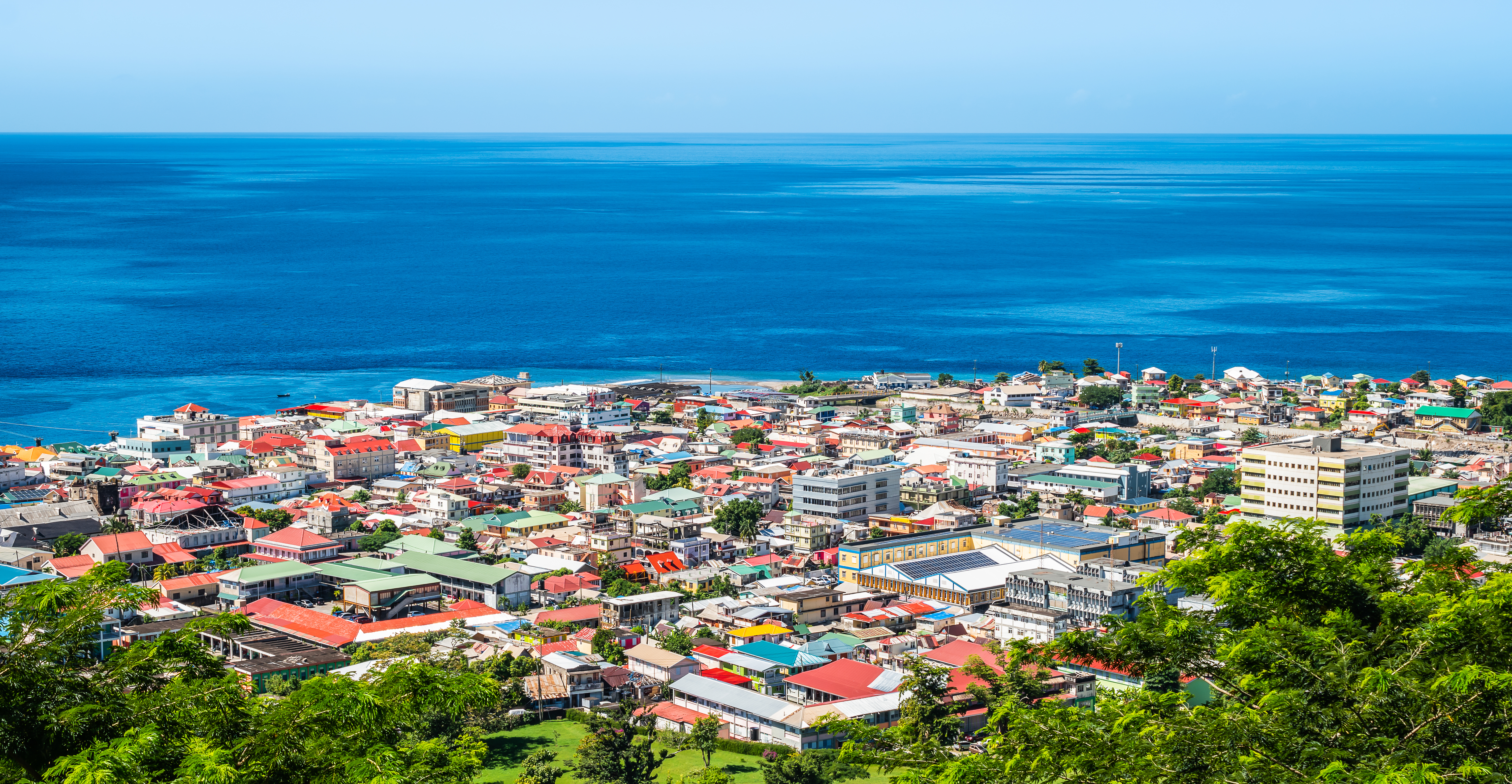
Real estate in Dominica is in demand because purchasing property in this country can quickly lead to dual citizenship. At the same time, prices are competitive — lower than in other Caribbean countries, as well as in Europe, the US, and Canada. Dominica offers a variety of properties, including luxury villas, apartments in modern residential complexes and hotels, and basic homes for personal use. You don’t have to travel to purchase real estate; the transaction can be completed remotely by appointing a lawyer with power of attorney.
In this article, we’ve gathered all the essential information about real estate in Dominica, including available properties, prices, and the best cities for specific purposes. We also describe the step-by-step process for buying a property, the costs and risks to consider, and how to obtain citizenship by investment.
Why investors choose Dominica for real estate investment?
Investors often consider purchasing real estate in Dominica because of its many advantages:
- Competitive prices. Property prices in Dominica are significantly lower than in other Caribbean countries. For instance, a 160 m² house costs USD 560,000, whereas a similar house in St. Kitts and Nevis costs USD 1,570,000.
- Economic and political stability. Dominica is not involved in international military conflicts and maintains neutrality on controversial issues. The government maintains stable relations with the EU and forms partnerships to develop green energy, economic sustainability, trade, and regional security.
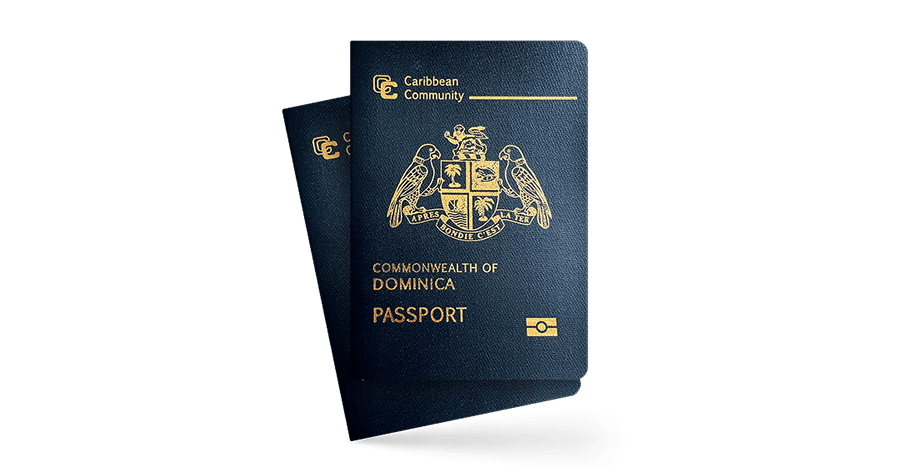
- Eligibility for citizenship. Dominica has a citizenship by investment (CBI) program. By purchasing a property priced at USD 200,000 or more, you and your family are eligible for a second passport. After obtaining citizenship in Dominica, you can travel visa-free to 136 countries, including those in the Schengen Area, Singapore, and China, and participate in European investment programs for temporary and permanent residence.
- Benefits of renting out property. On average, annual rental yields are 4-5%. For luxury homes, they can reach 10%. Property in popular tourist areas such as Portsmouth, Roseau, Marigot, and St. John is in high demand.
However, when discussing the advantages of real estate in Dominica, its disadvantages cannot be overlooked. The first disadvantage is the small market. The selection of properties, especially those not participating in the CBI program, is limited. The second disadvantage is low liquidity. Real estate in Dominica does not sell quickly, especially on the secondary market. A medium- and long-term return strategy is more effective here.
Purchasing a property in Dominica is ideal for:
- Investors who want to obtain a second passport quickly and at a relatively low cost.
- Families with children who are planning to relocate and settle permanently in the country.
- Entrepreneurs who want to start a business by renting out real estate.
Dominica real estate market: properties for sale in 2026
Dominica’s real estate market is small yet diverse. In 2026, you can choose from residential and commercial properties, land plots, and hotel equity projects.
Residential properties, such as houses, villas, and apartments, are in demand among investors who plan to live in Dominica permanently, vacation there, or rent out their properties. Prices start at USD 220,000 for a 35 m² apartment in a prestigious hotel. A 557 m² luxury villa on an 11,300 m² plot with panoramic views of the ocean, mountains, and nearby islands costs USD 2.7 million.
A significant advantage is that some properties are approved by authorities under the CBI program, making them eligible for Caribbean citizenship. One disadvantage is low liquidity; it’s difficult to sell apartments or houses quickly.
Commercial real estate in Dominica includes boutique and eco-friendly hotels, apartment complexes, and agricultural land. Prices vary depending on the property’s category and location. For instance, a 3-villa complex spanning 1,145 square meters and located 20 minutes from Melville Hall Airport is priced at USD 450,000. A luxury boutique hotel operating on the oceanfront costs USD 2,950,000.
Commercial real estate is a popular choice for entrepreneurs looking to grow their businesses in the tourism sector. The advantage is the potential for higher rental income. However, commercial real estate is often not eligible for the CBI program, and it requires additional costs for hiring employees and renovations.
Land plots for sale in Dominica are limited due to the island’s geography. Prices start at USD 133,000 for a 2,790-square-meter riverfront plot. A 509,900-square-meter plot of land, 15 minutes from the capital, formerly a historic estate, is priced at USD 25 million.
The main advantage of such a purchase is the ability to build a house or hotel from scratch according to your preferences. However, the land is not eligible for the CBI program, so additional construction investment is required. This type of purchase is ideal for investors with a defined construction plan, such as a hotel, residential complex, or villa development, as well as for entrepreneurs planning a business in the agricultural sector.
The share-in-hotel option is the most popular among foreign investors. It involves buying a stake in an apartment or house rather than purchasing individual units, such as hotel rooms or villas in resort complexes. Such projects are generally approved by the CBI program, enabling foreigners to quickly obtain a second passport.
Pros:
- Low entry barrier: prices start at USD 200,000 (the minimum investment required under the CBI program).
- Ready-made project: The property is operational with a management team (hotel staff).
- Income can be generated immediately by renting out apartments, luxury home, and hotel rooms.
Disadvantages include the fact that investors only own a share, not a full villa or apartment, and resale may be difficult.
A share in a Caribbean property is ideal for those looking to increase their capital through rentals, as well as for investors seeking a second passport with minimal investment. Currently, this is the most accessible and cost-effective way to obtain Caribbean citizenship. The entire process takes about 3 months and requires an investment of just USD 200,000.
Best locations to buy real estate
Before buying a property in Dominica, it’s important to explore the specifics of each region. Your choice of area directly impacts the availability of the CBI program, the price, and the liquidity of the property. Here are the 4 most popular locations in Dominica among investors.
Portsmouth
Portsmouth, Dominica’s second-largest city and former capital, is located in the northwest of the island. Considered a cultural and educational center, it boasts numerous resorts and active recreation areas (such as diving, surfing, snorkeling, and horseback riding). It is also home to one of the island’s 4 universities, Ross University School of Medicine.
The most common purchases in Portsmouth are apartments, houses, and small residential properties, while commercial real estate is less common. Prices here are much lower than in the capital. For instance, you can purchase 1/10 of a 128-square-meter villa with a pool for USD 220,000. Luxury real estate options are also available: a high-end property on the Caribbean coast above a tropical forest costs USD 1,540,000.
Roseau
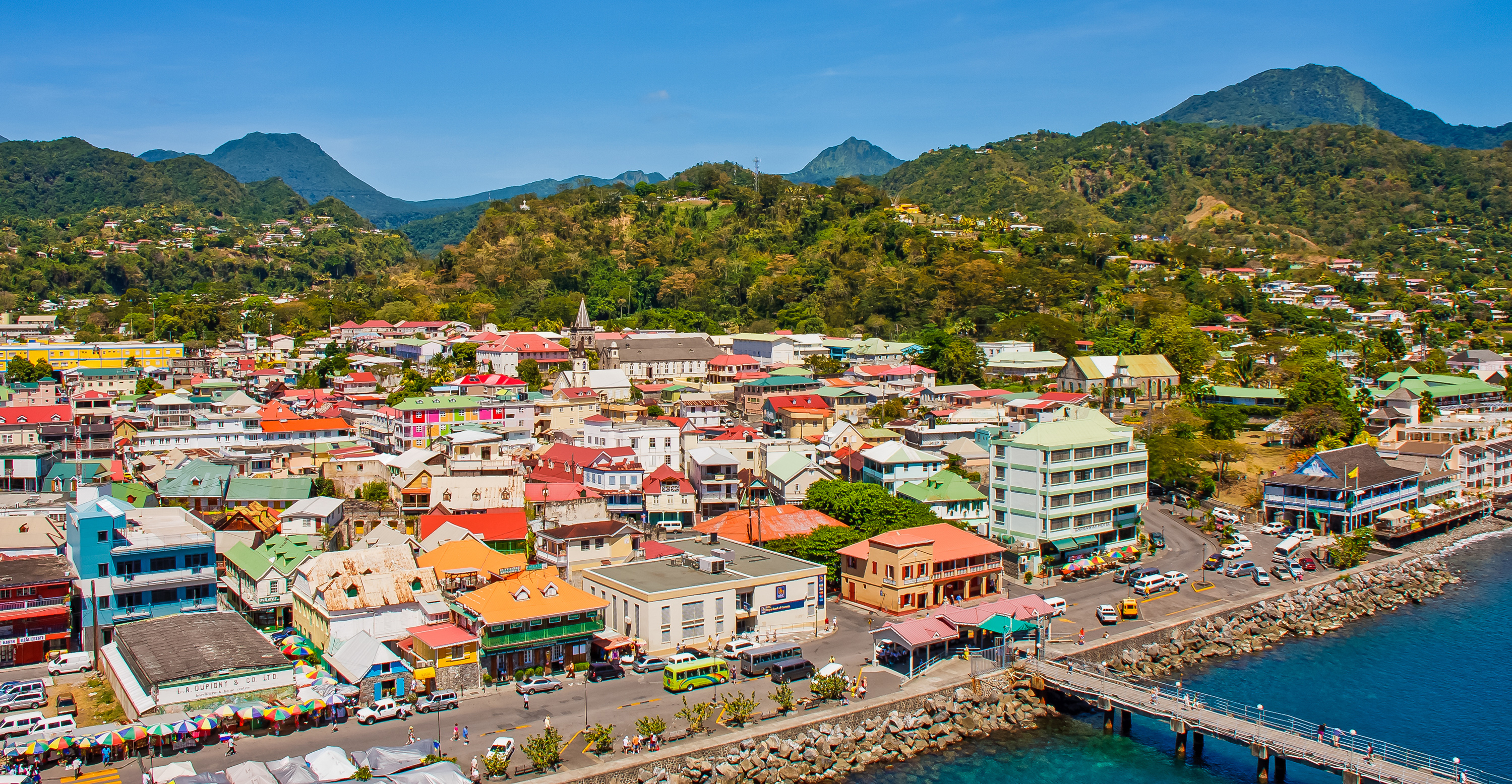
Roseau is the capital and business center of Dominica. It is home to the country’s largest port, numerous hotels and restaurants, and two universities. Houses, villas, apartments, hotel rooms, and commercial spaces are in demand in Roseau. Roseau is also home to many approved CBI projects, such as the Anici Resort.
The capital offers attractive short- and long-term rental opportunities. The average monthly income is USD 1,111 during peak season (February–March), USD 938 during the off-season (January, May, June, July, and August), and USD 811 during the low season (September–December). The top 3 areas for real estate purchases are downtown Roseau, Soufriere, and Ladika.
Marigot
Marigot is located in the northeastern part of Dominica, near the Douglas-Charles Airport. The real estate market primarily offers beachfront villas, small houses, and development land. Areas near the Woodford Hill and Hodges Bay beaches are particularly popular.
The region emphasizes ecotourism and environmental protection by constructing nature-friendly hotels and eco-friendly residential complexes. Prices are reasonable. For example, a 741 m² villa with a pool and panoramic ocean views can be purchased for USD 395,000, and 935 m² of development land costs USD 31,620.
St. John
St. John is a parish located in the northwest of Dominica, centered on Portsmouth. The area is famous for Prince Rupert Bay, the country’s main hub for the yachting community.
The real estate market offers apartments, houses, residential complexes, hotels, commercial spaces, and land. For instance, an older house right on the seashore can be purchased for USD 167,400, while an exquisite, 2-story, 6-bedroom villa costs USD 892,800.
Property prices in Dominica in 2026
Real estate prices in Dominica are lower than in other Caribbean countries. Prices are influenced by the property’s type and class, location, year of construction, and participation in the CBI program. iWorld experts analyzed the market in Dominica and compiled an approximate price range:
| Property type | Price range, $ | Suitable for |
|---|---|---|
| Villas | 220,000–2,700,000 | CBI program applicants, families with children, and landlords |
| Apartments | 220,000–320,000 | CBI program applicants, landlords |
| Fractional ownership | From 200,000 | CBI program applicants |
| Commercial properties | 450,000–4,500,000 | Business investors |
| Land plots | 133,000–25,000,000 | Business investors, those planning to build a private home, residential complex, or hotel |
The most expensive real estate is in Roseau and the surrounding area. Prices are lower in Portsmouth and St. John’s but are expected to rise soon due to the region’s development prospects. Although property prices in Marigot are lower than in other parts of Dominica, land is more expensive there due to its preserved wilderness.
Becoming a citizen of Dominica doesn’t require millions of dollars. You can purchase a share for as little as USD 200,000. , who will find a property suitable for the CBI program, prepare the necessary documents, and guide you through every step.
Buying real estate in Dominica: a step-by-step guide
The process of buying real estate in Dominica is strictly regulated. With competent legal support, you can complete the process remotely without visiting the country. We have identified 8 main steps for purchasing a property in Dominica:
- Determine the purpose of the purchase
Apartments and villas are suitable for personal residences, while hotels, offices, shops, and houses are suitable for businesses. To participate in the CBI program, consider equity participation in hotels.
- Select a property and verify its status
Decide on a city where you want to purchase real estate and review the current options. iWorld specialists will help you select a property, including one that is suitable for the CBI program. Lawyers will also verify the seller’s title and ensure there are no encumbrances on the property.
- Reservation
The buyer reserves the property and transfers a deposit to the seller, usually 10% of the property’s value. This deposit can be transferred to a special escrow account opened specifically for this transaction. The deposit is held in this account until the purchase agreement is signed.
- Obtain a landholding license
Those not participating in the CBI program must obtain an Alien Landholding License (ALHL). Applications are submitted through a local lawyer and take 4 to 8 weeks to process. A fee equivalent to 10% of the property’s value is payable when the license is issued.
- Prepare the documents
A iWorld specialist will provide a precise list, but in any case, you will need a passport and a certificate confirming the source of funds. This applies to both CBI and non-CBI property purchases. All color copies of documents must be notarized and legalized in English. For the best results, entrust the preparation of documents to a lawyer who will compile the dossier expertly and in accordance with all legal requirements.
- Sign the purchase and sale agreement
On the appointed day, the agreement is signed, and the buyer transfers the remaining funds to the seller. The document includes the details of both parties and the property, such as the price, address, and cadastral number, as well as the payment method and the rights and obligations of the signatories. If the transaction is conducted remotely through a lawyer, the lawyer will review the agreement for accuracy before signing.
- Registration of ownership
The lawyer prepares a Memorandum of Transfer (MOT) and sends it to the Land Registry, along with the following documents: passports of both parties, the agreement, the seller’s original title deed, and any other necessary documents. The transfer of ownership is then published in two consecutive issues of a newspaper in Dominica, and neighbors are notified. This is necessary so that anyone with a claim can object to the transaction. Publication and notification of neighbors are not required if the property is purchased through the CBI program.
- Obtain the documents
If no public objections to the transaction are raised within six weeks of notification, the property’s title deeds are issued to the new owner. This does not apply to the CBI program. In the case of a remote purchase, the deeds are mailed to the new owner.
Property Search Request
- Personalized property selection
- Calculation of the total cost
- Comparison of Countries and Projects
- Consulting and support from an iWorld expert

Leave an application and get a consultation specialist
Timeframes and processing times
Purchasing property outside the CBI program takes approximately 3 months. This includes the licensing period, as well as the time required after newspaper publication and neighbor notification.
CBI participants become property owners in Dominica more quickly; the transaction takes 30 days. The process of applying for a second citizenship generally takes 2-6 months, including the time required to prepare documents and undergo due diligence.
Buying property and Dominica citizenship: What you need to know
Dominica now offers citizenship through real estate investment. This legitimate government program issues passports in approximately 3 months.
Key CBI requirements:
- Minimum property value: USD 200,000.
- The property must be approved by the Dominican authorities.
- Due diligence must be completed.
- Applications must be submitted through a licensed agent.
- The property must be owned for at least 3 years from the date of citizenship issuance.
Along with the main investor, their immediate family members (spouse, children, and dependent parents) are eligible to receive a second passport.
The process of purchasing real estate in Dominica and obtaining citizenship is simple and consists of 6 main steps:
- Select a property from the approved list.
- Sign a contract with a licensed agent.
- Prepare documents.
- Complete due diligence.
- Purchase the property.
- Obtain citizenship.
You don’t need to travel to Dominica to obtain citizenship; everything is done remotely.
clients from start to finish, from selecting an apartment or house to receiving their second passport by mail.
Additional costs: taxes, commissions, maintenance
Purchasing real estate in Dominica involves additional costs:
- Government fees upon transfer of ownership. A 1% court fee, a 1% guarantee fee, and a 4.5% stamp duty (2% for the buyer and 2.5% for the seller). The amount of each payment is calculated based on the property’s value.
- Property tax. In the major cities of Roseau and Canefield, a municipal tax of 1.27% of the property’s cadastral value is payable.
- Rental tax. Those who rent out property are subject to income tax in Dominica. The first USD 7,400 is taxed at 15%, the next USD 11,100 at 25%, and all subsequent income at 35%.
- Maintenance/management costs. On average, these costs account for 40% of the property’s income. These costs include utilities, management company fees, property maintenance, minor repairs, and advertising if the apartment or house is rented.
- Local lawyer fees. Varies depending on the lawyer’s rates. On average, a lawyer’s fee is 2.5% of the property’s value. VAT is also payable at 15%.
Risks and restrictions to be aware of
Buying real estate in Dominica is an important step. It’s crucial to consider all possible risks:
- Small market. Dominica is a small island nation that is largely occupied by natural wilderness. There are few properties on the market, so finding one that meets all your criteria isn’t always easy.
- Low liquidity. Selling a property quickly isn’t possible. Years can pass between posting an ad and completing a transaction, especially on the secondary market.
- Property inspection necessity. Even modern buildings can have poor construction quality. Some developers may be unreliable and frequently delay project completion. Before purchasing a property, it is essential to carry out thorough legal due diligence to ensure it is free of issues and avoid acquiring a problematic asset.
- Not all properties are eligible for the CBI program. To obtain citizenship in Dominica, you must purchase government-approved properties only.
- Resale value is not guaranteed. The resale price may be lower depending on demand, the overall market situation, and the property’s condition.
How to choose a property: A buyer’s checklist
Key points to consider when choosing a property in Dominica:
- Whether the property participates in the CBI program. To obtain second citizenship in 3 months, you must purchase a property from the government-approved list. Without this, you will not be able to obtain a Dominica passport, even if the property meets the program requirements.
- Potential profitability. Research the market to find out which cities have the highest demand for villas and houses, and where apartments are most commonly rented. Research prices and calculate your estimated profit from renting or reselling in a few years. If you are buying a share in a residential complex or hotel, ask the manager for financial statements on the property’s profitability.
- Management company/hotel. Check the reputation of the management company or hotel. Request reports, property management terms, and service rates. Find out how much commission is required to rent out a property without personal involvement.
- Construction timeline. If the property is under construction, inquire about the completion date. Ask if the completion date has been postponed before. Research the developer’s liability in the event of a delay.
- Ownership costs. Before purchasing, calculate how much money will be spent on monthly maintenance, utilities, and taxes.
Considering all the risks and nuances, buying real estate in Dominica will be a profitable investment that allows you to obtain a second passport and generate additional passive income.