

A residence permit by investment is granted to a foreigner who contributes a specified amount to a country’s economy. Such programs are often referred to as «golden visas». These initiatives operate in over 20 countries and help governments attract private investment for business development, real estate, foundations, and job creation.
Residence permits can be obtained through investments in real estate, businesses, securities, or foundations. Sometimes, other options are available, such as making a charitable donation or obtaining tax residency. Conditions vary by country, including amounts, terms, investor requirements, and rights.
Don’t confuse an investment residence permit with direct citizenship-by-investment programs. Depending on the terms, investors receive a temporary or permanent residence permit, not a passport. However, an investment residence permit can be a step toward citizenship by naturalization. Typically, you must live in the country for several years and pass integration exams.
Benefits of residency by investment
A residence permit by investment is one of the simplest immigration routes, offering distinct advantages:
- Simplified requirements: no need to look for a job, start a business, or enroll in a university. All you need to do is invest a certain amount.
- Fast processing: applications are usually processed within one to two months, and in some countries, within a few days.
- Relocation with family: most often, you can include your spouse, children, and parents in your application.
- Citizenship prospects: investment programs lead to citizenship after meeting the residency and integration requirements.
- Access to the banking system: residency status allows you to open bank accounts and send and receive foreign currency transfers.
- Tax incentives: you can expect reduced rates, and in some countries, investors are exempt from taxes entirely.
- Freedom of movement: with a European residence permit, you can travel visa-free within the Schengen area.
Disadvantages of investment programs
Like any immigration option, investment programs come with potential disadvantages and risks:
- High cost threshold: to participate, you must invest hundreds of thousands of U.S. dollars or euros, demonstrate sufficient income, and pay fairly high state fees. These are not the only associated costs.
- Capital freeze for several years: investments cannot be returned immediately because they must be maintained for as long as the residency permit is valid (otherwise, it will be revoked).
- Strict compliance: the investor must have an impeccable reputation and confirm that they are investing legally earned money (all of this is verified as part of Due Diligence).
- Risk of refusal: failure to meet any requirement leads to rejection of the application. For example, even an initial investment of EUR 1 may be deemed insufficient.
- Political risks: Authorities may reject applications from citizens of certain countries due to political pressure, external circumstances, and sanctions.

Basic requirements for obtaining residence by investment
The exact requirements vary depending on the country and program, but basically, all investors must:
- Have legally obtained personal funds: applicants must demonstrate that their capital was acquired lawfully and is not linked to fraud or other illegal activities.
- Make the required investment: the minimum amount depends on the country and the chosen program route; investments below the threshold are not permitted, even by a small margin (e.g., a few euros or US dollars).
- Maintain the investment for the required period: funds may not be withdrawn for a specified timeframe (typically five years).
- Have a clean record: applicants must provide police clearance certificates from all countries where they have lived.
- Be at least 18 years old and legally competent: minor children may be included in a parent’s application, while certain conditions (such as serious mental disorders or infectious diseases) may prevent eligibility for a residence permit.
There are specific document requirements: they must be translated into the language of the country to which you plan to immigrate and properly notarized/apostilled. In some countries, you cannot apply for a residence permit on your own. In these cases, you must enlist the help of an accredited agent.
Investment options to obtain residency
Each country offers its own options, including purchasing or renting real estate, making charitable contributions, and investing in businesses, the economy, securities, and investment funds. You can also obtain a residence permit through tax residency, though this is less common.
| Investment type | Country with the lowest minimum investment | Country with the highest minimum investment |
|---|---|---|
| Real estate purchase | Brazil, $132,078 | Indonesia, $1,000,000 |
| Real estate rental | Malta, €14,000 per year | Vanuatu, $82,000 |
| Business investment | Argentina, $1,000 $ | Indonesia, $50,000,000 |
| Startup investment | France, Canada — no minimum amount required | Greece, Italy, €250 000 |
| Government bonds/investment fund | Cyprus, €300,000 | Italy, €2,000,000 |
| Non-refundable contribution | Thailand, $20,000 | Italy, €1,000,000 |
| Tax residency | Malta, annual tax of €15,000 | Switzerland, approx. €190,000 per year |
Real estate purchase
Investing in real estate is one of the most popular ways for investors to obtain residence. To obtain a residence permit through real estate investment, you must purchase an apartment, house, or commercial space that meets the required value threshold. Sometimes, restrictions apply to the total area of property that a foreigner can own (for example, in Turkey, the limit is 30 hectares).
Currently, Greece, Malta, Cyprus, Andorra, Turkey, the United Arab Emirates (UAE), Bahrain, Indonesia, Panama, Brazil, and Uruguay offer golden residency through real estate purchases. In Malta and Vanuatu, you can obtain a residence permit by renting a property.
Please note that, typically, the property must be fully owned by the investor; purchasing a share does not always qualify. Selling the property within several years is prohibited; otherwise, you risk losing your residency status. Some countries offer alternatives to direct property purchase, such as investing in government infrastructure projects or real estate funds.
Investing in a business or establishing a company
Another common method is business immigration through investments in a local or private company. Often, there are requirements to create new jobs or maintain existing ones. Simply forming a company isn’t enough; it must be operating, and you must pay taxes in accordance with the law.
Currently, residence permits for business investment are offered by Cyprus, Portugal, Italy, France, Andorra, Indonesia, the United States, Canada, Paraguay, Brazil, Argentina, and Chile.
Some countries offer startup relocation options that require a smaller investment (or none at all), but the project must be recognized as innovative. Such programs exist in Greece, Italy, France, the UAE, Canada, and Brazil.
Purchase of government bonds or investment in a fund
Another option is to invest in the securities (bonds) of a specific country or in an investment fund. Typically, these contributions do not generate revenue: no interest is paid, and the government may charge an additional fee for holding the funds.
Currently, programs for investing in securities exist in Greece, Italy, and Andorra. Investment funds exist in Portugal and Cyprus. After several years, provided all conditions are met, the applicant may recover the original amount (for example, when the bond reaches maturity or the deposit term ends).
Non-refundable contribution (donation)
A non-refundable contribution is one of the simplest ways to obtain a residence permit, as the funds are paid directly to the government or a third-party organization (such as a charity or cultural institution). From a loss perspective, this option is not the most profitable because there is no way to recover the capital.
Portugal, Italy, and Thailand offer residence permits in exchange for a donation. Some countries, such as Malta, include the cost of participation in the investment program.
Financial independence and tax programs
Some countries issue residence permits to individuals who can demonstrate a high income and/or past tax payments. One such country is Switzerland. There, wealthy foreigners can obtain a residence permit under a tax treaty. They must pay income tax on their personal living expenses. Malta has a similar initiative under which program participants pay income tax on funds transferred to the country, with a minimum annual requirement of EUR 15,000.
Financially independent foreigners can obtain residence permits in countries such as Spain, France, and Austria. All they need to do is demonstrate they have a specified level of passive income.
Residence by investment programs in Europe
These programs are popular among investors seeking to deploy capital in a region with a stable economy. Most investors choose EU countries in the hope of obtaining an EU passport after 5-10 years.
In recent years, however, a number of European countries have abandoned their investment programs, including:
- Great Britain (Tier 1 Investor) — a residence permit was issued for investments of EUR 2 million until 2022;
- Ireland (Immigrant Investor Programme): A residence permit could be obtained for investments of EUR 500,000 until February 2023;
- Spain (Visado de Oro) program issued residence permits in exchange for investments of at least EUR 500,000 until April 2025.
Currently, 13 European countries grant residency or permanent residence permits in exchange for investments.
| Country | Minimum investment, € | Residence permit validity, years |
|---|---|---|
| Greece | 250,000 | 5 |
| Malta | 70,000 | Indefinite |
| Cyprus | 300,000 | Indefinite |
| Portugal | 200,000 | 2 |
| Italy | 250,000 | 2 |
| Switzerland | Depends on income | Case-by-case |
| France | 300,000 | Up to 4 |
| Andorra | 600,000 | 2 |
| Serbia | Not specified | Up to 3 |
| Latvia | 60,000 | Up to 5 |
| Bulgaria | 127,800 | 1 |
| Hungary | 250,000 | Up to 10 |
| Montenegro | Not specified | 1 |
- Let’s briefly compare the terms and conditions
- Assess risks and requirements for each country
- We will suggest the best option for your budget
Greece
The Golden Visa Greece program allows foreigners to receive a 5-year Greek residence permit in exchange for investing in real estate, startups, or securities. This status does not require you to live in Greece; maintaining your investments is sufficient.
A minimum investment of EUR 250,000 is required in either a Greek startup or a specific property. Until fall 2023, this amount could be invested in any house or apartment; however, following legislative reform, the requirements have changed. Currently, a 5-year residence permit is issued upon the purchase of real estate to be converted from industrial to residential use, or of an architectural monument to be restored.
If these options do not interest you, you can invest EUR 800,000 in any property located in popular areas of Greece, such as Athens, Thessaloniki, and the islands, or EUR 400,000 in other cities. Alternatively, you can invest in securities or shares starting from EUR 350,000, EUR 500,000, or EUR 800,000, depending on the option chosen.
Holders of a Greek Golden Visa can travel visa-free within the Schengen Area, access local healthcare, and enroll their children in European universities. After 7 years of residence (not necessarily continuous), you can apply for Greek citizenship. However, most investors view the Greek Golden Visa as a «Plan B», allowing them to maintain EU residency without relocating permanently if needed.
iWorld lawyers provide comprehensive support to clients applying for a Greek residence permit. They help them select an investment property, gather the necessary documents, submit the application, and.
Malta
Malta offers a comprehensive option: the Malta Permanent Residence Program (MPRP). This program grants permanent residency through real estate investment. To participate, you must:
- Purchase real estate worth at least EUR 375,000 or rent it for EUR 14,000 per year.
- Pay a non-refundable administrative fee of EUR 60,000.
- Donate EUR 2,000 to a charity, sports organization, or other organization.
- Pay a state fee of EUR 37,000 to obtain permanent residency.
The total cost is at least EUR 474,000 for purchased property and at least EUR 169,000 for rented property.
Immediate family members of the investor, including spouses (or common-law partners), children, parents, and grandparents, are eligible for permanent residence. There is an additional fee of EUR 7,500 for each family member.
Permanent residence under the MPRP program is granted indefinitely. However, property ownership must be maintained for at least 5 years. Permanent residence entitles you to live, work, and study in Malta and to travel visa-free within the Schengen Area for up to 90 days every 6 months.
The Global Residence Program (GRP) is available to citizens of non-EU countries who purchase or rent property in Malta for a period of 1 year. Investment requirements:
- Purchase property in the south of Malta or on Gozo Island for at least EUR 220,000, or in other regions for at least EUR 275,000.
- For a one-year rental, the price starts at EUR 8,750 in the south or on Gozo Island and at EUR 9,600 in other cities.
GRP participants become tax residents of Malta and must pay an annual income tax of EUR 0.15 on every euro of remitted income (minimum EUR 15,000 per year).
Unlike the MPRP, GRP participants do not receive permanent residency; instead, they receive a one-year residence permit for investment, with the right to extend. Therefore, the MPRP is of interest to investors, as it offers a relatively quick path to EU permanent residency (4-6 months).

Cyprus
Until 2020, Cyprus issued «golden passports», but the program was discontinued due to pressure from the EU. Today, the country offers investors the opportunity to obtain permanent residency within 2 months by investing EUR 300,000 in real estate, a business, or investment funds. The most popular option is real estate, which allows investors to become owners of an apartment or house in an English-speaking country with a warm climate.
As long as a Cyprus permanent residence permit is required, the investments are non-refundable. While it is possible to sell property or withdraw funds from a business or fund, doing so will result in the revocation of the status unless the funds are reinvested in the same or a different sector.
Applicants must have a stable annual income of at least EUR 50,000. This income may come from employment, business, pension payments, royalties, or interest on deposits. If permanent residence is requested for the investor’s spouse, the required annual income increases by EUR 15,000; for minor children, it increases by EUR 10,000. A combined annual income of EUR 75,000 is required for a family of 3 (mother, father, and child).
One benefit of the Cyprus program is that the investor and their immediate family members receive permanent residence immediately and do not need to renew it every few years. The residence card must be renewed every 10 years. Permanent residence in Cyprus is not required; absences of more than 2 consecutive years are not permitted.
Investors who have lived in Cyprus for 8 years and attained B1-level proficiency in Greek may apply for Cypriot citizenship. However, many people find that permanent residence is sufficient because it allows visa-free entry into the EU and Schengen countries, as well as permanent residence in Cyprus. It also serves as a reliable backup.
Portugal
In Portugal, the Autorização de Residência para Investimento (ARI) program offers a 2-year residence permit in exchange for investments in:
- Science and research: EUR 500,000 (EUR 400,000 for sparsely populated cities).
- Investment fund shares: EUR 500,000.
- Culture: EUR 250,000 (EUR 200,000 for sparsely populated cities).
- Local or private business: EUR 500,000.
Until 2023, investors could obtain a residence permit through the ARI program by purchasing real estate; however, this option was removed following legislative reform.
To maintain residency status, funds cannot be withdrawn for 5 years.
Investors often choose the ARI program because it does not require permanent residence in Portugal. Investors must stay for seven days in the first year and 2 weeks in subsequent years. Investors also receive all the rights of a European resident:
- Visa-free travel within the Schengen area.
- Open accounts with European banks.
- Apply for residence permits for their relatives (investors can submit a single application).
- Apply for permanent residence or citizenship after 5 years.
A Portuguese investment residence permit is ideal for those who want to transfer capital to a safe EU country but do not plan to permanently relocate.
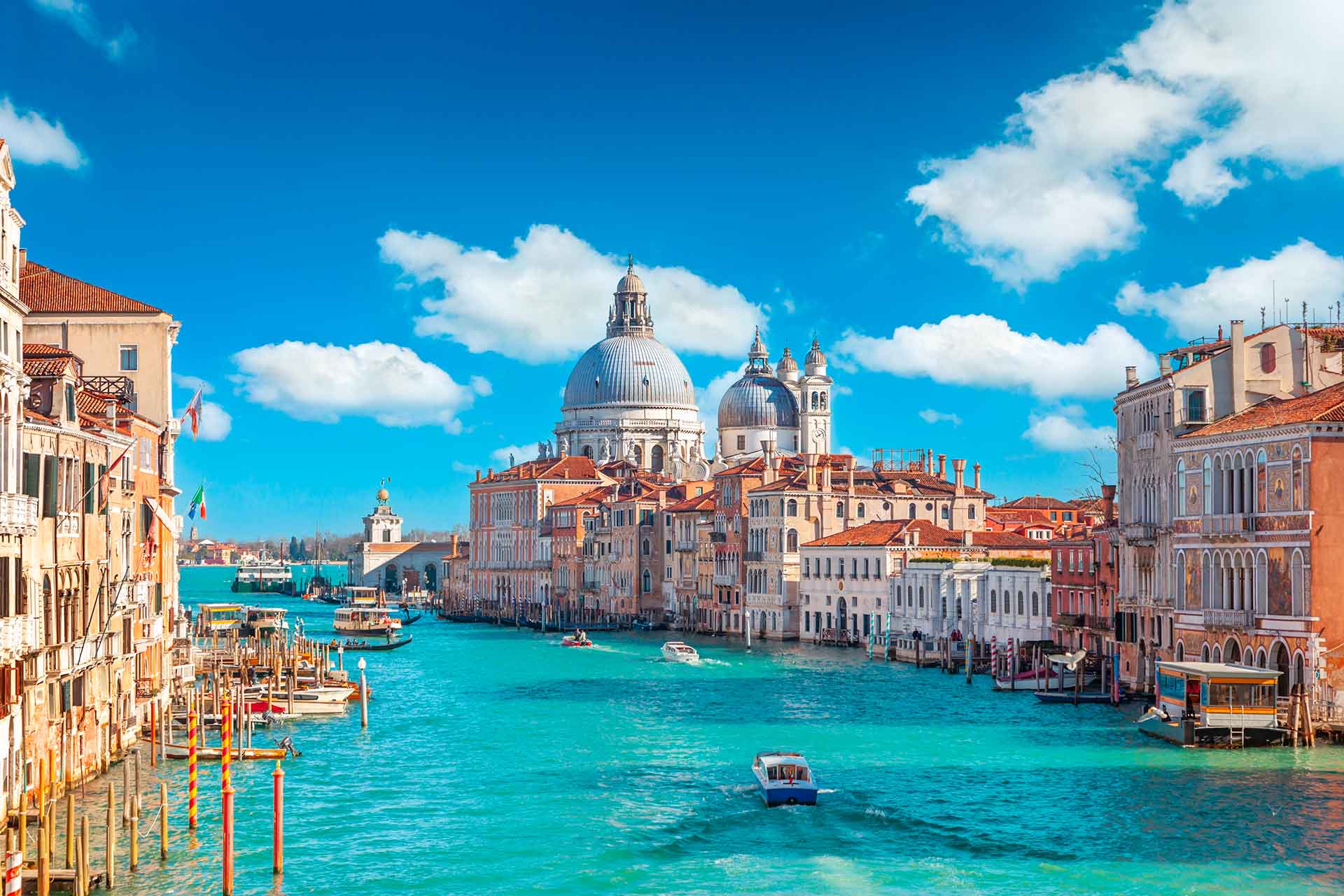
Italy
A 2-year Italian residence permit under the Investor Visa for Italy program is issued to citizens from non-EU countries who invest at least:
- EUR 250 000 EUR in a local startup;
- EUR 500,000 in Italian companies;
- EUR 1,000,000 in charitable organizations;
- EUR 2 million in government bonds.
If the investment is maintained, the residence permit can be renewed for 3-year periods. After 5 years of residence in Italy, applicants may apply for permanent residency, and after 10 years, citizenship.
The process for obtaining an Italian residence permit through investment is relatively straightforward. First, the applicant receives an investor visa and enters Italy. Then, they apply for a residence permit within 8 days.
Advantages of the Italian program:
- Exemption from state fees for applying for an investor visa.
- Fast application processing: a decision is issued within 30 days.
- Low state fees for applying for a residence permit (around EUR 100).
- There is no need to live permanently in Italy: visiting the country once a year is sufficient.
- Tax optimization: You can pay a fixed tax on foreign income transferred to Italy for 15 years (EUR 100,000 per year).
- Family relocation: Children (including adults), spouses, and parents can receive residence permits along with the investor.
Disadvantages of the Italian Golden Visa include the high investment threshold, especially the EUR 2 million in bonds, which few choose. Additionally, the path to citizenship in Italy is long (10 years), and the country requires a minimum B1 level of language proficiency.
Switzerland
Switzerland does not have a residence permit program in exchange for investment. Instead, it offers a lump-sum taxation system for «purchasing» a residence permit.
Foreigners can obtain a residence permit in Switzerland if they:
- do not hold Swiss citizenship;
- have never lived in Switzerland or have been absent from the country for the past 10 years;
- do not plan to work in Switzerland;
- are obligated to pay annual taxes on their living expenses.
The minimum amount of taxable living expenses varies by canton. For example, in the Lucerne region, the cost is CHF 646,700 (EUR 704,435), while in Appenzell Innerrhoden it is CHF 400,000 (EUR 435,710). The tax is calculated using standard income tax rates. If you move to the Lucerne region, for example, and your living expenses total CHF 646,700, your annual tax would be CHF 180,768 (EUR 196,900).
The Swiss Investment Program provides a payment in exchange for the right to reside in Switzerland. For many, this option is easier than relocating for work or business.
Foreigners are issued Swiss residence permits, the validity of which must be clarified during the application process. After 10 years, one can apply for permanent residence, followed by Swiss citizenship. Those who have met the integration requirements and have learned English, German, French, or Romansh (with spoken skills at no lower than the B1 level and written skills at no lower than the A2 level) are eligible for a passport.
The program is ideal for wealthy individuals with passive income because it requires an annual investment in the Swiss budget. In the absence of a «golden visa», this option is popular among celebrities, athletes, and wealthy individuals. However, for many, the barrier of hundreds of thousands of euros remains too high, so they prefer more affordable European programs.
France
In France, the «Carte Talent» investor residence permit is issued for up to four years and is renewable. To qualify, you must:
- Invest at least EUR 300,000 in a local business.
- Confirm your intention to maintain (or create) jobs for 4 years.
A person applying for residency through investment can be joined by their spouse and children. They will be eligible to work and conduct business in France.
First, program participants receive a special long-term «Business Investor» visa at the French embassy or consulate. After entering the country, applicants apply for a residence permit online through the General Directorate for Foreigners portal. Investors are then issued a preliminary approval certificate, which is equivalent to a French residence permit. The final step is a personal visit to the prefecture (city administration office) to obtain the permit.
After 5 years of residence in France, participants can apply for permanent residency or French citizenship.
Residence permits under the Talent Passport program are available to investors and the following individuals:
- highly qualified employees of innovative French companies with a monthly salary of at least EUR 3,300;
- startup founders with a monthly personal allowance of at least EUR 1,801.80.
You don’t need to launch your own startup in France; you can become a partner in a company that has already been approved by the French government. iWorld specialists will explain all program details and provide assistance throughout the residence permit process.
- Let’s check if you meet the criteria
- Let’s evaluate the chances based on your profile or project
- Let’s figure out the best format: business or startup
Andorra
Immigration to Andorra is possible through investment in this tiny principality between France and Spain. Foreigners receive a 2-year residence permit under the Passive Residency of Andorra program if they:
- Invest at least EUR 600,000 in real estate, a local business, or securities; or open an interest-free deposit with the Andorran Financial Authority (l’Autoritat Financera Andorrana — AFA).
- Pay a non-refundable fee of EUR 47,500 to the AFA (plus EUR 9,500 for each accompanying family member (spouse and children).
- Provide proof of an annual income of at least EUR 52,104.
- Commit to residing in Andorra for at least 3 months each year.
- Own or rent housing in the country.
- Undergo a mandatory medical examination and provide a vaccination card.
The first Andorran residence permit is valid for 2 years. The second permit is valid for up to 3 years, and subsequent permits are valid for 10 years. After residing in Andorra for 20 years, you can apply for citizenship, provided that you renounce your current passport.
Investors choose Andorra for its safety, pleasant environment, and high quality of life. It is a suitable country for those who value privacy and seek European residency rights. Although Andorra is not an EU member, residence permit holders can travel visa-free to Schengen countries for up to 3 months.
While a EUR 600,000 investment is significant, the cost of living and tax burden in Andorra are lower than in neighboring countries. For example, income and corporate tax rates are among the lowest in Europe at 10%. In any case, this program is designed for patient investors who value financial optimization and quality of life over expediency in obtaining a passport.
Residence permits for investment in Asia, the Middle East, and Oceania
Golden Visas aren’t limited to European countries. Alternatives exist in Asia, the Middle East, and Oceania. For instance, Malaysia offers the MM2H (Malaysia My Second Home) program. Residence permits are issued for 5, 15, or 20 years upon placing a fixed deposit (from USD 150,000) and purchasing real estate.
Singapore Global Investor Programme (GIP) offers a route to permanent residency through significant investment. Applicants may qualify by investing at least USD 7,705,650 in a local business. Alternatively, they can invest at least USD 19 million in an approved investment fund or USD 154 million through a Single Family Office.
Qatar offers residence permits to those who purchase real estate worth at least USD 200,000. Permanent residency is possible if the property is worth more than USD 1 million.
Saudi Arabia has a Saudi Premium Residency program. Purchasing real estate worth at least USD 1,066,680 will earn you a residence permit valid for the duration of your ownership. Permanent residency is granted to individuals who establish a business in the country and invest at least USD 1.87 million.
10 countries in Asia, the Middle East, and Oceania are competing for wealthy expats by offering long-term residency in exchange for investment:
| Country | Minimum investment, $ | Residency validity, years |
|---|---|---|
| Turkey | 200,000 | Up to 2 |
| UAE | 544,600 | 5 or 10 |
| Bahrain | 530,500 | Lifetime |
| Thailand | 20,000 | 5 |
| Indonesia | 130,000 | 5 |
| Vanuatu | Varies (case-by-case) | Determined individually |
| Malaysia | От 150 000 | Up to 5 |
| Singapore | 7 705 650 | Lifetime |
| Qatar | 200 000 / 1 млн | 1 / Lifetime |
| Saudi Arabia | Approx. 1,000,000/ 1,900,000 | Varies/ Lifetime |
Turkey
Although Turkey is an EU partner country and a member of the Council of Europe, 97% of its territory is geographically in Asia. For this reason, we’ve included it in this section. For many foreigners, Turkey has become the number one destination for quick relocation.
Anyone who purchases real estate in Turkey valued at at least USD 200,000 can obtain a residence permit valid for up to 2 years. When choosing a property, consider the following:
- Location: You can only purchase real estate in areas approved by the authorities (currently, 1,169 regions are closed due to the high density of foreigners).
- Area: The total area cannot exceed 30 hectares, even if there are multiple properties in different cities.
- Purpose: Only residential property is suitable.
After selecting a property, you must also:
- Obtain insurance for the entire duration of the residence permit.
- Confirm that you have sufficient income (at least USD 620 per month).
- Register with the National Electronic Notification System (Ulusal Elektronik Tebligat Sistemi — UETS).
Your residence permit will be extended as long as you own and live in the property. You cannot rent out the property. If you share ownership with your immediate family members (spouse or children), they can also obtain a residence permit.
After 8 years, you can apply for permanent residency. You can obtain a passport more quickly after 5 years, but you must prove financial solvency and demonstrate proficiency in Turkish. Turkey also offers a citizenship-by-investment program: you must purchase real estate worth at least USD 400,000. iWorld specialists can help you obtain a Turkish residence permit or passport through investment. Schedule a consultation to determine the best program for you.
Want to calculate your investment for a Turkish residence permit?
- We will select the investment format
- We will assess the budget and timing based on your situation
- We will answer questions about residence permits and citizenship
- We provide turnkey support — from selecting a property to obtaining status

Leave an application and get a consultation specialist
The UAE
The United Arab Emirates launched the Golden Visa program in 2019. You can receive a 10-year residence permit by investing at least AED 2 million (USD 544,600) in an investment fund. You can also invest this amount in an existing UAE company. Another option is paying an annual tax of AED 250,000 (USD 68,100) to the UAE government.
You can obtain a 5-year residence permit by investing:
- at least AED 2 million (USD 544,600) in real estate;
- at least AED 500,000 (USD 136,150) in your own startup.
By investing in the UAE, you will immediately receive a long-term status that does not require annual renewal. Your loved ones, including children of any age and your spouse, can relocate to live with you.
The Emirates offer a high quality of life, access to reliable banking, asset management, no income tax, and a comfortable business environment. That’s why both investment and business relocation options are popular in the UAE. Investors don’t need to reside in the UAE permanently to maintain their residence permit, allowing them to use it as a backup plan.

Bahrain
The Bahraini government has launched the Golden Residency Program, which offers permanent residency to real estate owners with a minimum value of USD 530,500. You don’t have to purchase a single property; you can own multiple properties, with their combined value taken into account.
The investor’s immediate family members, including their spouse, children, and parents, can also relocate to Bahrain. However, each family member will need to pay an additional government fee of approximately USD 810.
Advantages of the Bahraini Golden Visa include processing applications within 5 days and maintaining permanent residency without the need to reside in the country continuously. One disadvantage is the high investment threshold.
Thailand
Thailand doesn’t have a traditional residency by investment program. Instead, it operates a special initiative called the Thailand Privilege Card Membership. It was developed by the private company Thailand Privilege Card Company Limited in collaboration with the Thailand Tourism Authority.
It isn’t exactly a permanent residence permit but rather a long-term visa program for privileged residents. Foreigners pay a voluntary membership fee to join the Thailand Privilege Card Membership club and obtain Thai residency. The visa’s validity period depends on the amount of the fee:
| Membership fee, $ | Visa validity, years |
|---|---|
| 20,000 | 5 |
| 46,255 | 10 |
| 77,100 | 15 |
| 154,200 | 20+ |
Advantages of the Thailand investment program:
- Fast processing time: 1-3 months.
- No residency requirements: enter and leave whenever you like.
- VIP status, which includes additional services such as expedited passport control, concierge services, and medical checks.
One downside of the program is that it issues only a visa, not a temporary or permanent residence permit, and does not lead to citizenship. The Thailand Privilege Card is popular among retirees, freelancers, and entrepreneurs from developed countries who value premium service and need a «backup» plan for relocation.
Indonesia
Indonesia offers several types of investment visas:
| Visa type | Description | Minimum investment, $ | Residence period, years |
|---|---|---|---|
| Е28А | Purchase of shares in an Indonesian company | 597,700 | 1 or 2 |
| E28B | Incorporation of a company in Indonesia | 2,5 million / 5 million | 5 or 10 |
| Е28С | Purchase of government bonds or shares in a publicly listed company | 350,000 / 700,000 | 5 or 10 |
| E28D | Establishment of a branch or subsidiary | 25 million / 50 million | 5 or 10 |
| E28F | Establishment of a new company | 5 million / 10 million | 5 or 10 |
| Е28G | Relocation as a representative of a subsidiary and incorporation of a new company in Indonesia | 25 million / 50 million | 5 or 10 |
In addition to Golden Visas, Indonesia offers a Second Home Program that provides a 5-year residence permit. To qualify, you must meet one of the following conditions:
- Deposit at least USD 130,000 into an account at a state-owned Indonesian bank.
- Purchase real estate in the country worth at least USD 1 million.
Second Home essentially replicates the «financially independent resident» model: an individual invests in Indonesia and, in return, receives the right to live there long-term. Participants cannot work, but they can engage in investment and business activities. After 5 years, participants may apply for permanent residency, and after another 5 years (for a total of 10 years), citizenship.
Advantages of the Second Home program include a low investment threshold, the possibility of returning the money (by withdrawing the deposit or selling the property), and a long visa validity period. Disadvantages include a long and arduous path to citizenship. In addition to 10 years of residence, to obtain a passport, you must meet integration requirements (having perfect knowledge of the Indonesian language and the country’s history).
Vanuatu
Vanuatu is an island nation known for its Citizenship by Investment program. However, the country also offers a residency option through property rental. To obtain a Vanuatu residence permit through investment, you must:
- rent a property worth at least USD 82,000;
- prove a monthly income of at least USD 2,050.
The validity period of the residence permit is determined on a case-by-case basis.
Vanuatu’s citizenship-by-investment program has more transparent terms. A person who donates at least USD 130,000 to support the country’s economy and infrastructure may be eligible for a second passport. Therefore, most investors prefer to avoid the time and expense of obtaining a residence permit and pursue citizenship directly.
Residency by investment programs in North and South America
Many countries in North and South America offer attractive residency by investment options. The United States and Canada have stricter investor requirements and higher minimum capital requirements, but permanent residency is granted immediately after the funds are invested. In Latin American countries, the programs are more straightforward, and investors typically obtain a residence permit.
| Country | Minimum investment, $ | Residency validity, years |
|---|---|---|
| USA | 800,000 | Indefinite |
| Canada | From 1,400,000 | Indefinite |
| Panama | 99,940 / 349,800 | 2 / Indefinite |
| Paraguay | 70,000 | Indefinite |
| Brazil | 94,400 | Indefinite |
| Argentina | 1,000 | Up to 3 |
| Uruguay | 543,600 | Indefinite |
| Chile | 500,000 | Up to 2 |
USA
The United States offers the EB-5 Immigrant Investor Program, which allows investors to obtain permanent residency (a «green card») for themselves and their dependents, including their spouse and unmarried children under 21. To qualify, you must:
- Invest at least USD 800,000 in a business located in a rural area or an area with high unemployment, or USD 1,050,000 in other areas.
- Create full-time jobs for at least 10 qualified employees (citizens and/or residents).
Initially, investors receive conditional permanent resident status for two years, after which they can apply for a permanent residence permit. The EB-5 program offers a direct path to U.S. citizenship, allowing investors to apply after 5 years.
Advantages of the EB-5 visa include family immigration and the opportunity to live, work, and study in the United States. Disadvantages include a high investment threshold, lengthy processing times (2-3 years), and the risk of losing capital due to unsuccessful investments.
The U.S. also offers another investor visa: the E-2. However, it is non-immigrant, meaning it does not lead to permanent residence or citizenship. There is no investment threshold, and the status is granted for two years and can be renewed periodically for the same period. Participation in this program is limited, however, as there is a strictly defined list of partner countries.
Today, the U.S. government is planning to launch a new program: the Trump Gold Card. Under the program, a permanent residence permit will be issued upon investment of at least USD 1 million. The project has not yet launched, and authorities are accepting only preliminary applications.
Canada
In 2024, the Canadian government reopened the Quebec Immigrant Investor Program (QIIP). Successful applicants receive permanent residency. To participate, they must:
- Enter into an investment agreement with an accredited financial intermediary, which will manage the funds on the investor’s behalf and oversee the entire process.
- Demonstrate at least 2 years of management experience acquired within the 5 years preceding the application date.
- Provide evidence of a net worth of at least CAD 2,000,000 (approx. USD 1,426,070).
- Prove an education level equivalent to a Québec secondary school diploma.
- Demonstrate French proficiency at the B2 level (a certificate issued no more than 2 years prior to the application is required).
- Pass an integration test.
- Invest at least CAD 1,000,000 (approx. USD 713,035) and make an additional contribution of CAD 200,000 (approx. USD 142,600) to Investissement Québec Immigrants Investisseurs Inc.
The investor must reside in Quebec for at least one year and work within 2 years of receiving the residence permit. This employment period may be split, with the main applicant working for 6 months and their spouse or partner working for the remaining 6 months.
Alternatively, the Start-Up Visa Program offers Canadian permanent residence. This option does not require a significant personal investment but does require a promising business idea or startup and support from a Canadian accredited venture capital fund, angel investor, or business incubator. Applicants must demonstrate sufficient funds to support themselves in the country, starting at CAD 15,263 (USD 10,800) per person. This amount increases depending on the number of family members immigrating.
Participants can apply for Canadian citizenship after living in the country for at least 3 of the last 5 years.
Latin America
Immigration programs for investment in Latin American countries typically have simpler requirements and are more affordable.
Panama. This financial hub in Latin America offers a 2-year residence permit upon opening a deposit of at least USD 299,800 or purchasing real estate valued at that amount. Investors can also contribute at least USD 159,900 in a local business or USD 99,940 in forestry. After 2 years, investors can obtain permanent residency. However, investing USD 349,800 in forestry immediately grants permanent residency. After 5 years, permanent residents can apply for Panamanian citizenship.
Paraguay. Until 2022, Paraguay granted permanent residency through a bank deposit of at least USD 5,000. The rules have changed, and the SUACE program is now in effect. Under this program, investors must register a business and invest USD 70,000. Investors receive permanent residency status, which must be renewed every 10 years. After 3 years, they can apply for citizenship.
Brazil. It offers residence permits to real estate investors, starting at USD 132,170 for properties in the North or Northeast regions and at USD 188,811 elsewhere. Another option is to invest at least USD 94,400 in a local or innovative business. Investors initially receive a Type IX visa valid for one year. Upon arrival in Brazil, they are granted permanent residency. After 4 years, they can apply for a passport.
Important note: If you have a child while living in Brazil, the child will automatically become a citizen, and you will be eligible for accelerated naturalization. This applies to both investors and other who come to Brazil.
Argentina. In Argentina, a special residence status is available to foreign nationals who carry out commercial or economic activities in the country using their own capital. This type of residency is initially granted for 2 months and can be renewed indefinitely. There is also a residence option for applicants who invest in local companies. The minimum investment starts from ARS 1.5 million (approximately USD 1,000). This status is granted for up to 3 years and can also be renewed. After 2 years of legal residence in Argentina, applicants may become eligible to apply for an Argentine passport.
Uruguay. Permanent residency in Uruguay is granted to those who invest at least USD 2.3 million in a local business or purchase real estate worth at least USD 543,600. Citizenship can be obtained after 3 years.
Chile. Chile issues residence permits to investors who invest at least USD 500,000 in local companies. After 5 years, you’ll be eligible to apply for citizenship.
How to choose the best residence permit by investment program
Investor immigration programs are available on every continent. In Europe, for example, you often need to invest less money, but in return, you can receive more benefits, including EU citizenship after a few years of residence. Asian and Middle Eastern countries typically require significant investments but offer quick decision-making and no obligation to reside permanently in the chosen country. American programs are either expensive (in the USA and Canada) or have less global impact (in Latin America).
Before choosing an investment program, investors should define their objectives: obtaining a second citizenship in the future, securing temporary or permanent residency, relocating to another country, or establishing a reliable «Plan B». Below, we outline the main criteria to consider when selecting a program.
Those who decide to obtain a residence permit abroad in exchange for an investment should carefully select a program based on the following:
- Budget. Consider the principal investment amount, taxes, non-refundable contributions, and state fees for due diligence, application processing, and residence permit issuance and renewal. Based on these criteria, Malta is the most advantageous program in Europe; the United Arab Emirates (UAE) and Turkey are the most advantageous options in Asia and the Middle East; and Argentina is the most advantageous program in the Western Hemisphere.
- Goals. Determine which investment option will best suit your goals. If you’re ready to launch or co-found a startup, consider France, Canada, or Italy. Want to buy real estate? Consider Greece, Cyprus, Malta, Turkey, the UAE, or Bahrain.
- Duration. Most programs grant residence permits valid for 1-5 years, which must be renewed periodically. If you want permanent residency, consider programs in Malta, Cyprus, Singapore, the United States, Canada, or Brazil.
- Residency requirements. Typically, you must physically reside in the country to maintain the validity of your temporary or permanent residence permit. However, investment programs in Portugal, Italy, the UAE, Bahrain, and Thailand have more lenient conditions.
- Benefits of residency in a particular country. Consider what your status will provide beyond the permit itself. These benefits could include preferential taxation (Malta and Italy), ease of doing business (Singapore and the UAE), or visa-free travel (Europe).
- Duration of the temporary/permanent residence permit-citizenship process. For those seeking a second passport, the total length of residence and additional naturalization requirements are important factors. In Italy, for example, you must have lived there for 10 years, whereas in Turkey it’s only 5.
Ultimately, choosing a program to obtain a temporary residence permit requires balancing cost and value. If you need help deciding, you can contact iWorld specialists. They will select several suitable countries based on your profile and preferences, outline all requirements, and .
The application process: the main steps
The process for obtaining a residence permit through investment varies by country but generally consists of 8 stages:
- Select a country and program.
Select a residence permit based on your goals and budget, and review the terms and conditions. iWorld specialists can help you make your decision. They offer several options and verify your eligibility. - Document preparation and Due Diligence.
Gather documents such as passports, police clearance certificates, and bank statements. Submit these documents to lawyers for a preliminary due diligence check. The lawyers will use this information to identify and resolve any red flags or controversial issues before submitting your application. - Choose and reserve an investment asset.
If there are multiple options, sign a preliminary agreement. This may involve making a down payment on real estate or drafting a letter of intent for a donation. Sometimes, you must invest the entire amount upfront before submitting your application. - Submit the application.
Contact a licensed agent and provide all necessary documents. Alternatively, you can submit the application yourself, depending on the country. At this stage, you will pay government fees for review, due diligence, and, in some cases, for issuing a temporary or permanent residence permit. - Wait for a decision.
The government agency processes the documents and checks the applicant against international databases. If necessary, the applicant is invited for an interview. If you are approved, you will receive preliminary approval. The time frame varies by country. For example, it may take a few days in the UAE, a couple of months in the EU and Latin America, and a year or more in the US and Canada. - Make the investment and obtain the residence permit.
You must make the investment. For example, you must transfer the remaining funds for the property and register the title deed. Once this is complete, supporting documents will be issued to obtain a residence permit. Usually, the residence permit must be obtained in person at a country’s consulate or embassy by submitting biometric data. - Maintain and renew the status.
It is important to monitor the validity of your residence permit and renew it regularly. You must comply with the program conditions, which include maintaining your investments, meeting any residency requirements, and not violating any laws. - Obtain permanent residence and citizenship (optional).
Once all legal requirements have been met, the investor may apply for permanent residence or a second citizenship, if desired. Sometimes, it is possible to skip the permanent residence process and apply for a passport immediately.
Obtaining a residence permit by investment with the help of lawyers
Relocating and obtaining a residence permit through investment is a complex legal process that requires careful attention to detail. Each country has its own requirements, and navigating the process can be challenging. One misstep can cost a significant amount of money. Therefore, many investors turn to iWorld, whose specialists can:
- Select the program that best aligns with your goals and budget.
- Prepare all required documentation in accordance with official standards. This includes compiling a complete application package, arranging translations, and handling legalization and apostille requirements.
- Conduct a preliminary eligibility review to identify potential issues that could result in refusal.
- Coordinate the investment process, including assistance with opening a bank account, transferring funds, and signing a preliminary agreement.
- Liaise with the authorities, submit the application, provide additional documents upon request, respond to inquiries, and monitor the case status.
- Provide post-approval support, including assistance with renewing or extending your status, and clear guidance on next steps.
- Offer legal representation, including filing appeals and representing your interests before commissions or in court.
Legal support is key to successful immigration, providing competent assistance at every stage.
Any questions?
Ask them for free to an immigration lawyer