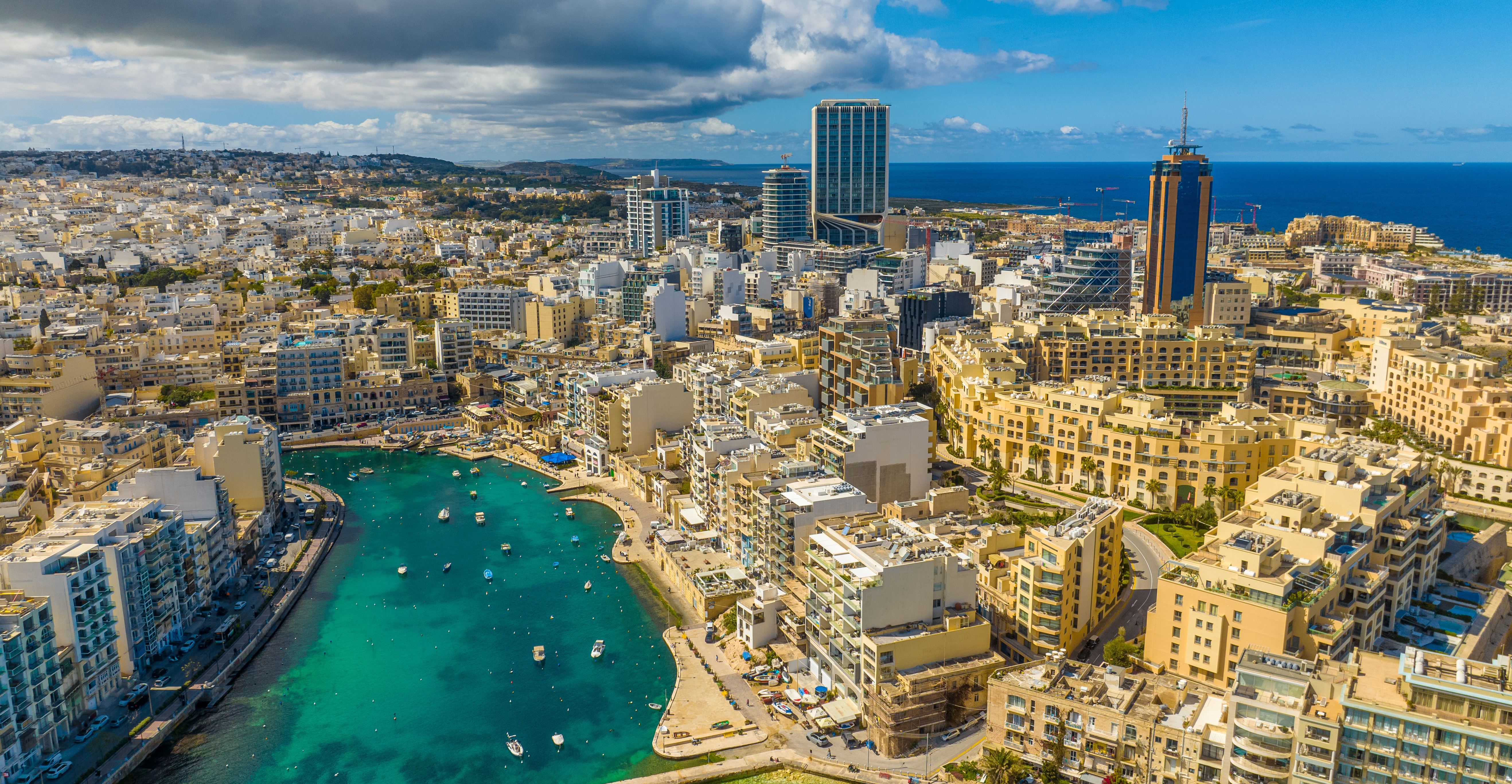
Starting in 2026, Malta offers the opportunity to obtain residency by investment through the purchase or rental of real estate. The Malta Global Residence Programme provides this option along with preferential tax treatment. Residence permits can be obtained for the entire family, and such residents may later apply for Malta citizenship.
Malta Global Residence Programme: residency by investment in real estate
The Malta Global Residence Programme (also known as the Malta Golden Visa) is Malta’s official government program, launched in 2013 and continuing in 2026. Any foreign national who does not hold citizenship in the EU, the European Economic Area (EEA), or Switzerland can apply.
The program is designed for investors who want to obtain Malta residency by investment in real estate, take advantage of the government’s tax incentives, and travel visa-free within the Schengen Area. Key benefits of the program:
- Preferential taxation. A flat rate of 15% applies to all worldwide income remitted to Malta, instead of the standard 0-35%. The minimum annual payment is EUR 15,000. If the investor receives income within Malta, the tax rate is 0-35%.
- Residence registration. Participants in the program can obtain residence permits for themselves and their family members to legally settle in Malta. Malta residents have the right to freely travel to other Schengen Zone (SZ) countries and stay for up to 90 days every 180 days. If necessary, they can obtain a work permit.
- Right to renewal. A residence permit for Malta is usually issued for 1 year when purchasing real estate, but it can be extended. After 5 years, you can receive a permanent residence permit and apply for citizenship. In other European countries, however, you can obtain a residence permit for 5 years or immediate permanent residence through real estate purchases.
A mandatory condition for participating in the program is purchasing or renting real estate in Malta, which costs at least a certain amount. However, there are additional requirements:
- Not receiving benefits under the country’s other special immigration programs (e.g., the program for pensioners).
- Have an income: it is important to be able to fully provide for yourself and your family without social benefits, though a specific minimum threshold has not been established.
- Take out health insurance that covers risks throughout the EU.
- Have a valid passport.
- Be fluent in one of Malta’s official languages, English or Maltese.
- Spend at least 183 days a year in Malta to maintain tax residency.
- Have no criminal record.
Residency in Malta when purchasing real estate
The cost of housing in Malta is slightly higher than in Spain, Greece, Italy, or Cyprus. However, the country attracts people with the opportunity to obtain a residence permit and tax benefits simultaneously. Additionally, Spain closed its «golden visa» program in 2025, and Portugal stopped issuing residence permits for real estate investments even earlier. Consequently, investors have become interested in programs offered by other countries, including Malta.
Apply for a Maltese residence permit and unlock new opportunities
- Life in a developed country
- Residence permits for all family members
- Prospects for obtaining permanent residency and citizenship

Leave an application and get a consultation specialist
Minimum property value
The minimum cost of real estate required for a residency in Malta varies by region:
- EUR 220 000 for the island of Gozo and southern Malta;
- EUR 275 000 for the rest of the country.
If you purchased a property before 2013 for less than the required amount, you can still participate in the program. To qualify, you must obtain an appraisal from an architect stating that, at the time of submitting the application, the property’s value is equal to or greater than EUR 220,000/275,000, depending on the region. The cost can increase with high-quality repairs and extensions, for example.
The average price of an apartment in the city center is about EUR 3,894 per square meter, and in residential areas, it is about EUR 2,947 per square meter. Villas usually start at EUR 1.4 million and cost approximately EUR 2.567 million.
Additional costs
When purchasing real estate in Malta, you will need to pay the following:
| Expense item | Amount or rate |
|---|---|
| Stamp duty | 5 % |
| Notary fees | 1–3 % |
| Registration fees | €600 |
| Authorization to purchase property by non-residents (AIP) | €233 |
For example, if the purchase price of the apartment is EUR 275,000, an additional EUR 17,333 is required. Buyers do not pay real estate tax.
The administrative fee for Global Residence Programme participants is EUR 6,000. For real estate purchased in southern Malta, the fee is EUR 5,500.
Insurance for 1 year costs approximately EUR 500–2,000. All family members included in the investor’s application must also have the policy.
Additional costs are required for direct residence permit registration. Submitting a request for residency and a long-term visa costs EUR 250, plus lawyer, notary, and translator fees.
According to the program’s terms, investors must also pay an annual tax of at least EUR 15,000. If these conditions do not suit you, consider residence permit programs for real estate in Greece or Cyprus. These countries are also EU members, and their residents can travel freely within the Schengen area.
Limitations
The property in which you invest can only be used for personal residence when applying for the Malta residence program. Only service personnel whom you are entitled to hire under the program’s terms may live with your family in the apartment or house, in line with your residency rights.
If the property is sold or rented out, the investor will lose their tax benefits and residence permit, including favorable taxes in Malta. The status may also be revoked if the individual obtains permanent residence, resides in the country without valid insurance, spends more than 183 days outside the state, or violates local laws.
Malta residency for rental housing
Renting a home allows you to participate in the Global Residence Programme and receive tax benefits and a residence permit. The residency visa is valid as long as you rent a house or apartment. However, you can change housing — the main thing is that the rental price complies with legal requirements.
Minimum rental amount for Maltese property
You can obtain a residence permit in Malta by renting real estate that costs:
- EUR 8,750/year for Gozo and southern regions;
- EUR 9,600/year for other regions of the state.
Subletting is allowed, and the contract does not have to be signed directly with the owner.
A long-term property lease in Malta is typically concluded for a minimum of 1 year and may grant the right to reside in Malta. Tenants can terminate the agreement no earlier than 6 months after the start of the contract, provided they give at least 1 month’s notice. If the contract is signed for 2 years, it may be terminated after 9 months of residence; for a 3-year contract, termination is possible after 12 months. The homeowner is required to register the rental agreement with the Housing Authority within 10 days of signing.
To obtain a residence permit, you need a Special lease agreement confirmation form, which can be downloaded from the Identità website. The document contains the owner’s and tenant’s details, as well as the lease agreement number. Both the contract and the form must be certified by the same notary, lawyer, or prosecutor.
If you move and sign a new lease, you must fill out a new form and notify the authorities of your change of address. However, if the contract is simply extended or the cost of living changes, there is no need to inform the authorities.
The average monthly rental prices in Malta are EUR 925 for a one-room apartment and EUR 1,526 for a 3-room apartment.
Property purchase differences
It is easier to get residency in Malta by renting property. You need less money, and the lease agreement is signed in one day. You receive the same benefits. Additionally, investors have greater freedom and can periodically change their place of residence by renting new apartments or villas.
The main risk is that the landlord may break the contract. In this case, it is important to find new housing quickly to avoid losing residency and tax benefits. Also, real estate costs may periodically increase. For example, from 2022 to 2024, the price of 2-room apartments in Malta increased by more than 28%.
Renting is more suitable for those seeking residency for tax benefits and to travel around Europe, but don’t plan to invest a lot of money in Malta. Many people choose this option to get to know the country firsthand before buying their own home. In this case, you don’t need a new residence permit — just notify the authorities of your new address with a purchase and sale agreement.
Buying or renting: which residency program should you choose?
Participants in Malta’s Global Residence Programьу receive the same benefits when purchasing or renting a home. Therefore, the decision should be based on your budget, goals, potential risks, and other personal circumstances:
| Comparison criteria | Buying | Renting |
|---|---|---|
| Budget | From €220 000 + registration costs | From €8 750/year |
| Purpose | Living in the country and obtaining residency | Residency |
| Risks | Potential decrease in liquidity | Rising rental costs, lease termination |
| Liquidity | Property prices grow by approx. 6.88% per year | — |
Renting is the best choice for those who are not ready to invest large sums in Malta and want to explore the country and/or obtain local residency. Buying a home is a better option for those with a long-term strategy who plan to immigrate and want to invest in an EU country. In both cases, the investor will receive residence permit bonuses and tax benefits.
Who is eligible for residence by investment?
An investor may include the following in an application for a residence permit in Malta:
- a spouse or partner with whom they are in a long-term, stable relationship;
- minor children, including those of the spouse/partner;
- children under 25 years of age who do not work and cannot financially provide for themselves;
- children who are financially supported by the main applicant or his/her spouse/partner due to illness or other reasons;
- siblings, parents, or grandparents of the main applicant or his or her spouse or partner who are unable to support themselves.
Applicants of any citizenship are eligible to seek a residence permit in Malta for the purpose of renting or purchasing property for at least one year. However, the country conducts strict checks on applicants, including screening against sanctions lists and verifying the origin of funds, as part of its investment migration framework. In comparison, it is generally easier to obtain a residence permit in Turkey, as it is not part of the EU. Investing in Turkish real estate starting at USD 200,000 is sufficient, while an investment of USD 400,000 can secure second citizenship for the entire family.
Procedure for obtaining a residence permit
To obtain a residence permit in Malta, you must first acquire housing and participate in the Global Residence Programme. This will entitle you to apply for a visa and residency. The basic steps are as follows:
- Choose housing.
You can view advertisements on the Frank Salt and Property Market websites. It is advisable to contact a lawyer at this stage, especially if you are purchasing real estate. After all, you need to verify that the property is not being used as collateral and that there are no other owners. Next, the rights to the property are established: either a lease or a purchase and sale agreement.
Timeframe: 1–4 weeks. - Apply for the Global Residence Programme.
Applications must be submitted through an authorized agent. A list of authorized agents is provided on the Maltese government website. The agent fills out the application form on behalf of the applicant and submits it, along with the dossier, for review by the authorities. It is important to promptly pay the administration fee and include the receipt with your application.
Timeframe: around 3 months. - Request a residence permit.
Once you are accepted into the Global Residence Programme, you can apply for a residence permit directly. Submit the online application through the Expatriates Unit website. The service costs EUR 100. After verification, you will receive preliminary approval and information on further actions.
Timeframe: around 2 months. - Visa application.
Based on pre-approval, you must submit your visa application to the Maltese Consulate or Visa Application Centre. The cost of the service is from EUR 150.
Timeframe: up to 8 weeks. - Obtain a residence permit card.
Upon arrival in Malta, make an appointment at the Identità to submit biometric data and documents for the card. The applicant will be issued a temporary document allowing them to legally reside in the country. Once the card is ready, the applicant will receive a notification at their residential address containing a PIN code, allowing them to pick up the card at the Identità office without an appointment.
Timeframe: up to 7 days.
The following basic documents are required to obtain a Malta residence permit for real estate:
- 2 recent passport-size photos;
- receipts for payment of fees and duties;
- a copy of the international passport;
- birth certificates of each person included in the application, as well as marriage certificates;
- certificate of no criminal record;
- lease or sale agreement;
- insurance policy.
All application documents must be translated into English or Maltese. Documents issued outside of Malta must be apostilled.
Residence permit renewal and applying for the Malta permanent residency
The Global Residence Programme allows you to obtain temporary status, which is valid for 1 year and does not automatically grant permanent residence in Malta. However, you can extend your stay in the country by submitting an application to the Identità office 90 days before your residence permit expires. The service costs EUR 150.
You can obtain permanent residence after 5 years of legal residence in Malta. Additionally, you must take the ‘I Belong’ course and earn a score of at least 75%. You must also earn a certificate of proficiency in the Maltese language with a score of at least 65% at MQF Level. 2. The cost of obtaining permanent residence is EUR 500.
If you are looking to buy property for residency in Europe, it is worth considering other countries as well. Although the investment threshold is usually higher, you may receive more benefits from residency status. For example, in Cyprus, you need to invest EUR 300,000, and your entire family will immediately receive permanent residence. In Greece, you can invest EUR 400,000 in housing or EUR 250,000 in a property to be restored. A residence permit is issued immediately for 5 years.
Each investment program has its own advantages and nuances, so it is important to take personal goals and capabilities into account when choosing. To choose the best country to move to and optimize your taxes, consult migration specialists. They will explain the details of each program, help prepare and submit documents, and organize finances. Submit a request for a consultation to learn more about migrating to the EU and other countries.
Do you still have questions?
Ask them for free to a migration lawyer