
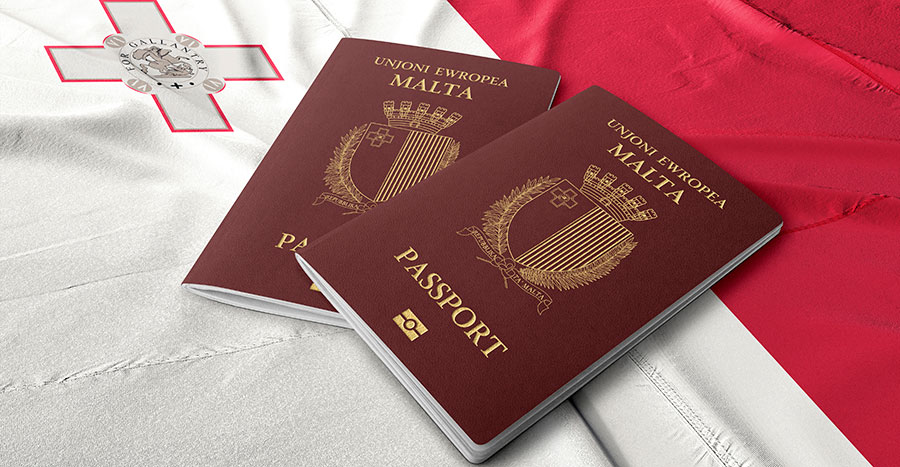
Maltese citizenship provides all the rights of an EU citizen. You can live, work, study, open a business, and travel visa-free in most countries worldwide. Dual citizenship is permitted, so foreigners can retain their current passport while obtaining a Maltese one.
It’s no surprise that Maltese citizenship has sparked a lot of interest. There are a variety of legal programs available, including standard naturalization after residing in the country for 5 years with a residence permit, as well as accelerated processing through descent, marriage, or exceptional merit. Following the 2025 reforms, the previously popular «golden passport» program was discontinued, but the main paths to obtaining Maltese citizenship remain available.
Advantages of Maltese citizenship
A Maltese passport provides its holder with the full range of EU citizen rights, simplifying employment, education, travel, and future planning:
- The right to live and work in any EU country. You can move freely to any EU country, work without a permit, start a business, and access healthcare and social benefits on the same terms as local residents. For example, tuition fees are typically discounted. This is one of the main reasons for obtaining a Maltese passport.
- Visa-free travel to over 170 countries. As of 2025, a Maltese passport will permit visa-free or visa-on-arrival entry into 172 countries worldwide, including those in the Schengen Area, the United Kingdom, the United States, Canada, Australia, China, and Japan. These benefits simplify business travel, tourism, and regular flights.
- Strong economy. Malta has a stable and developed economy (with a credit rating of A+ according to Fitch Ratings). It ranks among the top 9 European countries in terms of GDP per capita. This has a positive impact on business, the labor market (unemployment is only 3%), and the overall well-being of the population.
- High quality of life. The average salary in Malta is EUR 1,555, which is higher than in Estonia, the Czech Republic, and Portugal. People also move here for the warm, Mediterranean climate, which features mild winters and 300 days of sunshine per year. The local population speaks English, which makes it easier to adapt.
- State protection. Citizens have access to social assistance and consular protection while traveling abroad. If there is no Maltese representation in your country, you can also contact the consulates of other EU countries. Citizens cannot be deprived of their right to reside in Malta or be deported. This is an especially relevant advantage now, when many are facing restrictions due to political instability in their home countries.
- Easy access to business and finance. With a Maltese passport, it is easier to open bank accounts, register businesses, and purchase real estate in the EU. Foreigners usually need a residence permit for these activities.
- Citizenship for family and children. After obtaining Maltese citizenship, you can apply for it for your minor children. If a child is born after naturalization, they will automatically become Maltese citizens. Other family members can immigrate through family reunification and obtain citizenship after 5 years of residence. Maltese citizenship provides children and future generations with continued access to the rights of EU citizens, including the freedom to reside, study, and work.
- Dual citizenship. Malta does not require you to renounce your first citizenship. When traveling, you can use whichever passport best suits your needs. This is also convenient for businesspeople who conduct business in different countries and want to maintain their rights and ties to their homeland.
How to obtain Maltese citizenship
The updated Maltese Citizenship Act outlines several ways for foreigners to obtain Maltese passports:
- Merit: a Maltese passport can be obtained in approximately 1-3 years without a residency requirement if you or your activities will clearly benefit the country.
- Standard naturalization: requires 5 years of residency, proficiency in English or Maltese, and a clean criminal record.
- Marriage: a minimum of 5 years of living with a Maltese citizen, not necessarily within Maltese territory.
- Descent: a person must have Maltese roots, but they do not need to be a resident.
- Family reunification: Close relatives of Maltese citizens and residents receive a residence permit, the first step toward citizenship.
Malta previously had a citizenship-by-investment program. However, it was heavily criticized by the EU. For this reason, demand for the program decreased in 2020, as foreigners feared losing money without obtaining a Maltese passport. For example, 317 applications were submitted in 2020, while only 177 were submitted in 2022. Consequently, the program closed.
Nevertheless, it is still possible to obtain permanent residence in Malta through investment. To qualify, you must demonstrate savings of at least EUR 500,000, purchase real estate valued at a minimum of EUR 375,000, and make additional contributions and donations. After 5 years of residence, you can apply for naturalization. However, this is not the most advantageous offer for investors in Europe. For example, Portugal’s investment requirement is much lower, starting at EUR 250,000, and naturalization takes the same 5 years.
The requirements for each path to citizenship in Malta differ. Therefore, to help you understand the necessary application stages, the cost, and the time required, we will discuss them separately.
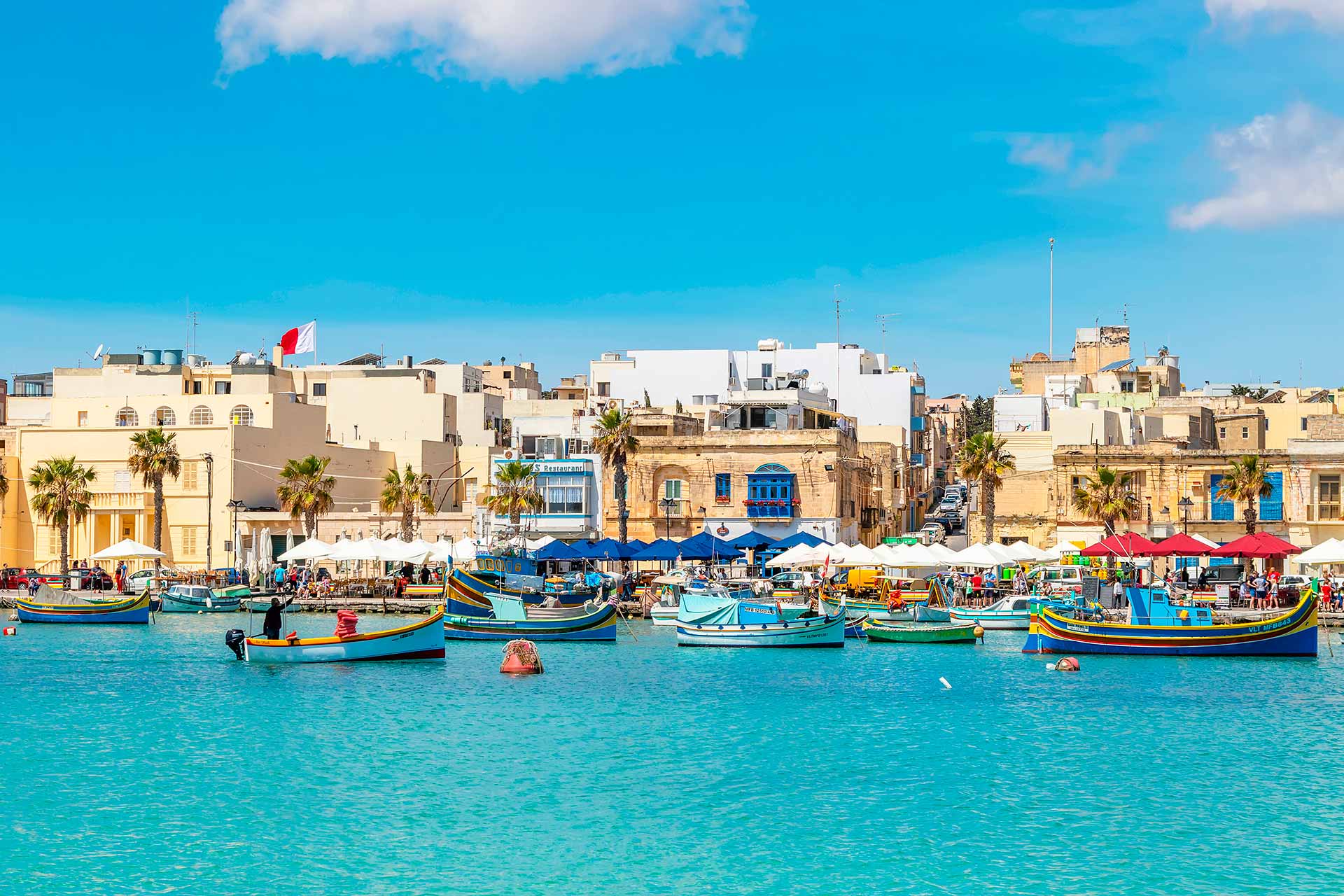
Maltese citizenship for merit (formerly the citizenship by investment program)
Until 2025, Malta offered a «golden passport» in exchange for investments of at least EUR 600,000. Following an EU court ruling and legislative amendments, however, the program was discontinued. Nevertheless, the law retains the possibility of granting citizenship based on merit, independent of direct investment.
Maltese citizenship may be granted for exceptional services or contributions to the country, including job creation. For example, citizenship may be granted to:
- scientists and researchers;
- athletes and sports figures (e.g., coaches);
- representatives of technical professions;
- cultural figures and artists;
- entrepreneurs;
- philanthropists.
Malta can grant passports to individuals with in-demand professions, such as technical professionals.
Investors who have brought exceptional benefits to Malta can also apply for citizenship, such as by creating a significant business in a priority sector and generating jobs. The law no longer sets minimum investment amounts. Instead, the assessment is based on the actual contribution and alignment with national priorities.
There are no additional requirements. You don’t need to prove residence or learn the language, as is required for naturalization. However, this isn’t an «easy» option. The applicant must prove an exceptional contribution, demonstrate a genuine connection to Malta, and undergo a multi-layered due diligence process (checking for criminal records, links to terrorism, and the legal origin of funds invested in the country’s economy).
Citizenship applications must be submitted directly to the Community Malta Agency (CMA) by the applicant, who will also be required to take an oath of allegiance. While the law no longer requires submitting documents through a licensed agent, many applicants still use the services of specialists to simplify the process and avoid complex bureaucracy.
After the application is approved, a citizenship certificate will be issued. There is no set timeframe for processing such requests, nor is there a fee for the application.
The terms and conditions offered by Malta to investors are rather vague, and granting citizenship in such cases is the exception rather than the rule. Meanwhile, other countries offer transparent and straightforward programs. For instance, Turkey requires an investment of USD 400,000 in real estate, and the process takes approximately 1 year. You can obtain a Vanuatu passport in just 2 months with an investment of USD 130,000. Other similar fast and affordable programs also exist in Caribbean countries.
Malta citizenship by naturalization (long-term residence)
Naturalization is the longest and most labor-intensive way to obtain Maltese citizenship. It is suitable for those who plan to live in Malta permanently, whether to work, run a business, study, or move their entire family. To apply, you must have lived in Malta for at least 5 to 6 years as a resident, and the entire process typically takes 7 years or more.
Naturalization requirements:
- age of majority;
- at least 5 years of residence in the country;
- sufficient proficiency in English or Maltese;
- no criminal record;
- owned or rented accommodation;
- two guarantors who can attest to your good character.
You don’t have to live in Malta for 5 consecutive years. However, it is essential to have spent at least 1 uninterrupted year here immediately before submitting your application. Before that, you must have lived in Malta for at least 4 years in the previous 6 years.
For example, imagine someone arrived in Malta in early 2018 and lived there for 12 months before returning to their home country in early 2019. They returned in 2021 and lived in Malta for another 4 years without interruption. In this case, they would be fully eligible for naturalization in 2025, even though their 5-year residence period included a 2-year break.
While you don’t need to prove your language proficiency through tests, you must have a sufficient level of English or Maltese to communicate effectively in everyday life. When submitting your application, you must confirm this by signing the appropriate form. You should also be prepared for an interview during the application process, during which you may be required to communicate in English or Maltese.
To apply, you need two sponsors. They must be adults, and relatives are not allowed. The first sponsor must hold an approved position such as judge, lawyer, notary, medical practitioner, or parish priest. The second sponsor’s profession is irrelevant, but they must have obtained Maltese citizenship by means other than naturalization (e.g., they must be a native Maltese citizen). The sponsors must confirm that the applicant lives in Malta, is well integrated into local life, and leads a law-abiding lifestyle.
List of documents required for naturalization in Malta:
- Application Form E: download the form from the CMA website.
- A recent passport-sized photograph.
- Birth certificate.
- Marriage certificate, if applicable.
- Passport and residence permit card.
- A police certificate of no criminal record.
- A work experience document from Jobsplus (the Maltese employment service).
- Lease agreement or title deed for the property.
- Residence certificate issued by the CMA.
- A letter outlining the reasons for naturalization.
If any of the documents are written in a language other than English or Maltese, they must be translated into one of these languages.
We will collect and prepare a package of documents as required by the European Union authorities
Naturalization stages
The standard naturalization process includes the following stages:
- Applying for a temporary or permanent residence permit.
Most applications for temporary residence permits are submitted through the Expatriates Unit portal. This applies to foreigners who plan to relocate for work, business, or study, for example. Special rules apply in some cases: digital nomads apply through portal.residencymalta.gov.mt, and those seeking permanent residence through investment contact a licensed agent. - Waiting for a decision and visa issuance.
The processing time for your application depends on the program that you are relocating under. For instance, labor migrants wait approximately 2 months, while students wait 3. If your application is approved, the authorities will issue a letter of approval in principle. This letter has limited validity, does not replace a temporary residence permit, and allows you to apply for a visa. The letter also contains a list of documents that must be submitted to the embassy/consulate. - Entering Malta and obtaining a residence card.
With the letter of approval in principle, you can schedule an online appointment at the CMA office. At your appointment, you must visit the government office to provide biometric data and have your photograph taken. After this, you will be issued a temporary permit, which allows you to live and work in Malta (if applicable) until your residence card is issued. Once the card is ready, you will receive a letter with a PIN and a request to return to the office. - Residing in Malta.
To become a naturalized citizen, you must reside in Malta legally and without interruption for 5 years. To qualify, you must renew your residence permit on time (you can obtain a new one on a different basis) and comply with local laws. It is important to pay your taxes regularly and avoid any violations that could compromise your credibility. You should also work on integrating into society by learning the language, making connections, and joining local community initiatives. These steps are necessary for the local sponsor to approve your naturalization. - Applying for naturalization.
First, apply to the CMA for a Residence Certificate, which confirms how long and on what basis you have resided in Malta. Then, submit the application itself, including information about your sponsor. After the application is approved, you will take the oath of allegiance. This service costs EUR 450. - Obtaining a citizenship certificate and internal documents.
After taking the oath, the new citizen is issued a naturalization certificate, a EUR 50 document. This certificate is used to issue an identity card and a Maltese passport. The Identity Department issues the internal passport free of charge. To obtain an international passport, contact the passport office. This service costs between EUR 70 and EUR 160, and processing takes between 4 hours and 4 business days, depending on the level of urgency selected.
Your minor children can also become naturalized citizens, but only after you do. To do so, you must submit a separate application using Form J.
A person can be stripped of citizenship within 7 years of naturalization. This can happen, for example, if they are convicted of a crime carrying a sentence of 12 months or more anywhere in the world. Permanent residence abroad for 7 years can also result in the deprivation of citizenship. To retain citizenship, you must notify the Maltese government of your intention to do so.
Citizenship, residence permits, or business relocation anywhere in the world
- Live freely and travel the world
- Expand the boundaries for your business
- Provide your children with an education at the world’s best universities

Leave an application and get a consultation specialist
Malta citizenship by marriage
Spouses of Maltese nationals can obtain citizenship after 5 years of registered marriage. Applications can be submitted even in the event of the death of the spouse, as long as the required period of cohabitation has been met at the time of application.
Citizenship by marriage can be registered through the CMA in Malta or at a consulate abroad. In this case, there are no residency, residence permit, or language requirements. Still, in many cases, the foreign spouse first obtains a residence permit based on marriage to a Maltese citizen and moves in with their partner. This status (Freedom of Movement) grants the right to live and work permanently in the country.
Required documents:
- Form B application: the form can be downloaded from the CMA website.
- A joint declaration by the spouses stating that they have lived together for 5 years.
- A recent passport-sized photo of the applicant.
- A marriage certificate registered in Malta.
- Previous marriage certificates of both spouses, if applicable.
- The applicant’s birth certificate, which must indicate the names of the parents.
- Passport, ID, or residence permit of the applicant and their Maltese spouse.
- The Maltese spouse’s birth certificate.
- Birth and marriage certificates of the Maltese citizen’s parents.
If citizenship is being applied for by a widow or widower, a death certificate for the spouse and 2 statements from the Maltese citizen’s relatives confirming that the couple lived together must also be attached.
Same-sex marriages have been recognized in Malta since 2014. Foreigners in same-sex marriages with Maltese citizens are eligible for residency and citizenship after 5 years.
Since 2010, if information about your marriage, birth, or death is available in the Maltese registers, these documents are no longer required with your application. However, to avoid delays and confusion, it is best to have them prepared.
Fraudulent marriages are grounds for rejecting citizenship applications. Therefore, the couple may be invited to an additional interview to confirm the authenticity of their relationship. Officials may verify how long you’ve lived together and how well you know each other, including your family histories. You can prove cohabitation with proof of address registration, utility bills, and shared travel (such as providing photos, visas, and tickets).
After your application is processed, you will be invited to the CMA or consulate to take the oath. You will then be issued a citizenship registration certificate, which you can use to apply for a Maltese passport.
The service costs EUR 150. An additional EUR 50 is required for the citizenship registration certificate. There is no legally specified processing time for your application.
Malta publishes the full names of all new citizens, both naturalized citizens and citizens who acquired citizenship through marriage, annually. is the main reason many foreigners choose other countries to obtain a second passport.
Maltese citizenship by birth or descent
The birth of a child in Malta does not automatically grant citizenship if both parents are foreigners. An exception would be if the child might become stateless.
If at least one parent was a Maltese citizen at the time of birth, the child acquires Maltese citizenship regardless of where they were born. Citizenship is passed down through both the father and the mother.
An adult can also acquire citizenship by descent: through registration. This right can be exercised in the following cases:
- A person was born abroad and was unable to inherit Maltese citizenship through their mother. Between September 21, 1964, and August 1, 1989, Maltese law prohibited women from transmitting their citizenship to children born abroad. To obtain citizenship, submit Form I.
- The applicant’s mother must have been born in Malta and either become a citizen or not acquired citizenship due to her death. Those born before September 21, 1964, can obtain a Maltese passport. To register for citizenship, submit a Form I application.
- The person lost their Maltese passport due to naturalization in another country and the ban on dual citizenship. When the ban was lifted in 2000, citizenship was automatically granted to native Maltese individuals who had lived outside of Malta for at least 6 years. If they spent less time in another country or acquired Maltese citizenship by naturalization/registration before losing it, they can apply for restoration independently using Form D.
- The individual’s ancestors were born in Malta. You can register as a Maltese citizen if one of your ancestors was born in Malta. It is important that this person’s mother or father was also born in Malta. The application is submitted on Form K or M.
Required documents in all cases:
- passport;
- a photograph;
- birth and marriage certificates, including those of parents.
Former Maltese citizens must also submit a certificate proving their current citizenship, a document renouncing their Maltese passport, or an explanation for not being able to prove 6 years of residency abroad. In all other cases, documents from the ancestors you refer to are required.
Citizenship by descent can be registered through the CMA or the consulate, where the oath ceremony is held.
The procedure costs EUR 150. An additional EUR 50 fee is required for the citizenship registration certificate.
Malta citizenship through family reunification
This is a naturalization option for individuals with immediate relatives living in Malta. However, being related to a Maltese citizen does not automatically grant the right to a passport. However, this path to citizenship is easier and quicker than employment or entrepreneurship.
There are 2 options for Maltese residency through family reunification:
- Family members of Maltese citizens are granted Exempt Person status, which allows them to permanently reside on the island and work freely. This status is available to spouses and partners over 21, children under 21, and parents and grandparents, provided that the Maltese citizen is willing to support them and resides in Malta. Applications are submitted through the Expatriates Unit portal.
- Relatives of Maltese residents can obtain a standard residence permit through family reunification. In this case, the resident acts as a sponsor and must prove income, housing, and health insurance. Relatives will be able to settle in Malta, but they will need a separate permit to work.
Family reunification is a convenient way to move to Malta if your loved ones are already citizens or residents. However, family reunification alone does not grant the right to a passport. It does, however, facilitate the process of obtaining a residence permit. After living on the island for 5+ years, you can apply for citizenship under the general terms and conditions.
- Quick assessment of the project and its chances
- Clear requirements and transparent deadlines
- A team with 15+ years of experience in European residence permits
Comparing options and choosing the best one
Which option is best for obtaining a second citizenship in Malta depends on your goals, family situation, finances, and willingness to relocate. For instance, if you have relatives living in Malta, the family reunification option would be easiest for you. If you’re interested in investing in Malta, you can choose the permanent residence permit for investors or the residence permit for startups.
The table below allows you to compare all the currently available options for obtaining a Maltese passport:
| Method of obtaining citizenship | Timeframe, years | Additional requirements | Application fee, € |
|---|---|---|---|
| Exceptional merit | No residence required | Demonstrated exceptional merit or special interest to the country | Not specified |
| Standard naturalization | 5 years | Valid residence permit (temporary or permanent); knowledge of English or Maltese | 450 |
| Marriage | No residence required | At least 5 years of marriage to a Maltese citizen | 150 |
| Registration by descent | No residence required | Proven special connection to Malta | 150 |
| Family reunification | 5 years | A close family member is a Maltese citizen/legal resident | 450 |
The cheapest way to obtain citizenship is through a process that doesn’t require prior residency. Naturalization involves higher costs, including processing fees for visas and residence permits, permit renewals, and residency in the country. There are also costs associated with preparing documents for submission, such as translation into English, notary fees, and legal assistance.
Many factors influence the choice of path to Maltese citizenship, including marital status, age, family ties, willingness to relocate, and financial means. In simple cases, such as legal descent or a long-term marriage to a Maltese citizen, you can often handle the process yourself. However, if you have a complex family history, disputed documents, or a combination of methods (e.g., permanent residence by investment + relocation + naturalization), it is advisable to consult an immigration specialist to avoid mistakes during the planning stage.
Any questions?
Ask them for free to an immigration lawyer