

Residency by investment in Europe is a type of European residence permit, obtainable in exchange for a financial contribution. Typically, foreign nationals are invited to purchase real estate, shares in companies or investment funds, or securities; finance their own business or startup; or make another type of investment.
After investing, investors acquire legal status in Europe, along with a variety of benefits, such as enhanced mobility, tax optimization, a backup place of residence, access to high-quality healthcare and education, entry into the European business market, and the right to apply for permanent residency and EU citizenship in the future. In most cases, a single application can cover the entire family. In other instances, family members may obtain residency through family reunification procedures.
Today, European investment programs are accessible to more than just millionaires. The minimum investment threshold is often quite affordable. For example, it starts at EUR 220,000 in Portugal and EUR 250,000 in Greece. In some countries, there is no minimum threshold. Consequently, interest in European economic and permanent residency programs is growing among business professionals and individuals with personal savings.
The evolution of residency by investment programs in Europe
Over the past few years, investment residency programs across a number of countries in Europe have undergone significant changes. These reforms are primarily aimed at protecting investors and making each attractive investment option more secure and transparent. As a result, the risk of having a residence or permanent residence permit revoked, or facing unexpected changes to program conditions after obtaining status, has been reduced. Today, European governments continue to attract and regulate foreign investment while providing greater stability and reliability for participants.
Key changes include the discontinuation of «golden passport» (EU citizenship by investment) programs because they do not align with general EU policy and a transformation in the approach to obtaining residence permits/permanent residency through investments. Most European countries are moving toward standardized procedures for obtaining EU residency through investment. Today, all investors undergo thorough background checks, including family members included in the application. Authorities also verify the legal source of the invested funds.
- Let’s briefly compare the terms and conditions
- Let’s assess the risks and requirements for each country
- We’ll help you find the best option for your budget
8 advantages of a European residence permit for investors
For many investors, a European residence permit through investment is not just legal status; it is also a tool for international mobility and capital protection. Key benefits:
- Visa-free travel within the Schengen Zone: if the permit is issued in one of the Schengen countries, a visa is not required to enter the others.
- Access to the European banking system: it is easier for individuals with a residence permit to open an account.
- Doing business in the EU market: if the status is obtained in an EU country, it is easier to establish business connections, register a business in Europe, and enter into contracts with European partners.
- Tax optimization: you can choose a jurisdiction with a more favorable tax regime than your country of citizenship.
- A backup place of residence: in some countries, it is not necessary to reside permanently to maintain a residence permit. This gives investors flexibility if they later decide to move to Europe permanently.
- Prospect of permanent residence and citizenship: an investment residence permit is the first step toward permanent residence and a European passport.
- Capital preservation: by investing, you protect your capital from currency fluctuations, inflation, and the risk of loss.
- Family immigration: depending on the program, investors can include their loved ones in the application immediately or later issue a residence permit for them, allowing them to move to Europe together.
The best European residency by investment countries
Currently, eight European countries offer investment migration programs that allow foreign nationals to obtain a residence permit or immediate permanent residency. These investment opportunities differ from country to country in terms of minimum investment thresholds, required years of residency, and the possibility of recovering invested funds.
Portugal residency program for investment in foundations, science, culture, or business
The regulations for issuing a Portuguese residence permit for investment are set forth in Law 23/2007, «Legal Basis for the Entry, Stay, Exit, and Expulsion of Foreigners from the Country’s Territory». As part of this legal act, a special initiative has been developed: the Autorização de Residência para Investimento (ARI). After the application is approved, each participant receives a Portuguese residence permit for 2 years. This status can be renewed for the same period each time.
Investors can choose from 4 investment routes:
| Investment area | Standard minimum investment amount, € | Reduced investment amount, € |
|---|---|---|
| Research and development activities | 500,000 | 400,000 |
| Culture | 250,000 | 200,000 |
| Investment fund shares | 500,000 | – |
| Own or local business | 500,000 | – |
According to the Nomenclature des unités territoriales statistiques (NUTS), the reduced border investment amount only applies to municipalities at level III. Portugal has 28 such regions containing 278 cities. For example:
- in the north: Minho-Lima, Cavado, and Greater Porto;
- in the center: Lower Mondego, Baixo Vouga, and Médio Tejo;
- Lisbon: Greater Lisbon and the Setúbal Peninsula;
- in the Alentejo region: Leiria do Tejo and Alentejo Litoral;
- in the Algarve region: Algarve.
Business investments involve creating new jobs or maintaining existing ones:
| Type of investment | Number of new jobs required | Requirement to retain existing jobs |
|---|---|---|
| Own company | 5 | – |
| Existing company | 5 | Retention of 10 existing jobs (at least 5 of them permanent positions) for 3 years |
When choosing a cultural sector in which to invest, it is important to consider that funds can be allocated to approved projects. This list is updated regularly by the Directorate for Strategy, Planning, and Evaluation in the Cultural Sector (Gabinete de Estratégia, Planeamento e Avaliação Culturais — GEPAC).
When purchasing shares, you can only invest in funds that do not work with real estate. A second key condition is that the repayment period must be at least 5 years.
Obtaining a Portuguese temporary residence permit does not require the investor to live in the country permanently. During the first 12 months, investors only need to spend about one week in Portugal, and in subsequent years, around 2 weeks per year. Even without permanent residence, investors retain full resident rights, including visa-free travel across the Schengen Area, access to the EU banking system, and the ability to use Portuguese and other European banks. Family members may also be included in the application, including spouses, children, parents, and in some cases siblings. After 5 years, the investor becomes eligible to apply for permanent residence or citizenship.
Regarding taxation, investors pay taxes only after receiving tax residency status. This status is granted if the investor spends more than 183 days a year in Portugal. Non-residents pay income tax only on income received within the country at progressive rates ranging from 12.5% to 48%, depending on the amount of income.

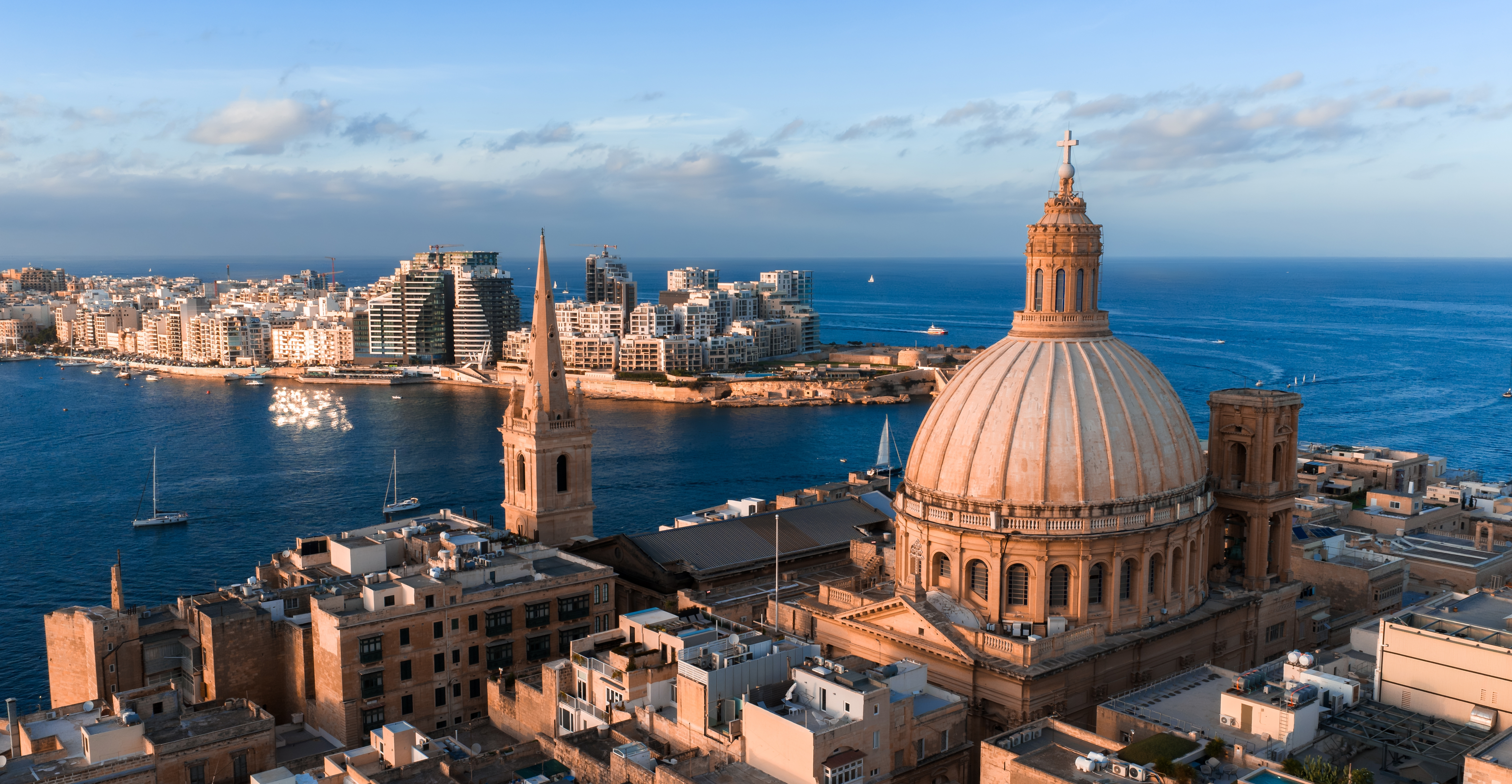
Malta residence permit through real estate investment
Today, it is possible to obtain permanent residence in Europe immediately through investment — Malta provides this opportunity through its Malta Permanent Residence Program (MPRP). The conditions for participation are simple: purchase or lease real estate on the mainland or the island of Gozo for a period of 5 years and pay all mandatory administrative fees:
| Expense category | Costs when purchasing property, € | Costs when renting property, € |
|---|---|---|
| Minimum property value | 375,000 | 14,000 |
| Non-refundable administrative fee | 60,000 | 60,000 |
| Donation to a charitable, scientific, sports, animal welfare, or cultural organization | 2,000 | 2,000 |
| Government fee for permanent residency processing | 37,000 | 37,000 |
In addition to the costs of purchasing or renting real estate and state duties, investors must confirm their financial solvency according to one of the following options:
| Minimum capital assets, € | Minimum share of financial assets from total capital assets, € |
|---|---|
| 500,000 | 150,000 |
| 650,000 | 75,000 |
Maltese permanent residence can be obtained by the investor’s spouse (civil partner) and other relatives, including:
- children under 18 years of age;
- unmarried children between 18 and 29 years old who are financially supported by the investor are also eligible;
- unemployed parents or grandparents who are financially dependent on the investor;
- children of any age with disabilities or serious illnesses.
The initial investment amount remains the same when applying for permanent residence for family members. For each family member, the investor pays an additional government fee of EUR 7,500.
To maintain permanent resident status, the property must be owned for 5 years. After this period, the property can be sold, provided that the investor can meet the residency requirement in Malta (e.g., a rental agreement).
With a smaller investment in Maltese real estate, you can acquire temporary resident status under the Global Residence Program (GRP):
| Type of investment | Costs in Southern Malta/Gozo, € | Costs in other regions of Malta, € |
|---|---|---|
| Property purchase | 220,000 | 275,000 |
| Annual property rental | 9,600 | 8,750 |
A Maltese residence permit through investment offers particular advantages for individuals planning to transfer substantial funds to the country and looking to optimize their tax situation. All GPR participants automatically become tax residents of Malta and are subject to annual income tax. The tax rate is EUR 0.15 for each euro transferred to Malta, with an annual minimum of EUR 15,000.
Participation in the MPRP program leads to indefinite residence status, while participation in the GPR program leads to temporary status for 1 year. The residence permit is subject to renewal; it must be renewed every 2 years.
Regardless of the program chosen, the investor receives full residency in Malta. This means that they can be:
- more mobile: able to travel within the Schengen area without a visa;
- open to international transactions — receives the right to banking services within the EU;
- flexible in choosing where to live — you can settle in any city in Malta;
- secure in the future — he can conduct business or work in Malta.
After 5 years of legal residence in the country, investors may become eligible to apply for a passport, providing a clear path to citizenship.
Serbian residence permit by investment
You can obtain a residence permit through investment outside the EU in Serbia. The country offers 3 options for obtaining legal residency:
- Purchase of real estate. An investor needs to purchase a house, apartment, or commercial premises in Serbia. The authorities have not set a minimum value, so any property will suffice.
- Opening a company. This is a more preferable option for those who plan to build a business in the European market. The businessman only needs to register an enterprise in the country. There is no minimum investment requirement for the company.
- Investment in an existing company. The investor must prove that they have at least EUR 50,000 (or an equivalent amount in another currency, including dinars) in their account.
The first 2 options grant residency through a residence permit valid for up to 3 years, with the possibility of renewal for the same period. If you are making a qualifying investment in an existing company, the initial residence permit is valid for 6 months. To renew it, you must confirm an invested amount of at least EUR 5,000 in the company.
After 3 years, residents can apply for permanent residence and then citizenship. Most iWorld clients choose to open a business in Serbia. In addition to a residence permit, clients receive other advantages, such as one of the lowest corporate tax rates (15%), the right to duty-free trade with EU, EEA, Turkey, Great Britain, China, and other progressive countries, and preferential tariffs with Japan.

Greece residence permit
Another European country that offers residence permits through investment is Greece. Foreigners are offered several options:
| Investment area | Minimum amount, € | Notes |
|---|---|---|
| Business | 500,000 | – |
| Government bonds | 500,000 | Minimum maturity period of 3 years |
| Bank deposit | 500,000 | Subject to annual renewal |
| Shares, corporate or government bonds listed for trading | 800,000 | – |
| Mutual investment fund shares | 350,000 | Fund assets must total at least €10 million |
| Alternative investment fund shares | 350,000 | Fund assets must total at least €3 million |
| Real estate | 250,000–800,000 | Depends on the property’s location and purpose |
| Startup | 250,000 | At least a 33% ownership stake, creation of a minimum of 2 jobs, and retention of those jobs for 5 years |
Startups receive a 1-year residence permit, while other investors receive a 5-year permit. All Greek residence permits are subject to renewal. Startups need to renew their residence permits once every 2 years, while others need to renew theirs once every 5 years. Investors may apply for citizenship after 7 years.
Greek resident status is equivalent to EU resident status. This means that investors can travel around the Schengen zone without a visa, receive medical care through a single insurance policy, and open bank accounts in Europe.
French residence permit by investment
One option of the French Talent Passport program is to invest in local businesses. In return, participants receive a 4-year residence permit. To become a resident of France, two conditions must be met:
- personally or on behalf of a legal entity, invest at least EUR 300,000 in a local company;
- demonstrate an intention to maintain or create new jobs for 4 years.
The Talent Passport program is not only aimed at the main investor, but also at his loved ones. A special category of residence permit is allocated for them: the «Family Talent» permit. This status is issued to the investor’s spouse and children. The residence permit’s validity period is the same as the investor’s. A key advantage is that spouses have the right to work or conduct business in France.
After obtaining French residency, investors can enjoy the many benefits of this status, including traveling without visas to Schengen countries, banking with European institutions, receiving treatment at top clinics in France and the EU with a single insurance policy, and sending their children to free public schools. However, the program does not exempt you from paying all applicable taxes. If an investor or their spouse plans to start a business or get a job, they will be required to pay taxes, including:
- personal income tax: from 0 to 45%, depending on income;
- corporate tax is 15% or 25%, depending on the company’s annual turnover.
Participants in the Passport Talent program may apply for permanent residence or immediate French citizenship. In both cases, you must live in the country for at least 5 years.
The Passport Talent program is not only aimed at investors. Those who do not plan to invest a large amount can choose the startup option or another option. iWorld specialists can clarify all participation options and help you obtain a 4-year French residence permit.
- Let’s see if you meet the criteria
- Let’s assess the prospects based on your profile or project
- Let’s determine the best format: business or startup
Italy residence permit by investment
The Investor Visa for Italy is a special 2-year residence permit for investors. As part of the state program, the residence permit is issued not only to the main applicant but also to his or her relatives, including a spouse, children, and parents over 65 years of age. Participants can choose one of 4 investment options:
| Investment area | Minimum amount, € |
|---|---|
| Government bonds | 2,000,000 |
| Italian company | 500,000 |
| Italian startup | 250,000 |
| Charitable organization | 1,000,000 |
Unlike some other European countries, Italy currently does not offer a residence permit through real estate purchase.
Subsequently, the residence permit can be renewed every 3 years. The key condition is maintaining the investment. After living in Italy for 5 years, the investor has the right to obtain permanent residence and, after 10 years, citizenship.
The Italian program is interesting in terms of tax optimization. If an investor obtains tax residency and remits their foreign income to Italy, they will be subject to special tax treatment. In this case, a fixed annual payment of EUR 100,000 is made to the Italian budget for 15 years. When immigrating with loved ones, this amount can be increased by EUR 25,000 for each family member, and the tax regime will also apply to them.
Montenegro residence permit
If you are outside the European Union, you can obtain a residence permit by investing in real estate in Montenegro. The permit is issued for one year and is subject to regular renewal. Foreigners can purchase any type of property, including apartments, dachas, hotel rooms, offices, and houses.
Previously, legislation did not require a minimum value for the property. However, an amendment issued in December 2025 states that the price of real estate cannot be less than EUR 150,000. This condition applies only to non-EU citizens, as well as those from Switzerland, Liechtenstein, Iceland, and Norway.
After 5 years of living in Montenegro, you can obtain permanent residence and after 10 years, citizenship.
All investors who purchase a house, apartment, or other property must pay annual property taxes. The rate is between 0.25% and 1% of the property’s cost.
Investors can obtain a Montenegrin residence permit by purchasing real estate or by opening their own business in the country. Entrepreneurs enjoy benefits such as paying corporate tax at one of the lowest rates in Europe (from 9 to 15%), getting loans to develop their business, and simplified logistics for goods to and from the EU.

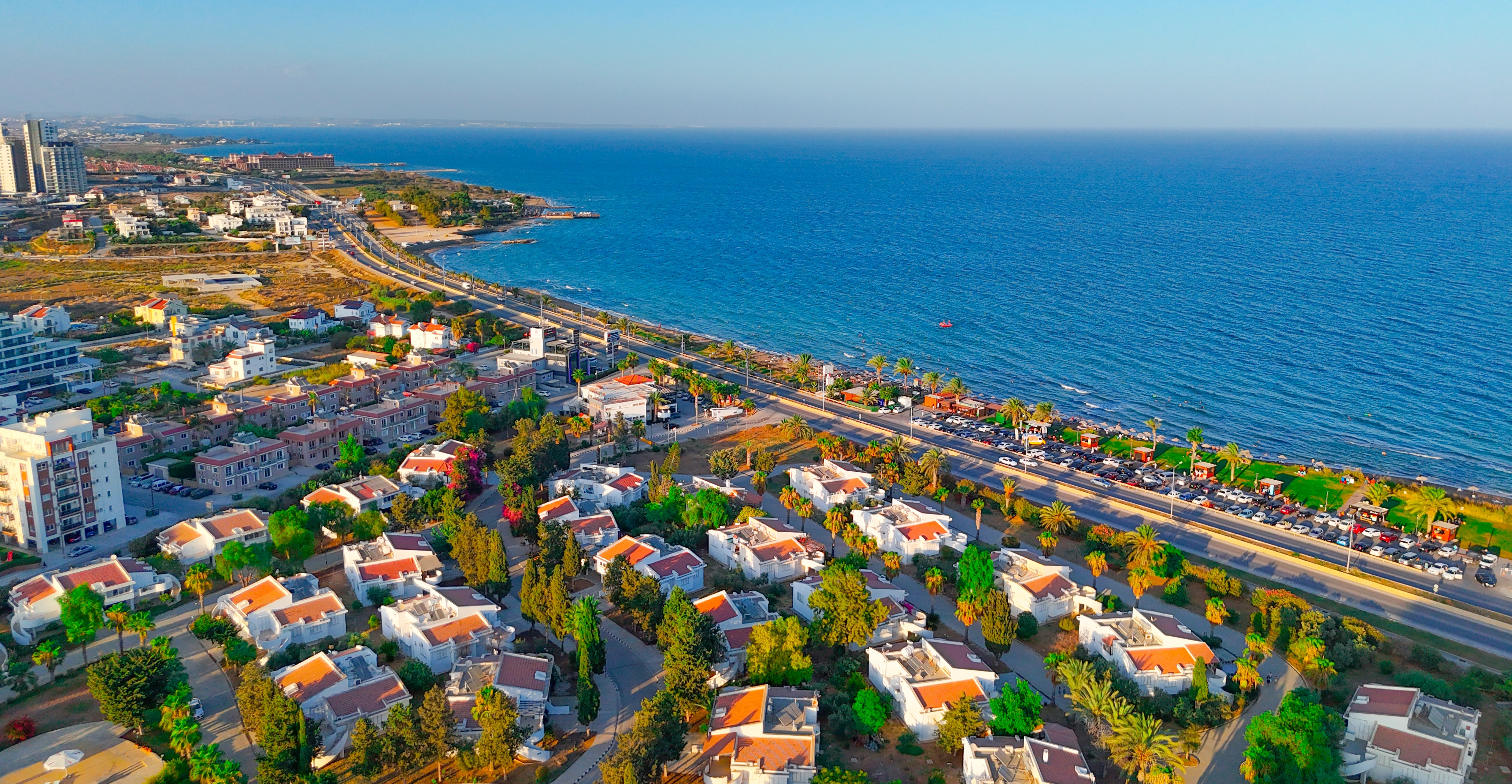
Cyprus permanent residence
In Cyprus, investors can obtain a permanent residence permit through investment. This status is granted to individuals who invest at least EUR 300,000 in:
- real estate (apartments, houses, hotels, offices, and shops);
- a local business with at least 5 employees and an official representative office in Cyprus;
- investment fund units.
To maintain permanent residence, investors should not withdraw their investments. However, you can change the type of investment. For example, if someone sells an apartment, they can immediately invest in a company, and their status will not be canceled.
A spouse and minor children can receive permanent residence together with the investor, and the amount of the initial investment does not change. In addition to investments, you also need to confirm your annual income to approve the application:
| Applicant | Minimum annual income requirement, € |
|---|---|
| Investor | 50,000 |
| Spouse | 15,000 |
| Each minor child | 10,000 |
Investors receive permanent residency for an unlimited period of time, but they may lose their status if they are absent from Cyprus for more than 2 consecutive years. After 8 years, you can apply for citizenship. You do not need to obtain a passport; you can remain a permanent resident for life. Most investors choose this option because permanent residence allows them to easily open a business or get a job in Cyprus, as well as access local banking and medical services.
Which European residence by investment program should you choose?
The choice of a European country for obtaining a residence permit through investment depends on your budget, goals, residency rules, opportunities for moving with your family, and the prospect of obtaining permanent residency and citizenship. We compared countries based on key factors:
| Country | Investment amount, € | Status granted | Residence permit validity, years | Required residence period for citizenship, years |
|---|---|---|---|---|
| Portugal | 200,000–500,000 | Residence permit | 2 | 5 |
| Malta | 8,750–275,000 | Residence permit | 1 | 5 |
| Malta | 70,000–375,000 | Permanent residency | Indefinite | 5 |
| Serbia | Not specified/ 50,000 | Residence permit | Up to 3 | 3 |
| Greece | 250,000–800,000 | Residence permit | 1–5 | 7 |
| France | 300,000 | Residence permit | 4 | 5 |
| Italy | 250,000–2,000,000 | Residence permit | 2 | 10 |
| Montenegro | 150,000 | Residence permit | 1 | 10 |
| Cyprus | 300,000 | Permanent residency | Indefinite | 8 |