

In recent years, many people have become interested in affordable real estate in Europe, looking for profitable relocation or investment options. Eastern Europe has received particular attention because prices there are lower than in Western Europe, and the quality of apartments and houses is comparable.
Many Eastern European countries offer reasonable prices for housing, food, and entertainment. For example, living in Romania is 69% cheaper than in Germany, and houses and apartments are sold at favorable prices accordingly.
We have compiled a ranking of the top European countries where you can currently buy real estate profitably. In some of these states, you can obtain a residence permit, permanent residence, or citizenship based on such a purchase. Purchasing a house or apartment can ultimately be a strategic investment and the first step toward living in Europe.
Moldova — the country with the lowest housing prices in Europe
Real estate prices in Moldova have increased by 60.7% over the past two years, reaching EUR 1,720 per square meter. Despite this increase, Moldova remains one of the most affordable jurisdictions in Europe for buying a home. Many transactions are financed through mortgages. In the first quarter of 2025, mortgages accounted for 41% of transactions. This is due to the state-run «Prima Casa Plus» program, which provides loans of up to MDL 2.5 million (approximately EUR 125,000) over 30 years at a preferential interest rate and requires no down payment.
iWorld specialists analyzed the Moldovan real estate market and compared prices for apartments ranging from 50 to 60 m² in 3 key cities:
| City | Secondary market price, € | New development price, € |
|---|---|---|
| Chisinau (city center) | 90,000 | 140,000 |
| Chisinau (residential area) | 67,000 | 84,000 |
| Balti (city center) | 59,000 | 65,500 |
| Balti (residential area) | 31,500 | 45,500 |
| Cahul (city center) | 75,000 | 72,000 |
| Cahul (residential area) | 42,000 | 59,000 |
Prices are even lower in smaller towns. For instance, in Birința, which is located 105 km from Chisinau and has a population of 4,000, you can purchase a one-bedroom apartment (34 m2) on the secondary market for EUR 13,000.
Low real estate prices in Moldova are due to:
- Population outflow. According to the latest data from the National Bureau of Statistics of Moldova, more than 130,000 people left the country in 2024;
- Low salaries. The average salary is EUR 870 per month, so many cannot afford to buy a home, even with a mortgage. The average monthly mortgage payment is EUR 380–EUR 500, while basic expenses for one person are EUR 570;
- The predominance of older housing stock. Apartments are mostly offered in buildings that require major renovations, which lowers the average cost of housing across the country.
Currently, Moldova is not an EU member, but it has candidate status and is actively implementing reforms toward European integration. After joining the EU, real estate prices could increase significantly, so now is the time to buy affordable housing. Furthermore, foreigners can purchase apartments or houses in Moldova without restrictions (only agricultural and forest land is prohibited).
Those who want to live in Moldova must obtain a residence permit for reasons such as work, business, or study. Purchasing real estate does not lead to resident status. A residence permit is only issued for investments in a local company starting from EUR 26,000. Those who want to obtain a residence permit or citizenship through real estate purchases should consider programs in other countries, such as Cyprus, Turkey, and Greece.
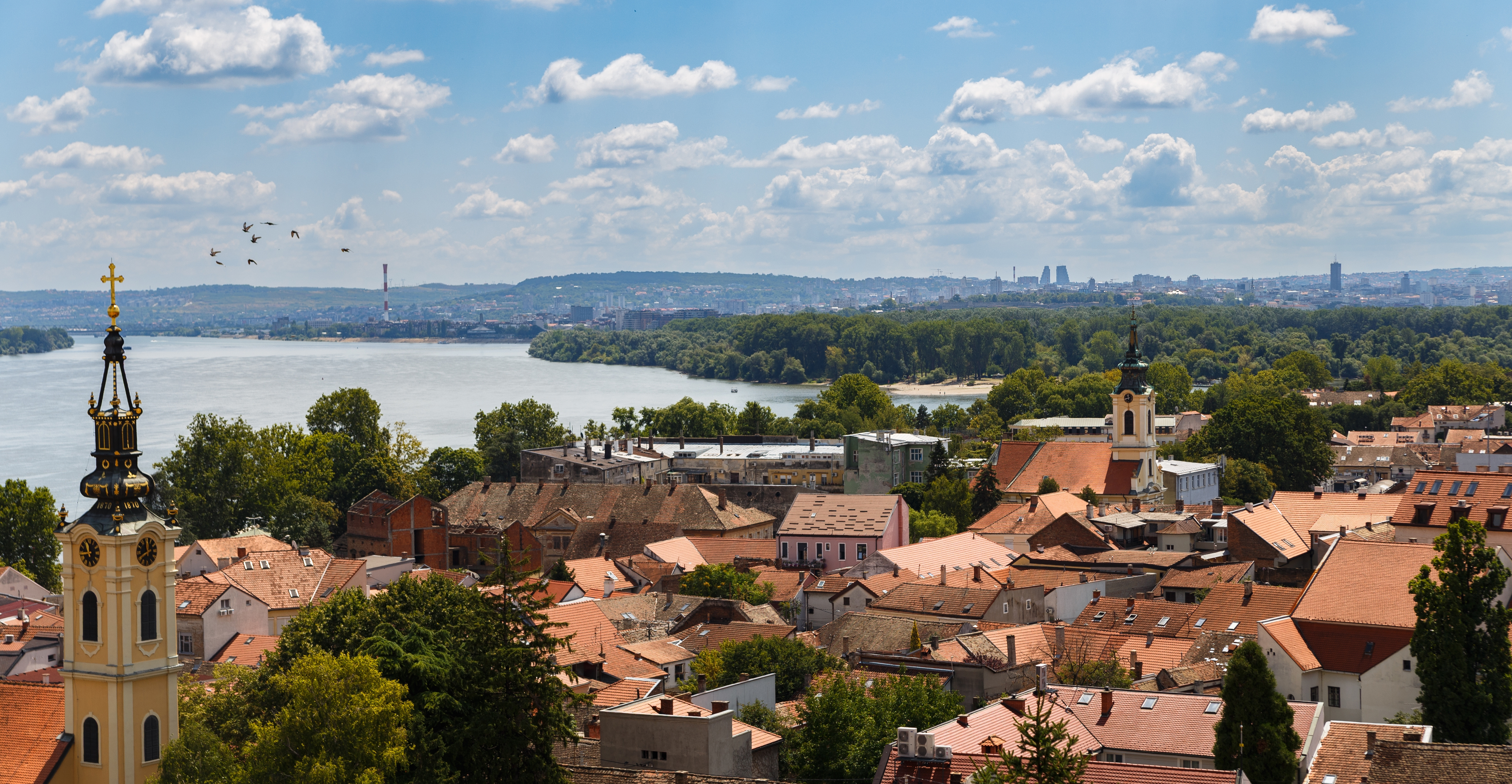
Serbia – the cheapest real estate in Europe
Serbia is another Eastern European country with competitive real estate prices compared to Western Europe (France, Germany, and Belgium). The average price per square meter varies by city. For example, in Belgrade, it ranges from EUR 2,500 to EUR 3,000, in Novi Sad, it’s EUR 1,800, and in Niš, it’s EUR 1,200. The price is also influenced by the neighborhood; real estate in the city center is always more expensive than on the outskirts. Now, let’s look at examples of apartments in 3 key Serbian cities:
| City | Area | Size, m2 | Price, € |
|---|---|---|---|
| Belgrade | City center | 71 | 250,000 |
| Belgrade | Suburbs (Mirijevo) | 86 | 187,000 |
| Novi Sad | City center | 62 | 138,000 |
| Novi Sad | Suburbs (Telep) | 50 | 115,000 |
| Niš | City center | 73 | 131,500 |
| Niš | Suburbs (Crveni Krst) | 72 | 80,000 |
House prices in the countryside of Serbia are also reasonable. In the Zemun district, a 20-minute drive from Belgrade’s city center, a 58 m2 house costs EUR 92,000, while a 204 m2 house costs EUR 140,000. For comparison, similar properties in Western Europe cost several times more. For instance, a 68 m2 house in suburban Berlin costs EUR 400,000.
In Serbia, the property transfer tax (2.5% of the price) is paid by the seller, so many sellers include this amount in their listings. The buyer covers other costs, such as realtor, notary, and property registration fees, which amount to an additional 3-5% of the property price. After the transaction, every owner of Serbian real estate must pay property tax. The rate depends on the cadastral value of the property, whether the owner is an individual or a legal entity, and whether they maintain accounting records. Rates range from 0.4% to 2%.
Despite all the taxes and additional expenses, real estate in Serbia remains one of the most affordable in Europe. Furthermore, foreigners can obtain a Serbian residence permit by purchasing a house or apartment, and there is no minimum purchase price requirement. This is one reason why Serbia is popular among immigrants. The country also attracts visitors with its mild climate (average winter temperatures range from 0 to -1.5°C), low cost of living (EUR 600 per month for one person), and friendly attitude toward foreigners.
Bulgaria — the most affordable homes in the EU
Bulgaria is considered the leader in affordable real estate among EU states, with prices significantly lower than in Germany, Austria, Spain, and France. The most expensive apartments and houses are sold in Sofia and its surrounding areas. Prices per square meter range from EUR 1,800 in the village of Benkovski (66 km from the capital) to EUR 5,500 in the prestigious, leafy Ivan Vazov neighborhood. However, a small apartment in the city center (31 m2) or a house in the countryside (94 m2) requiring major renovations can be purchased for EUR 40,000.
Prices in smaller cities and on the coast are even lower:
| City | Price per 1 m2, € |
|---|---|
| Burgas | 1,200–2,300 |
| Varna | 900–4,100 |
| Plovdiv | 1,200–2,200 |
| Stara Zagora | 1,000–2,400 |
| Pleven | 1,000–1,400 |
As an EU member, Bulgaria offers foreigners an opportunity to acquire affordable housing in the EU by purchasing real estate in the country. Buying an apartment or house for at least EUR 302,500 qualifies you for a Bulgarian residence permit. However, if the property is priced lower, foreigners will have to find another basis for moving. Still, it will be somewhat easier to obtain a permanent EU residence permit in the future, as one of the key requirements is guaranteed housing in Bulgaria.
On January 1, 2026, Bulgaria will officially replace its national currency, the Lev, with the Euro. Currently, a transition period is in effect during which citizens can exchange money at banks, and prices in stores are displayed in both currencies for 6 months (until August 2026). Real estate prices have remained stable for now, but a gradual increase is predicted once the transition to the Euro is complete.
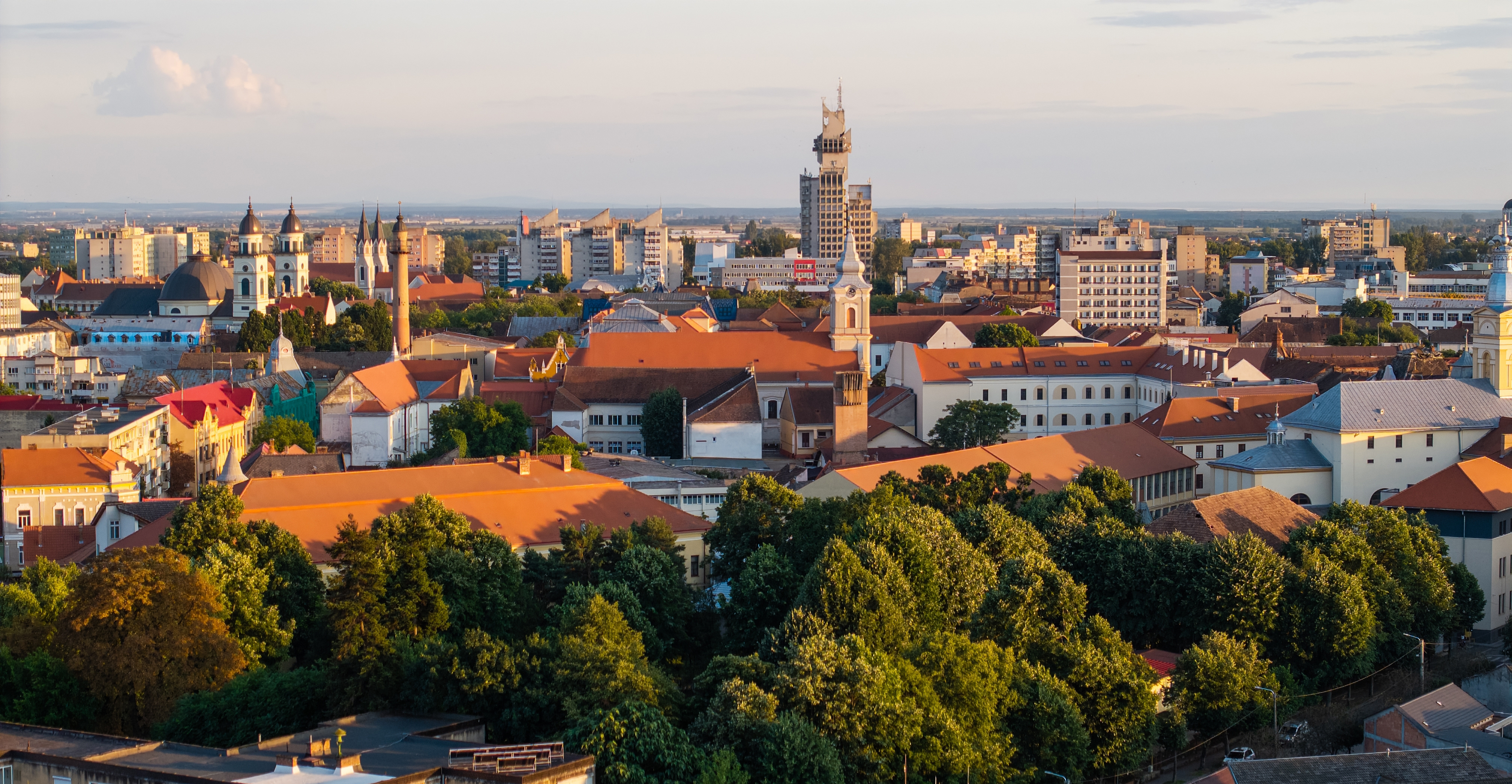
Romania – affordable living and buying homes
Romania is one of the cheapest EU countries in terms of cost of living. Basic monthly expenses for a single person are EUR 600, and for a family of 4, EUR 2,000. For comparison, living in Germany costs almost twice as much: EUR 1,000 for one person and EUR 3,500 for a family of 4.
The low cost of living is also reflected in the real estate market. In Bucharest’s central and prestigious Lipscani district, the average price per square meter is EUR 2,600. You can find small apartments (40 m2) for EUR 99,000 and more spacious apartments (107 m2) for EUR 290,000. Prices are even lower on the outskirts. For example, in the Baicului and Compozitorilor districts, one square meter costs EUR 1,600.
Real estate prices are also low in other Romanian cities:
| City | Price per 1 m2, € |
|---|---|
| Arad | 1,000–2,000 |
| Bistrița | 1,250–1,600 |
| Constanta | 1,200–2,500 |
| Iași | 1,400–3,000 |
| Brașov | 1,700–3,000 |
You can buy a house at a low price in rural areas. For instance, a renovated 110 m2 house in the village of Baskov costs EUR 45,000, while a modern 90 m2 villa in Floresti costs EUR 135,000, making these properties attractive to foreign buyers.
According to Romanian law, foreigners can freely purchase apartments and houses in the country. The only restriction is that title deeds can only be registered if a special agreement has been concluded between Romania and the buyer’s country of citizenship. In practice, however, this government approach does not prevent foreigners from purchasing real estate.
Currently, it is not possible to obtain a residence permit by purchasing an apartment or house in Romania. The government is discussing the possibility of introducing a golden visa program, which would allow foreigners to obtain a residence permit by purchasing real estate. Currently, foreigners who purchase property in Romania can obtain a residence permit for work, business, study, or other reasons and reside in the country. With a Romanian residence permit, they can travel within the EU visa-free.
The Romanian real estate market is one of the most affordable in Europe. However, as the country continues to develop its economy and infrastructure and integrate with the EU, prices are expected to rise in the medium and long term.
Albania – affordable housing on the Adriatic
When it comes to affordable seaside real estate, many investors consider Albania because it has some of the lowest prices in Europe. Even in coastal towns, you can find comfortable housing at a reasonable price. For instance, in Durrës — the main seaside resort, with stunning views, on the Adriatic — prices per m2 start at EUR 740. A 52 m2 apartment with a modern renovation costs EUR 65,000. In Vlora, where the Adriatic and Ionian Seas meet, prices are even lower, starting at EUR 690 per square meter. You can buy a 60 m2 apartment in a new building here for EUR 48,000.
In Albania’s capital city, Tirana, prices are higher but still reasonable. 1 m2 costs approximately EUR 1,300. A duplex apartment (73 m2) costs EUR 119,000, while an off-plan 79 m2 apartment costs EUR 95,500.
Albanian real estate is in demand among foreigners due to:
- Low prices. In 2025, foreign direct investment in this sector amounted to 392 million euros, a 45% increase from 2024;
- Full Ownership. Foreigners are legally allowed to purchase real estate and register it in their own name;
- The opportunity to obtain a residence permit. A residence permit is issued for 1 year (even to those who co-own 50% of the property) and can be renewed multiple times. There is no minimum purchase price requirement.
Greece — affordable property offers and EU residence permits
Greece offers foreigners access to a mid-priced European real estate market. While prices for apartments and houses are not the lowest in the EU, they are still lower than in Western Europe. Another advantage is that you can obtain a residence permit in Greece by purchasing real estate.
Prices for apartments and houses in Greece vary by the region:
| City | Price per 1 m2, € |
|---|---|
| Athens | 2,400–4,100 |
| Piraeus | 2,500 |
| Thessaloniki | 1,000–2,600 |
| Argos | 2,000 |
| Xanthi | 1,200 |
| Corfu | 2,300 |
Thus, a 66 m2 apartment in Athens can be purchased for EUR 155,000, which is significantly cheaper than in Western European capitals. In Xanthi, for example, a 64 m2 apartment costs EUR 65,000.
Investors are considering purchasing real estate in Greece because of the opportunity to obtain a 5-year European residence permit that can be renewed without residing in the country. To qualify for a residence permit, one must purchase a property worth at least EUR 400,000. In regions such as Attica, Thessaloniki, Thira, and Mykonos, as well as on islands with populations of 3,100 or more, the minimum threshold is EUR 800,000.
It is also possible to obtain a 5-year Greek residence permit with a purchase price of EUR 250,000. To do so, one of the following conditions must be met:
- The commercial premises will be converted into residential space.
- Purchase an industrial property that has not been occupied by any enterprise for the past 5 years.
- The property has protected status and is subject to restoration or reconstruction.
Compared to other countries, real estate prices in Bulgaria and Serbia are lower. However, Bulgaria only offers 1-year residence permits, not 5-year permits, and Serbia is not part of the EU. Greece also has a milder climate. In the southern regions, winter temperatures range from 11°C to 18°C, resulting in lower utility costs.
Greece is often chosen by wealthy investors who want to buy real estate and obtain legal EU status.

Turkey — affordable housing and a quick passport
Although Turkey is not an EU member, it is often mentioned when discussing affordable real estate in Europe because it offers a European standard of living at lower prices. Investors are also attracted by the opportunity to obtain a residence permit (ikamet) by purchasing a property: if the house costs at least USD 200,000, investors can obtain a residence permit; if the property costs at least USD 400,000, investors can obtain citizenship.
The average real estate price varies by region:
| City | Price per 1 m2, $ |
|---|---|
| Istanbul | 1,400 |
| Ankara | 800 |
| Antalya | 1,100 |
| Izmir | 1,100 |
| Bursa | 750 |
Thus, a 120 m2 apartment in Istanbul can be purchased for USD 50,000, while an 85 m2 apartment near the sea in Antalya costs USD 84,600. Prices are even lower in the provinces. For example, in the non-resort town of Çorum, a 110 m2 apartment costs USD 23,000.
Despite rising prices in the national currency, foreigners still find it advantageous to buy property in Turkey due to the weakening of the lira against the US dollar and the Euro. This is why demand among foreign investors remains high. According to the latest data from the Turkish Statistical Institute, foreigners purchased 18,993 properties in 11 months.
Turkey attracts foreigners with its warm climate and simple process for purchasing apartments and houses. Foreign citizens can obtain full title deeds (Tapu), and there are no strict property requirements (except in military and strategic zones). Another significant argument in favor of Turkey is the right to obtain a residence permit or citizenship.

North Macedonia – the cheapest housing in the Balkans
North Macedonia frequently appears in rankings of the cheapest countries in Europe and the Balkans for buying real estate. It’s not surprising, given that a three-bedroom apartment (56 m2) in the capital can be purchased for EUR 51,000. Prices in other cities are even lower. In Bitola, a similar apartment costs EUR 34,000, and in Veles, EUR 27,000.
Investors often consider North Macedonia a budget-friendly option for capital preservation. Due to limited supply and low demand, investments do not quickly pay off.
It is important to note that North Macedonia is not an EU member and has only been a candidate for accession since 2005. Additionally, residence permits through real estate purchases (worth at least EUR 40,000) are available only to residents of the European Union and the Organization for Economic Co-operation and Development (OECD) countries. Therefore, most investors considering purchasing an apartment or house in Europe for the purpose of legal residency prefer Greece, Serbia, or Cyprus.
Bosnia and Herzegovina — the most undervalued European real estate market
Another Balkan country, Bosnia and Herzegovina, offers affordable real estate by European standards. Despite an increase in the average price per square meter of 7-10% over the past year, prices remain low at EUR 1,600 per square meter. For instance, in Sarajevo, you can purchase a 52 m2 apartment for EUR 92,000. A spacious house on a 3,100 m2 plot in the village of Šargovac (a suburb of Banja Luka) costs EUR 130,000.
Investors have yet to explore the Bosnian real estate market fully. Demand for apartments and houses is primarily local. This is why real estate prices remain low, and competition is minimal.
Bosnia and Herzegovina has been a candidate for EU accession since 2022, and official negotiations began in 2024. If progress is made, prices could increase significantly. Therefore, some investors are beginning to consider real estate in Bosnia and Herzegovina as a potentially profitable investment for the future.
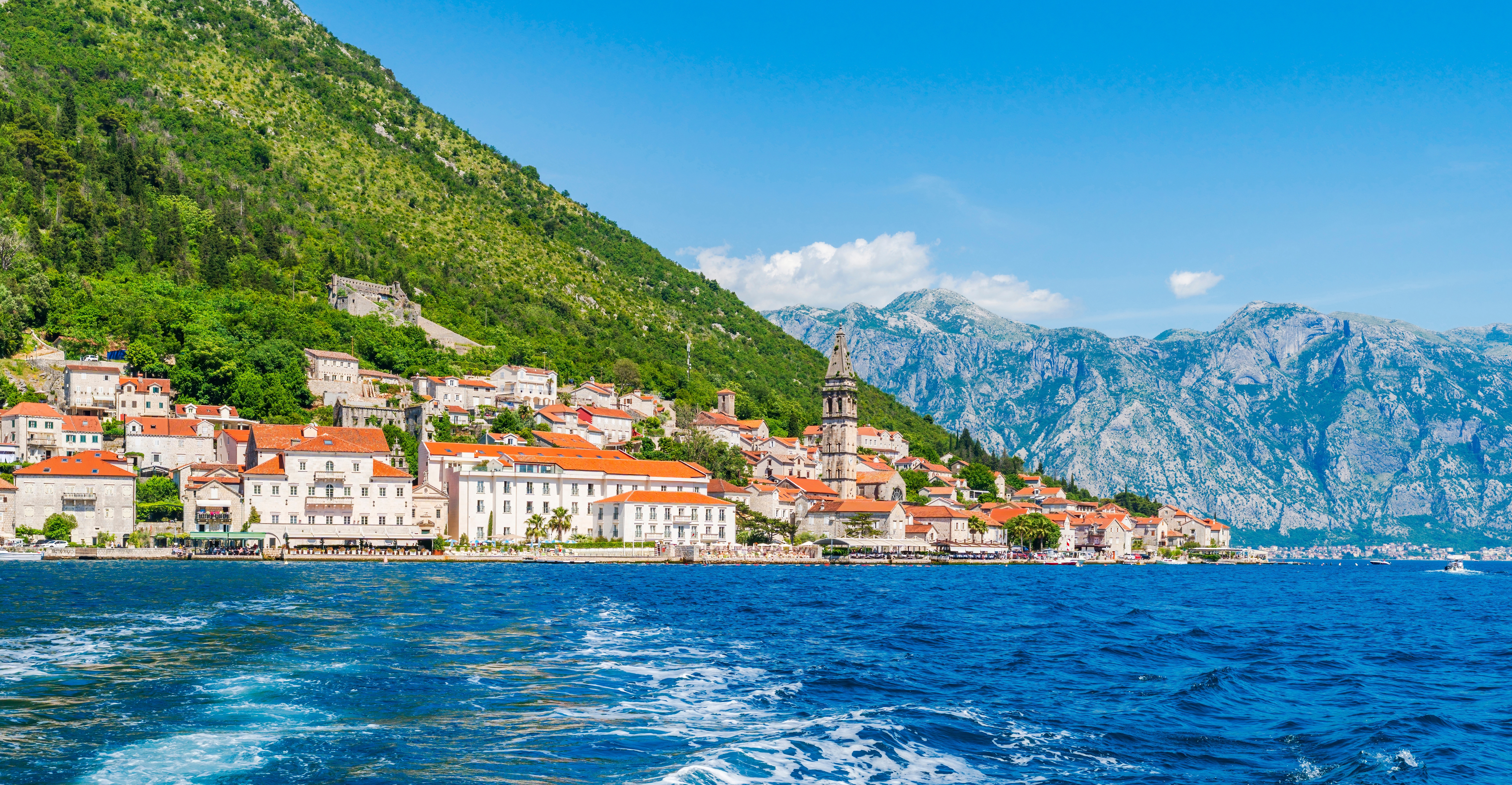
Montenegro — a popular destination among investors
Montenegro is one of the most popular countries on the Balkan Peninsula. Property prices here are slightly higher than in neighboring states, averaging EUR 2,200 per square meter. However, the final price varies by region:
| City | Feature | Price per 1 m2, € |
|---|---|---|
| Podgorica | Capital city | 1,650–3,000 |
| Budva | Adriatic coast | 2,400–7,400 |
| Kotor | Bay of Kotor | 2,500–3,500 |
| Herceg Novi | Bay of Kotor | 1,800–3,500 |
| Perast | Provincial town | 1,000–1,400 |
Investors choose Montenegro for property purchases because of its warm climate, proximity to the sea and mountains, and the opportunity to obtain a residence permit. The law does not set a minimum property value for residency, which is an added benefit.
Cyprus — a profitable place to purchase property to obtain permanent residence in the EU
Although property prices in Cyprus are not low, they remain reasonable compared to those in Western European countries. The average price per square meter is EUR 4,100 for apartments and EUR 3,800 for houses. The exact price varies by region:
| City | Apartment price per 1 m2, € | House price per 1 m2, € |
|---|---|---|
| Paphos | 3,800 | 4,000 |
| Limassol | 5,500 | 4,200 |
| Larnaca | 3,000 | 2,700 |
| Nicosia | 2,700 | 2,100 |
| Geri | 2,200 | 2,400 |
| Kiti | 2,400 | 2,100 |
Cyprus primarily attracts foreign investors by offering the opportunity to obtain permanent residence through real estate purchases. This can be done by buying an apartment, house, or commercial property worth at least EUR 300,000. The investor’s spouse and minor children can also obtain permanent residence.
Since Cyprus is an EU member state, purchasing real estate and obtaining permanent residence grants you legal status in the European Union and the right to live indefinitely in a warm, coastal country.

What to consider when buying an affordable home in Europe: nuances and pitfalls
A low price shouldn’t be the only criterion for choosing a property. Potential buyers must consider the legal and financial aspects of the transaction. We’ve compiled the key criteria to consider when purchasing real estate abroad:
- Restrictions for foreigners. In most countries, foreigners can purchase real estate freely without permits. However, there are exceptions. For instance, in Turkey, you cannot buy property located near military zones or sites of strategic importance. In Moldova, foreigners cannot own agricultural or forest land. In Abkhazia, foreigners are legally prohibited from purchasing residential property. This is an extreme case, but it’s still important to be aware of. Therefore, always check whether you can formalize full ownership before making a transaction.
- Additional costs. The property price is not the buyer’s final expense. Realtor and notary fees, taxes, and registration fees should be added to it. For example, in France, an additional 7-8% of the property value should be factored in for taxes and notary fees, whereas in Spain, the additional cost is around 13%. In Eastern Europe, all fees are cheaper. For instance, Bulgaria levies a property transfer tax at a rate of 0.1-3% of the property value, depending on the municipality, while Serbia levies a tax of 2.5%. According to iWorld specialists, additional costs should total approximately 5-10% of the property price.
- Legal due diligence and registration. Each country has its own procedure for concluding a real estate purchase and sale transaction. Some require a preliminary agreement, while others require the mandatory participation of a notary or lawyer. Before signing the contract, verify the property’s legal status: absence of encumbrances, owner’s title, and building permit. To simplify this process, consider hiring a specialist who is familiar with the specific state’s legislation and can address all the relevant details.
- Property maintenance and taxes. After the transaction, each owner is responsible for maintaining the property. Some countries have an annual property tax. In Bulgaria, for example, the tax ranges from 0.01% to 0.45% of the property’s assessed value. In Serbia, the tax ranges from 0.4% to 2%. Utilities must also be paid, and if the apartment is in a condominium, maintenance fees must be paid as well. In Eastern European countries, these costs are relatively low (EUR 100–170), but they should still be considered.
To protect yourself from potential issues when buying real estate abroad, consider enlisting the help of experienced lawyers. After all, even the slightest mistake or ignorance of local customs can result in financial losses. For instance, late tax payments may result in a fine. If the contract is drafted incorrectly, problems may arise during the title deed process.

iWorld specialists are ready to provide abroad and ensure secure transactions.
Which European countries are the best places to buy real estate? Recommendations from iWorld experts
There is no universal answer to the question, «Where is the best and most profitable place to buy real estate in Europe?» Everything depends on the buyer’s priorities:
- Most inexpensive. Moldova, Serbia, Bulgaria, Albania, and Romania are suitable options. Prices for decent housing don’t currently exceed hundreds of thousands of euros, and the cost of living is low. These jurisdictions are ideal for those on a budget who want to live in a developing European country, including those in the EU, such as Bulgaria and Romania.
- Prospects of legal residency. Greece, Turkey, Cyprus, Montenegro, Bulgaria, and Serbia are good options because these countries have immigration programs that allow you to obtain residency by purchasing real estate. You can generally obtain a temporary or permanent residence permit, but Turkey also offers citizenship to investors.
- Price/Quality ratio. The best options are Bulgaria and Romania. Both are EU members, and the cost of living is low, averaging EUR 600 per person and EUR 2,100 for a family of 4. Bulgaria and Romania offer access to the European education system, healthcare, and the EU labor market, and real estate prices are reasonable.
- Investment and profitability. Tourist destinations worth considering include Albania, Montenegro, Greece, Turkey, Cyprus, and Bulgaria. Real estate prices in Albania and Montenegro are low because these countries are developing their tourism sectors. Rental yields are 5-6% and 3-4%, respectively. Serbia and Georgia have become popular relocation destinations in recent years. Demand for rental housing has grown, and investors can expect a 5.6% return on rental home in Serbia, compared to 9% in Georgia.
The cheapest real estate across Europe is concentrated in Eastern Europe and the Balkan Peninsula. When choosing a home, consider the price, the stability of the state, legal risks, and your goals. The property market varies significantly across Europe, so the best option is often a country that combines affordable prices with a low cost of living, comfort, and the opportunity to obtain residency or citizenship.

If you are planning to purchase real estate for personal use or investment, , conduct due diligence, close the deal, and obtain a residence permit or passport. With the right approach, an apartment in Europe can become your first step toward a new life abroad.