
São Tomé and Principe, a small island nation off the coast of Central Africa, has been the center of investor attention since 2025. The excitement stems from the launch of the world’s most affordable citizenship-by-investment program. Before taking steps to obtain a new passport, however, we recommend taking a closer look at this country. Consider what life is like on the islands of São Tomé and Príncipe now, whether it’s worth moving there permanently, the strength of the local economy, and the business prospects it offers.
Where is São Tomé and Príncipe located?
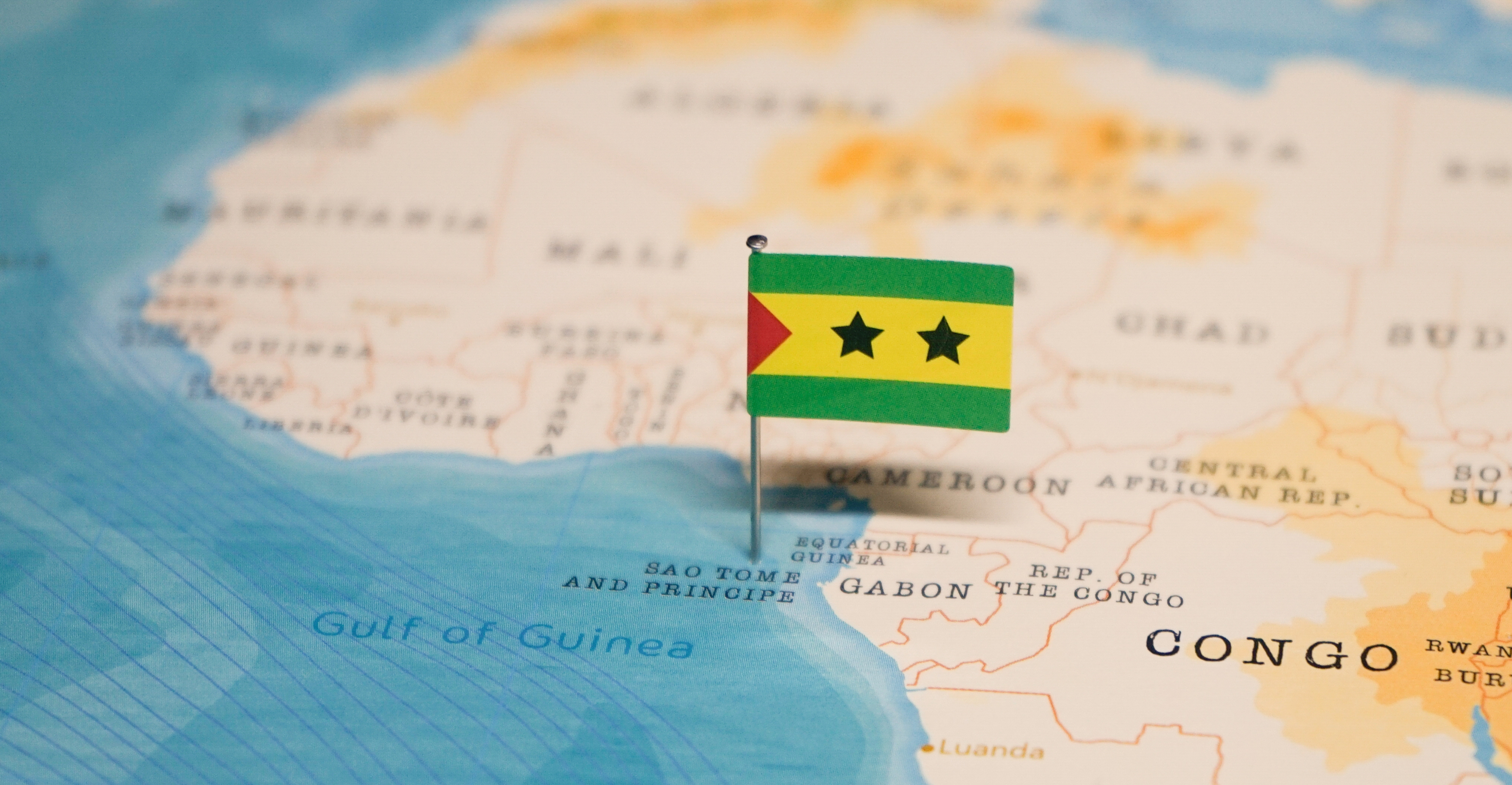
It is located off the west coast of Africa in the Gulf of Guinea in the Atlantic Ocean. The country consists of the 2 main islands of São Tomé and Príncipe, as well as six smaller rocky islets.
The largest island, São Tomé, covers 854 km2 and is located just 2 km from the equator. The second largest island, Príncipe, is 145 km away and covers 136 km2. With a total area of only about 1,001 km2, São Tomé and Príncipe is the smallest country in Africa.
The islands are relatively close to Europe, just a six-hour flight from Portugal. The nearest airports on the African continent are an one-hour flight away.
São Tomé and Príncipe have a tropical climate, which is hot and humid year-round. Most tourists visit from June to September, when the cooler, drier months begin. There are no sharp transitions between the rainy and dry seasons in São Tomé and Príncipe.
Due to the high humidity, fog often lingers over the hills, and the islands generally enjoy consistently high cloud cover. On average, there are 1,675 hours of sunshine per year, which is comparable to the amount of sunshine in London and Paris.
The average annual air temperature is about +28°C. The sea temperature never drops below 26°C, even during the coldest periods.
Since the country is located on the equator, day and night are nearly equal in length.
General information about São Tomé and Príncipe
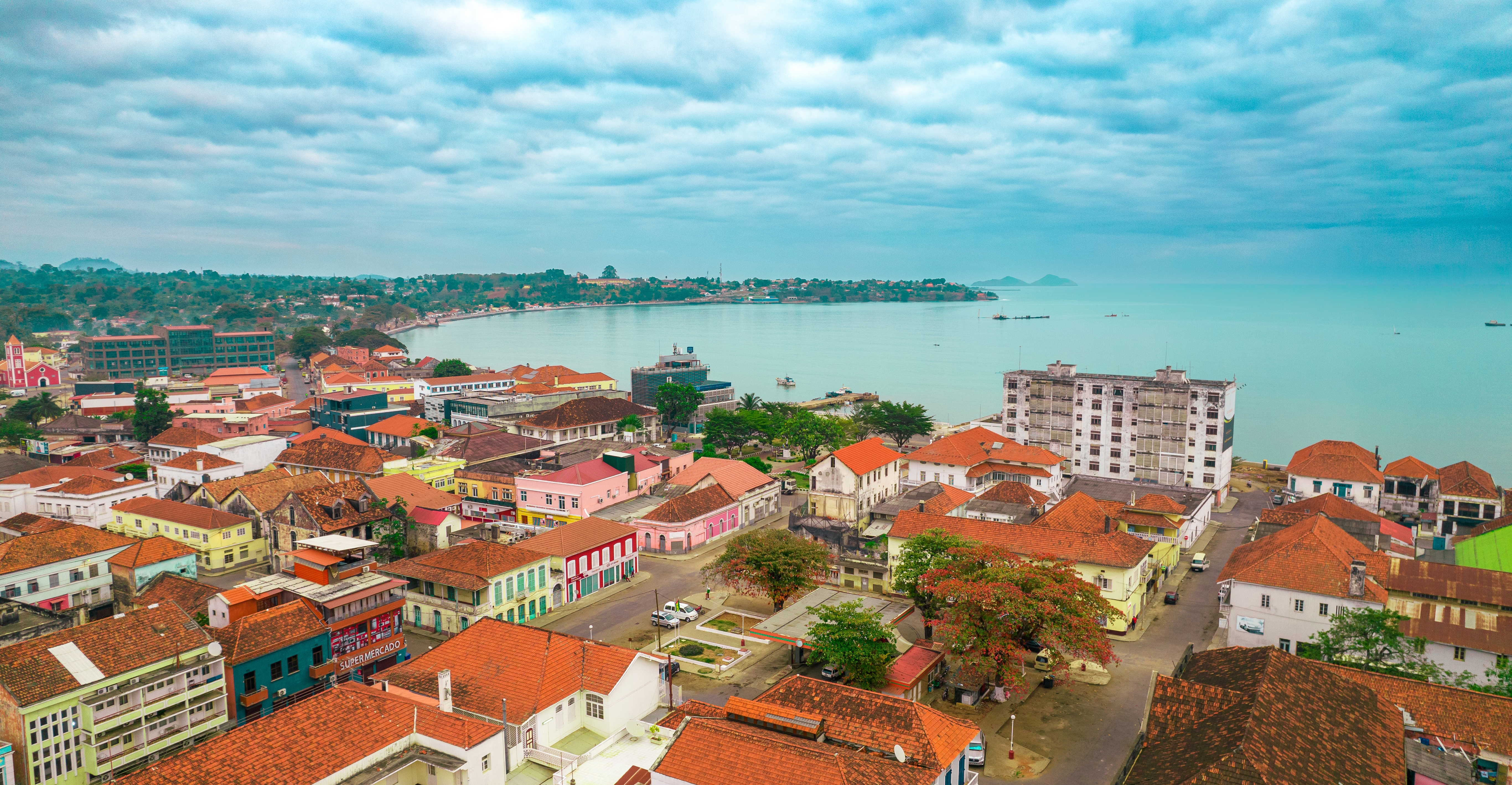
The capital city, São Tomé, is located on the island of the same name and has a population of approximately 67,000. The city houses all government institutions, the country’s only public university, major medical centers, a seaport, and an international airport.
Other major cities include Trindade, Santana, Angolares, and Neves. Santo António, the capital of the Autonomous Region of Príncipe, is of particular importance because it is home to another airport.
The population of São Tomé and Príncipe is approximately 209,600. Most of the population lives on São Tomé, while Príncipe accounts for only 4.7%. The average age is approximately 19 years old. 52% of the population is under 20 years old, which is valuable for the labor market.
The official language is Portuguese, which is spoken by over 98% of the population. This is because São Tomé and Príncipe was a Portuguese colony until it gained independence in 1975. The influence of the colonizers is evident in many aspects of the islanders’ lives, including their culture, architecture, and religion. However, some of the population speaks Creole dialects, such as Forró, Angolan, and Principe, while the Cape Verdean diaspora speaks the language of their country of origin.
English and French are taught in schools, allowing for easier communication with the younger generation. In general, foreigners find it easy to connect with the local population, particularly in business and tourism.
The currency of São Tomé and Príncipe is the dobra (STN). Since 2010, it has been pegged to the euro, which has ensured financial stability and prevented currency depreciation. The current exchange rate is EUR 1 = STN 24.5.
In tourist areas, euros are accepted, though change may be given in dobras. Visa cards are widely accepted, though other payment systems are accepted only at some hotels.
The São Tomé and Príncipe passport ranks 70th in the Travel Power and Freedom Index. It allows visa-free or simplified entry to 71 countries worldwide, including South Africa, countries in Latin America, Hong Kong, and Singapore. For many investors, a São Tomé and Príncipe passport offers increased travel freedom, quick relocation, and a way to avoid sanctions.
The time zone is UTC+0, shared with the United Kingdom, Ireland, and Portugal. It is convenient for entrepreneurs doing business globally and remote professionals.
Obtaining citizenship of São Tomé and Príncipe in 1–2 months
- Citizenship for the whole family
- Dual citizenship option
- Minimum requirements for staying in the country
- The most affordable investment program

Leave an application and get a consultation specialist
Political structure and international relations
Today, São Tomé and Príncipe is practically the only country in the region that has never experienced political dictatorship or armed conflict. It was the first Portuguese-speaking country in Africa to adopt democracy in 1990. A multi-party system has been in place since then.
In 2003, the country transitioned to a semi-presidential republic through constitutional reform, which improved the distribution of powers between the head of state and parliament. The president is elected for a five-year term, and parliamentary elections are held every 4 years.
Since its independence, São Tomé and Príncipe has been a member of the United Nations and the African Union. The country has established close diplomatic relations with many countries and signed agreements to avoid double taxation. Consequently, residents and entrepreneurs pay lower taxes.
In 1996, São Tomé and Príncipe became a founding member of the Community of Portuguese-Speaking Countries (CPLP). This allows São Toméans to obtain a special residence permit in Portugal, Brazil, and other CPLP countries without meeting additional conditions, such as being employed or making an investment. In Portugal, for example, a residence permit is initially issued for two years and can be extended for three. This is advantageous to individuals obtaining São Tomé and Príncipe citizenship because the passport grants access to residency in Europe and Latin America.
The country participates in the Everything but Arms (EBA) program, which exempts all exports to the EU from quotas and duties. This makes it profitable for local entrepreneurs to trade with the EU. Many investors choose São Tomé and Príncipe as a backup plan in the event of geopolitical instability in their home country.
The economy of the country
The economy of São Tomé and Príncipe is based on agriculture, fisheries, tourism, and foreign investment.
The main exports are cocoa beans and palm oil, which account for approximately 97% of the country’s total trade. Depending on the month, export volumes range from USD 0.52 million to USD 5.55 million.
Fishing also supports the country’s economy. In 2025, São Tomé and Príncipe signed a new four-year agreement with the EU, allowing them to catch 6,500 tons of tuna and other fish annually in exchange for investments totaling EUR 3.3 million.
Tourism has the potential to become a new source of economic growth and foreign currency. In 2024, tourist arrivals to the islands increased by 37%, and this growth continues. Foreigners flock here for secluded, tranquil getaways by the ocean and to explore pristine jungles and colonial architecture.
The oil and gas reserves discovered off the coast of São Tomé in 2006 are estimated to be worth 1 billion barrels and offer significant economic potential. Currently, offshore exploration and drilling are being carried out by the state agency and major foreign oil companies, including Shell, Petrobras, and Galp.
The country’s citizenship-by-investment program is designed to supplement the budget with foreign currency. Launched in 2025, it allows individuals to obtain a São Tomé passport by investing at least USD 90,000. The government is investing the proceeds in renewable energy, healthcare, housing construction, ecotourism, education, and infrastructure. Initial investments were used to purchase powerful generators.
Despite its small size, São Tomé and Príncipe’s economy shows many positive trends and growth potential. In 2024, the United Nations officially removed the country from the list of least developed countries for the first time. In 2025, São Tomé and Príncipe’s GDP increased by 2.9%, reaching USD 976 million. According to the UN, the country’s Human Development Index is 0.637 (on a scale of 1), which measures life expectancy and years of schooling. With the start of oil and gas production, these improvements will become even more noticeable for the country and its population.
Investment climate and opportunities
To attract investment, São Tomé and Príncipe created a special Investment Code, which provides foreign investors with incentives. For example, investors can enjoy a 10% corporate tax rate instead of the standard 25%, import equipment and products duty-free, and accelerate depreciation.
The government has identified several priority sectors for investment that offer additional incentives:
- Agriculture, livestock farming, and fisheries. Entrepreneurs pay only half the corporate tax for the first 7 years and enjoy a 25% discount for the next 2 years. Investments in this sector are subject to a flat tax rate of 0.2%;
- Tourism. Investments in the construction, renovation, or expansion of hotels, as well as the development of rural and ecotourism, are reduced by 2% in corporate tax. Reinvestments are taxed at 70%, not the full rate. This tax break can be used for 5 years, provided that 20 jobs are created within 7 years.
Investments in the energy sector, such as the construction of solar and hydroelectric power plants and the launch of oil production, are also a priority for the state. The government is trying to attract funds to modernize airports and seaports, build housing, develop telecommunications networks, and install fiber-optic internet.
Registering a business in São Tomé is simple and takes only 1 to 5 days. Approximate costs start at EUR 164, plus the cost of obtaining a certificate of approval (approximately EUR 10) and creating authorized capital. You can open a company with a single founder, an LLC, a public joint-stock company, or a branch.
Any foreigner can register a business; there are no citizenship restrictions. The same applies to opening accounts with local banks.
Investors in São Tomé and Príncipe are attracted by and the predictability of the local market. Furthermore, the government consistently demonstrates an interest in long-term partnerships.
Taxes and the financial system
The tax system in São Tomé and Príncipe is much more flexible and advantageous than in many EU countries and the US. There are no offshore schemes or “gray areas.” Rates are moderate, and benefits are established by law and applied under clear conditions.
The main taxes for businesses and individuals are:
- Corporate tax: 25%, though a special rate of 10% is available for investments in priority areas.
- Personal income tax: A progressive rate ranging from 0% to 25% applies, depending on income level.
- Value-added tax (VAT)—15%, though a 7.5% rate applies to certain food products, and exports and international transportation are exempt.
- City tax on real estate: 0.1% of the property’s value.
- Real estate transfer tax: 8% of the value.
- Capital gains and non-resident income tax: 15%.
- Dividends — 20% at source, but this only applies to non-resident entrepreneurs.
The country has a Central Bank that monitors financial performance and four commercial banks, including investment banks. The local currency is stable and is pegged to the euro. Since 2021, Visa and Mastercard have been accepted in the country. Residency status or citizenship is required to access all banking services.
Infrastructure and communications
The country’s infrastructure covers all basic living, traveling, and business needs, especially in the capital and tourist areas.
The country is mostly accessible by air. The main international airport, located in São Tomé, receives flights from Europe and Africa and operates daily flights to Príncipe. The most popular direct flights to the country are from:
- Libreville, Gabon — the flight takes 1 hour.
- Luanda (Angola)—2 hours and 45 minutes.
- Lisbon (Portugal)—6 hours.
The main seaport is located in the capital. It connects the country with the Gulf of Guinea countries and serves as a refueling hub for international merchant ships. Ship traffic and the volume of shipping are small. However, the government plans to build a deep-water port to improve logistics between continents. The Chinese government is financing the project.
The seaport also handles passenger ships, primarily those sailing between São Tomé and Príncipe. Cruise ships also dock here.
Paved roads connect all major cities in the country and are constantly maintained thanks to investments from international organizations. A highway runs along the coast from São Tomé to the southern part of the island. Access to the mountainous regions of the island is more difficult, as most of the roads are rural.
Electricity and running water are available in all large towns and tourist destinations. The government regularly invests in improving the electricity grid, including purchasing generators with funds from the citizenship-by-investment program. However, power and water outages may occur in remote areas.
The internet in São Tomé and Príncipe is fiber-optic, with cable installed in 2012. The 2 operators, Unitel and CST, provide mobile phone service on the islands and have both launched 4G networks. This provides residents with stable service and mobile internet, especially in São Tomé and tourist areas. This is a significant advantage for remote workers and entrepreneurs who want to relocate to the country and obtain citizenship.
Standard of living, safety, and culture
With one of the lowest crime rates in the world, São Tomé and Príncipe is considered one of the safest countries. Problems common in other African countries, such as extreme poverty, hunger, theft, ethnic conflict, and terrorism, are practically nonexistent here. São Toméans are very friendly with foreigners. Although interpreters are often required for communication, they are relatively easy to find.
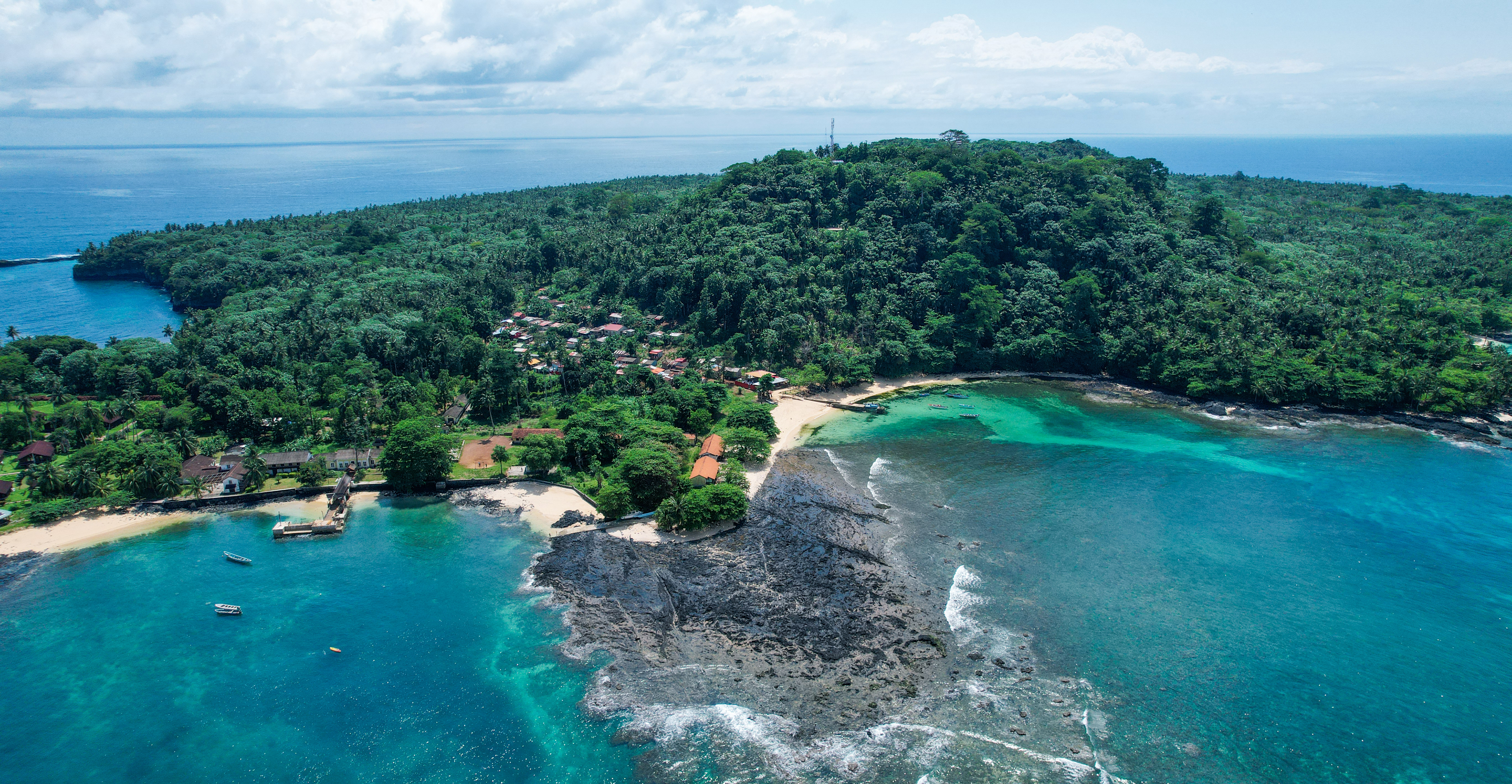
Life on the islands is calm and relaxed. Foreigners are most attracted to São Tomé and Príncipe by the pristine African jungle, picturesque beaches, and absence of industrial air pollution.
The São Toméan standard of living is modest, as is the case in many developing countries. Social infrastructure is limited; medical care is mainly available in the capital, but more complex treatments usually require travel to other countries. Higher education is concentrated at one university, so wealthy families send their children abroad to study.
The cost of living in São Tomé and Príncipe is generally low for foreigners. However, prices vary: local goods and services are inexpensive, while imported goods are expensive because they are shipped by sea or air. Still, there is an extensive selection of European products, which makes it easier for foreigners to adapt.
The average cost of a grocery basket, including various meats, cheeses, alcohol, and cigarettes, is about EUR 92. For comparison, a similar set of groceries in Portugal costs EUR 62. Rent for a small apartment ranges from EUR 174 to EUR 254 per month. The average cost of buying a home is EUR 1,326 per square meter. Therefore, life in São Tomé and Príncipe is quite comfortable for those with an income from abroad in euros or dollars. This is one of the factors that attracts investors and convinces them to obtain local citizenship.
The country’s culture has been shaped by African and Portuguese traditions. The majority of residents, nearly 64%, are Catholic, which is reflected in the holidays and way of life. Many cities have impressive cathedrals and other colonial architecture that attracts tourists.
Nature and tourism
São Tomé and Príncipe boasts unspoiled nature, including volcanic mountains reaching 2,024 meters high and endless beaches. There are also many man-made monuments and other tourist attractions:
- Beaches. The most picturesque are the Banana on the island of São Tomé and the Piscina on the island of Príncipe.
- Architectural monuments. Popular sites include the ruins of the hospital, the early 20th-century Roca-Agua-Ize estate, Fort São Sebastião, and the Cathedral of Our Lady of Grace of São Tomé.
- Museums. Learn about the state’s history at the National Museum of São Tomé and the Coffee Museum. The Kaxí Tetuga Museum of Marine Biodiversity and the Museum of the Sea and Artisanal Fisheries, where you can observe turtles, introduce you to the region’s flora and fauna. Tourists are also drawn to the coffee and cocoa plantations, where they can learn about the islands’ agricultural history.
- National parks. In the middle of São Tomé Island is Obo National Park, home to unique plants and birds. Another way to get in touch with the islands’ flora is to visit the Jardim Botanico do Bom Sucesso botanical garden.
- Waterfalls. The islands have several picturesque waterfalls, such as Bombaim and Cascata de São Nicolau.
- Pedestrian routes and areas. The most popular ones are Lagoa, Amelia, Flavio Boss, and Cascata de Praia Pesqueira.
The islands offer a variety of activities year-round, including jungle trekking, diving, and fishing. Many are attracted to trips to nearby small islands, such as Ilhéu de Santana, where you can explore the gorges between the rocks by boat.
Tourism in São Tomé and Príncipe is just beginning to develop. There are only a few hotels to choose from for a holiday: the Praia Inhame eco-lodge, Roca Monte Forte, and Jale Ecolodge hotels have the highest ratings. However, this also creates ample opportunity for successful investment projects in the tourism sector. Interest in the country has grown greatly in recent years, especially among Portuguese and other Europeans. The main attractions are safety, exoticism, and an absence of large tourist crowds, ensuring a relaxing and relatively inexpensive holiday.
Conclusion
São Tomé and Príncipe is a small country with steady growth, offering investors a rare combination of opportunities. There are no geopolitical risks or sanctions. The country has a transparent legal system, a fair tax policy, and an open attitude toward foreign capital. At the same time, the country remains an exotic destination with significant growth potential in tourism, agriculture, energy, and infrastructure.
The launch of a citizenship-by-investment program, as well as the development of gas and oil deposits, could be an economic breakthrough for São Tomé and Príncipe. For investors looking for unconventional jurisdictions who see a second passport as a path to freedom and diversification, this equatorial country offers a chance to swiftly alter their future.
If you are interested in obtaining São Tomé and Príncipe citizenship or investing in the country, iWorld Company specialists can help you at every stage, from assessing opportunities to supporting you in obtaining a passport, relocating, and starting a business. Provide your contact information, and our specialists will reach out to you to start planning your confident future.
Any questions?
Ask them for free to an immigration lawyer