
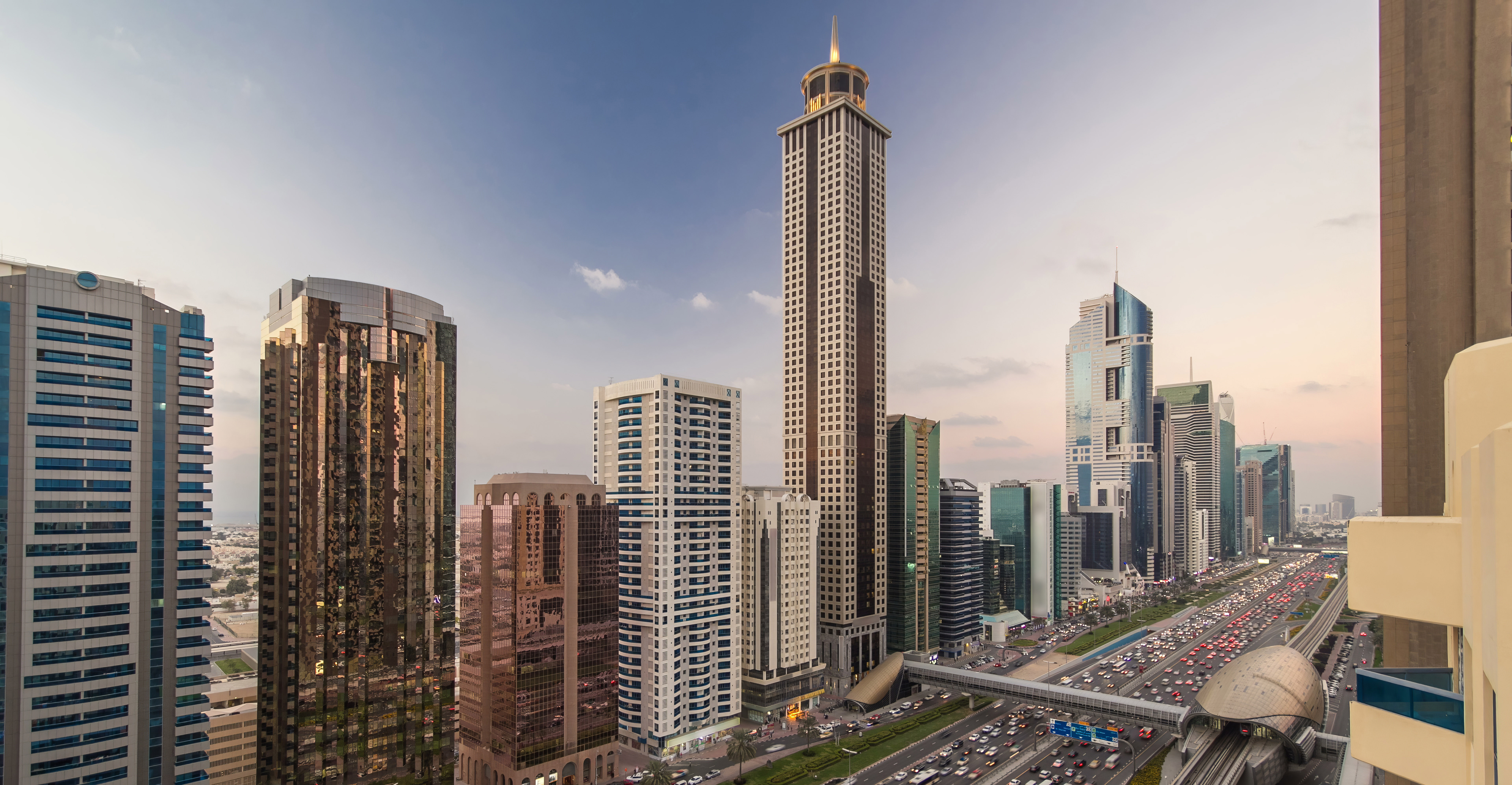
Today, real estate in the UAE, especially in Dubai, is one of the most popular investment and relocation options. The high demand for apartments, houses, and commercial properties among foreigners is due to the country’s high level of safety and quality of life. Furthermore, the UAE has no annual property tax or personal income tax, including rental income.
Foreigners can purchase real estate in the UAE. Special freehold zones have been established for this purpose, allowing for full ownership. The UAE property market, especially in Dubai, caters to foreign investors, and transactions are strictly regulated.
In this article, we will describe in detail how to buy real estate in Dubai, a key city for investors, and discuss all possible costs and risks. Additionally, we discuss the conditions under which a purchase can qualify for a residence permit in the UAE.
Pros and cons of buying property in the United Arab Emirates as a foreigner
Buying real estate in the UAE is ideal for those looking to protect their capital, earn a stable and high rental income, acquire high-quality and prestigious housing, or plan to relocate. Key benefits of buying property:
- Opportunity to obtain a residence permit: purchasing a property of a certain value can grant a residence permit for 2 years or 10 years for the entire family.
- Full Ownership: by purchasing a property in a special zone (freehold), a foreigner acquires full, perpetual ownership and can rent or resell the property.
- High rental yields: in popular areas, annual yields reach 5-9%, while the national average is 5.45%.
- No taxes: the UAE has no annual property ownership tax or personal income tax.
- High level of security: the UAE is ranked among the safest countries in the world. It is not involved in military conflicts and maintains political neutrality.
- High quality of life: developed infrastructure, healthcare, education, and luxury services.
Owning real estate in the UAE is a sign of prestige and status in business circles. Having your own apartment or house in an international financial center improves your image and helps you establish connections with international partners.
Purchasing real estate in the UAE is not ideal for those seeking low-cost relocation or citizenship. Disadvantages:
- High entry costs: average property prices range from USD 400,000 to USD 700,000.
- Restrictions for foreigners: property purchases are limited to certain areas and not throughout the UAE.
- Significant associated costs: budget for 6–8% of the property price for fees and commissions.
- Market risks: property prices are subject to adjustment, and rapid price appreciation is not guaranteed.
Can foreigners buy properties for sale in Dubai and the other emirates?
A foreigner can purchase real estate in Dubai and the other emirates of the UAE, but there are some limitations. Purchases are permitted only in areas defined by the UAE law, which are called freehold zones.
Depending on the emirate, different ownership rights apply in these areas:
- Freehold: A foreigner can own residential or commercial property and land entirely. They can sell, lease, or bequeath it.
- Limited: ownership of a home for up to 99 years, with the option to sell.
- Musataha: use of a home for 50 years, with the option to extend for the same period. Redevelopment and renovation are permitted.
- Usufruct: ownership of a home for 99 years without the right to renovate.
- Leasehold: a foreign national owns the property for at least 25 years.
Dubai is the most open emirate to foreigners. There are officially 23 freehold zones, but including subdistricts and communities brings the total to more than 50. The most popular of these are:
- Dubai Marina
- Palm Jumeirah
- Business Bay
- Downtown Dubai
- Emirates Hills
- Jumeirah Village Circle
- Jumeirah Lake Towels (JLT)
- Jebel Ali
- Sheikh Zayed Road
In the other emirates of the UAE, you can buy property in freehold zones, but there are fewer of these areas. In Abu Dhabi, for example, there are 9 districts open to international investors: Yas Island, Reem, Saadiyat, Lulu, Saih Al Sedayrah, Maria, Al Reef, Al Raha Beach, and Masdar City. In 2019, local legislation was amended to officially permit foreigners to own property outright. However, other contracts, such as musataha, usufruct, and leasehold, are also possible.
In Sharjah, foreigners do not become full owners of the property but rather acquire the right to use it for up to 100 years. This is only possible after obtaining special permission from the emirate’s ruler and registering the contract with the Property Registration Department.
Therefore, if you are wondering whether a foreigner can buy real estate in Dubai or other emirates, the answer is always yes. The process is clearly regulated and runs smoothly, especially with theи .
Dubai real estate market: what’s important to know in 2026
The Dubai real estate market has grown in recent years. According to official data from the Dubai Land Department, 209,181 purchase and sale transactions worth AED 665.62 billion were completed in 2025. Additionally, 3,908 transactions worth AED 13.94 billion were completed in January 2026 alone.
Demand is driven by:
- An influx of wealthy foreigners. IT specialists, entrepreneurs, and financially independent individuals are moving to the UAE. The total number of expats exceeds the number of citizens (10.4 million versus 1.3 million).
- Government support: Authorities are actively creating a real estate investment ecosystem and have attracted 110,000 new investors in 2024 alone.
- High rental demand. The number of visitors is growing faster than the housing supply. In 2025 alone, Dubai was visited by 15.7 million people.
- Tourism and infrastructure development: Authorities are investing in tourist clusters, which are combinations of hotels, restaurants, museums, and entertainment complexes, as well as transportation, thereby strengthening the city’s status as a financial and business hub.
- Simplified residency processing: A residence permit can be obtained by purchasing real estate of a certain value.
- Low and controlled inflation: at 2.73%, which reduces the risk of investment depreciation.
Property Search Request
- Personalized property selection
- Calculation of the total cost
- Comparison of Countries and Projects
- Consulting and support from an iWorld expert

Leave an application and get a consultation specialist
What types of real estate in the UAE are most often purchased by foreigners?
Apartments are in the greatest demand. They are purchased for both rental and long-term residence. The average price of an apartment is AED 1.52 million, but the final price depends on the location and type. Luxury apartments in prestigious areas are more expensive. For instance, apartments in a new residential complex in Dubai Marina start at AED 2.7 million, whereas in Dubai Downtown, they start at AED 6 million.
Apartments are in demand due to:
- high rental demand from tourists and expats;
- relatively low entry barriers;
- a large number of options on the market.
Villas and townhouses are popular among wealthy investors and families with children planning to live in the UAE long term. Prices vary by location. On the exclusive Palm Jumeirah island, for example, where celebrities such as David and Victoria Beckham are among the owners, prices start at AED 18 million. In less popular locations, houses cost between AED 2.5 and AED 12 million.
Advantages of buying villas and townhouses in the UAE:
- large area;
- prestige and privacy;
- large passive rental income, which can start at AED 300,000 per year.
Commercial real estate (such as offices, warehouses, and retail spaces), is purchased by businessmen and investors. It’s important to note that purchase conditions are more stringent and a legal review is usually required. The average price depends on the location and size of the property. For example, a 62-square-meter office in Business Bay costs AED 1.6 million, while a 4,200-square-meter warehouse in Dubai Industrial City costs AED 23 million.
Investors often choose to purchase properties off-plan. Advantages include a lower initial price and the possibility of obtaining an installment plan from the developer. However, these transactions are always risky: there may be delays in completion dates, indefinite construction pauses, and it is difficult to assess the quality of construction.
Completed properties from developers are also in demand. Advantages include the ability to move in or rent out the property immediately after purchase. Disadvantages include the requirement for full payment or a mortgage and less flexible payment plans.
Popular areas of Dubai for buying apartments and houses
Popular areas for buying real estate in Dubai among foreigners include:
- Dubai Marina.
This waterfront district, surrounded by skyscrapers, is ranked among the top 50 best places to live, according to Time Out. It boasts a vibrant urban lifestyle, and the Dubai Marina Mall is considered its heart. The area has seen increased rental demand among tourists and digital nomads. The average price per square meter is AED 25,400, with a return on investment ranging from 5% to 7%. - Downtown Dubai.
Dubai’s key cultural hub, located adjacent to the Burj Khalifa. In addition to entertainment venues and commercial properties, there are many residential buildings here. The average price per square meter is AED 32,200, with a return on investment of 4% to 6%. - Jumeirah Village Circle (JVC).
This area is popular due to its lower prices. The average price per square meter is AED 15,400. The location is actively being developed, so prices will soon rise. - Palm Jumeirah.
This man-made island in the shape of a palm tree is considered a symbol of Dubai’s luxury and an iconic location. It is home to elite resorts, such as Atlantis, The Palm, and luxury villas. Celebrities, including Madonna and Kim Kardashian, have purchased real estate here. - Dubai Hills Estate.
Located near the center of Dubai, it is considered one of the greenest areas for family life. The center boasts an 18-hole golf course and parks for families with children. Both luxury properties and more affordable apartments are available.
How much does real estate cost in Dubai? Prices, taxes, and fees when buying
Real estate prices in Dubai vary depending on location, property type, year of construction, and view (sea or city). Average apartment prices:
| Area | Category | Average price, $ |
|---|---|---|
| Jumeirah Bay Island | Premium | 9,802,590 |
| Palm Jumeirah | Premium | 1,347,590 |
| Business Bay | Mass market | 447,380 |
| Dubai Marina | Waterfront | 748,800 |
| Arabian Ranches | Mass market | 898,570 |
| Dubai Hills Estate | Mass market | 665,490 |
| Jumeirah Village Circle | Mass market | 266,850 |
| Umm Suqeim First | Waterfront | 5,432,300 |
When purchasing property in Dubai, you need to factor in additional costs:
- 4% title transfer tax, calculated based on the property price and sometimes split with the seller;
- 2-10% realtor commission, depending on the agency’s rates;
- AED 390 for title deed registration, paid to the Dubai Land Department;
- AED 5,300 for a No Objection Certificate (NOC), which is required for secondary market transactions;
- Mortgage registration fees and bank valuation fees (if applicable) depend on the property price.
In total, you need to factor in 6-8% of the initial property price for these costs.
Property maintenance costs in the UAE after purchase
In the UAE, individuals are not subject to an annual property ownership tax or rental income tax. However, every owner incurs regular maintenance costs:
- Service charge.
This includes cleaning, security, landscaping, waste disposal, repairs, and general property maintenance. The amount depends on the service package. On average, it ranges from AED 11 to AED 30 per square meter per year. - Utilities.
Electricity, water, and air conditioning are not included in the service charge and are therefore paid separately. The average monthly cost for an 85-square-meter apartment is AED 860. - Communications and internet.
Costs depend on the provider’s tariffs. On average, mobile phone service (including 10 GB of data) costs AED 225 per month, while unlimited home internet costs AED 350. - Insurance.
Mandatory only for those purchasing property with a mortgage. iWorld specialists recommend purchasing a property protection policy. The annual insurance premium is 0.1%-0.5% of the property price, depending on the coverage level and risk factors. - Property management.
If the owner rents out the property through a management company, they are required to pay a commission. The amount varies by agency. Management companies typically charge 5-10% of the monthly income for long-term rentals and 15-20% for short-term rentals.
Some emirates have small municipal fees that are automatically included in utility bills. These fees are usually paid by the tenant. In Dubai, for example, the fee is called the Dubai Municipality Housing Fee. It is 5% of the property’s annual rental value (or estimated rental value for owners). The annual fee is divided into 12 monthly installments.
How to buy a property in Dubai: a step-by-step guide
Buying property in Dubai is a strictly regulated process consisting of 6 stages:
- Define your goals and budget.
Determine the purpose of the purchase: investment, family relocation, business, or obtaining a residence permit. These goals determine the required down payment. For example, any property is suitable for personal residence, but for a residence permit, you need to start with a property of a specific price. When planning a mortgage purchase, find out the required down payment amount. - Select a property and area.
Popular locations, such as Dubai Marina and Downtown Dubai, are ideal for investment, while quieter, greener areas, such as Dubai Hills Estate, are perfect for family living. Realtors are typically involved at this stage, selecting the property, and lawyers compare options to avoid poor investments. - Inspect the property and conditions.
This stage should be entrusted to iWorld specialists: accuracy and knowledge of UAE law are essential. Lawyers will check ownership, encumbrances, and the reputation of the seller/developer. Next, the price, terms of the transaction, and payment terms are agreed upon. If a mortgage is involved, a bank employee will conduct an assessment of the property. - Sign a preliminary contract and pay a deposit.
When purchasing a property on the secondary market, a Memorandum of Understanding (MOU) or form F is signed to record the transaction details. This document is then registered with the Department of Land Resources. Then, a deposit of 10% of the property price is paid. For purchases from a developer, a reservation agreement is initially signed, followed by the first payment. - Obtain a No Objection Certificate (NOC) (if applicable).
This document is required when purchasing a resale property. It confirms that the management company and other government agencies have no objections to the transaction. The application for a NOC is submitted online through the Ministry of Industry and Advanced Technology’s website. - Final payment and registration of ownership.
Transfer the remaining balance to the seller. If you have a mortgage, register the transaction with the bank. The buyer also pays a 4% title transfer tax and other mandatory fees. After registering the transaction with the Dubai Land Department, the new owner receives a title deed.

Mortgages and installment plan for buying real estate in the UAE
Foreigners can obtain mortgages in the UAE, but the terms for non-residents are stricter than for citizens and residents.
| Criteria | UAE citizens | UAE residents | Non-residents |
|---|---|---|---|
| Maximum loan amount, AED | 1,020,000 | 960,000 | 720.000 |
| Loan term, years | 1–25 | 1–25 | 1–25 |
| Down payment, % | 15 | 20 | 40 |
In order to obtain a mortgage, you must verify your income and demonstrate a stable financial history. Before issuing a loan, the bank must inspect the property and approve it. Additionally, clients pay fees for registering the mortgage and collateral, as well as for the property appraisal.
When purchasing a property during the construction phase, you can arrange an installment plan with the developer. This is popular among investors because the entry threshold is lower during the foundation stage. Some developers offer 0% installment plans and convenient payment plans, such as 20/80 or 60/40. For instance, you might make a 20% down payment when you reserve an apartment, 55% during construction, and the remaining 25% when you receive the property. However, with this option, you are tied to construction deadlines and risk working with an unreliable developer.
If you are buying real estate to obtain a residence permit, it is important to meet the minimum deposit requirements. Typically, at least 50% of the purchase price of an apartment or house must be paid toward the mortgage when applying for a residence visa.
Residence permit and Golden Visa in the UAE with real estate purchase
Purchasing real estate in the UAE can provide legal grounds for obtaining a residence permit. The validity period depends on the property’s value. Currently, 2 types are available: the standard investor visa and the golden visa.
The standard investor visa is issued for 2 years and can be renewed as long as you maintain ownership of the property. The minimum investment is AED 750,000 (USD 204,220). After receiving the residence permit, foreigners can invite their spouses and children, regardless of their age, and they will also be issued two-year visas. Important note: The property must be completed, not off-plan. A mortgage can be used to purchase the property; however, to obtain a residence permit, at least half of the purchase price must be paid without any outstanding balances.
The Golden Visa is issued for 10 years to those who purchase real estate worth at least AED 2 million (USD 544,600). The transaction can be completed without a local sponsor. A residence permit is issued to the owner. Once received, the owner can invite their spouse and children, regardless of age. Mortgage financing through a UAE bank is permitted. In some cases, it is possible to purchase an off-plan property if all the basic payment conditions are met.
A residence permit entitles you to:
- Obtain an Emirates ID.
- Long-term residence in the Emirates.
- Open accounts with local banks.
- Obtain a prestigious education.
- Optimize your finances (there are no taxes on income, dividends, wealth, or real estate).
- Obtain a local driver’s license.
Buying property in the UAE is an opportunity to quickly become a resident of one of the safest countries in the world. Take the first step toward your Arab dream — sign up for a consultation today!
A UAE residence permit allows you to:
- To live in a country with a developed economy
- Open accounts at reputable banks
- Doing Business in the UAE
- Simplified visa processing for Schengen countries and the United States
Leave an application and get a consultation specialist
A brief overview of the main points of purchasing property in Dubai and the UAE
Key points to know when planning a real estate purchase in Dubai or another emirate in the UAE:
- Right to purchase: Foreigners have the right to purchase real estate in the UAE, even without a residence permit, in freehold zones.
- Dubai is a key real estate market offering a wide selection of properties, such as houses, apartments, and luxury villas, as well as clear and stable rules for investors.
- Regulated procedure: the purchase and sale transaction is structured consistently and takes several weeks, and some stages can be completed remotely through a lawyer’s power of attorney.
- Residence permit in exchange for investment: The investor and their family receive a two-year residence permit when purchasing real estate for AED 750,000 or more and a 10-year «golden visa» for properties priced at AED 2 million or more.
- Additional costs: 6-8% of the property price should be included for government fees, agent fees, and transaction registration.
- No taxes: There is no annual tax on property ownership or rental income in the UAE, and the average yield is 5-8%. This makes the market attractive for investment and capital diversification.
Get advice