
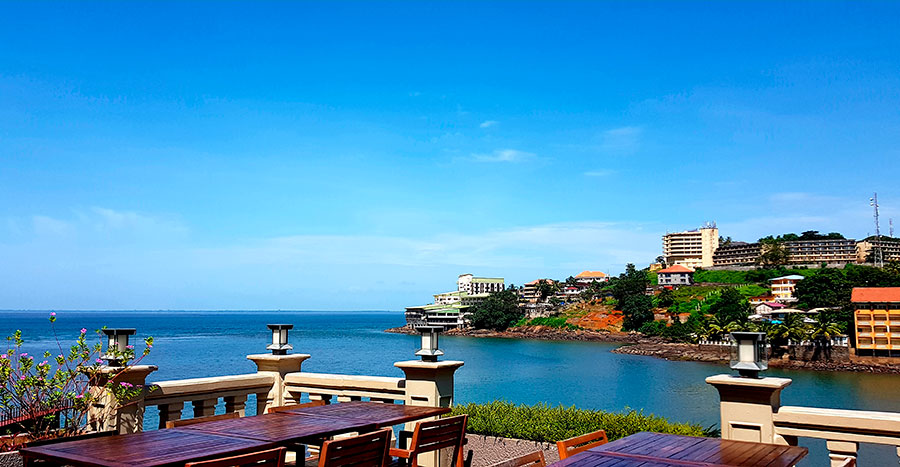
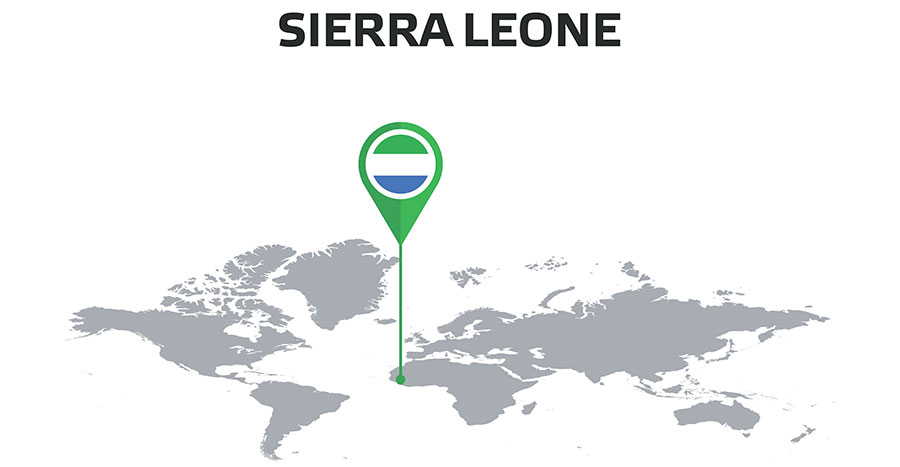
Sierra Leone is located in West Africa, bordering Guinea and Liberia. While most locals speak Creole, the country’s official language is English. It is also used for business communication.
Sierra Leone actively cooperates with international organizations such as the UN, the World Bank, and the IMF. The country has trade agreements with the EU and the US. As a member of the Economic Community of West African States, Sierra Leone makes it easier for investors to trade in the African market.
Investments grant the right to obtain a Sierra Leonean passport
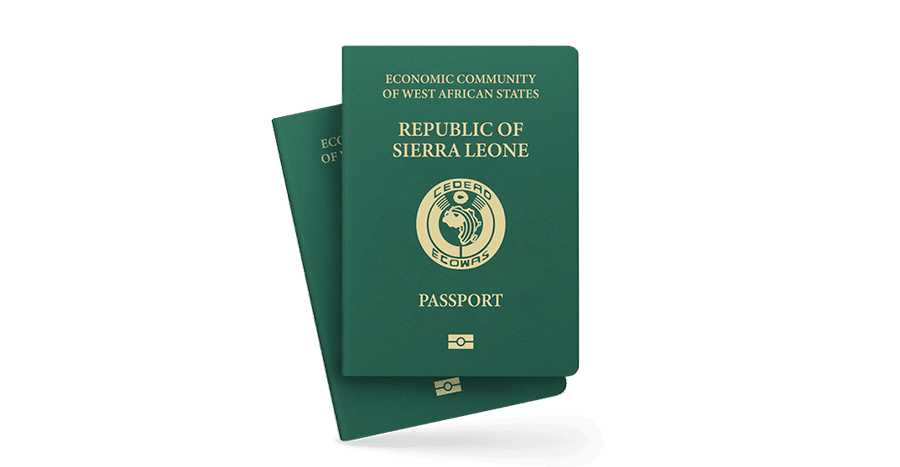
Investments under the government’s “Go-for-Gold” program grant investors the right to obtain a second passport in Sierra Leone. Unlike Caribbean countries, there are no citizenship restrictions. To obtain a second passport, you must:
- Make a non-refundable contribution to a government fund;
- Prepare documents;
- Successfully pass a due diligence check.
The minimum investment for the main applicant is USD 140,000. You can include relatives and a business partner in your application. To include them, you must pay an additional fee for each person:
| Family members/Applicants included | Additional fee per person, USD |
|---|---|
| Spouse, children under 18, parents, and grandparents | 10,000 |
| Children aged 18+, siblings under 30, and spouses and minor children of siblings | 20,000 |
| Business partner (co-investor) | 30,000 |
In addition to the initial investment, a state fee for due diligence is required:
| Number of applicants | Government fee, USD |
|---|---|
| Up to 5 | 5,000 |
| 6-10 | 10,000 |
| Each additional applicant beyond 10 | 900 |
Sierra Leone’s economic citizenship program is one of the most advantageous in the world. For a relatively small additional fee, the entire family receives a second passport within 3 months. Sierra Leonean citizenship grants the right to:
- Live, work, and do business in Sierra Leone;
- Visa-free entry to 67 countries;
- Travel, live, work, or do business in any of the 12 Economic Community of West African States (ECOWAS) countries;
- Open foreign bank accounts;
- Purchase up to 20 kg of gold at a reduced price within 5 years.
Many people obtain a second Sierra Leone passport as a backup. Due to economic or political pressure, investors can move to an English-speaking country at any time and transfer all their capital. Furthermore, there is no requirement to live permanently in Sierra Leone after receiving a second passport.
- Proven investment programs
- Full cost calculation
- Comprehensive legal support
Sierra Leone’s economic growth rate is +5% of GDP
According to the International Monetary Fund, Sierra Leone’s average annual real GDP growth rate as of October 2025 is 4.9%. This is 0.6% higher than in 2024. This trend indicates a gradual economic recovery following the end of the civil war in 2002 and the Ebola outbreak in 2015.
The country’s economic growth is driven by agriculture and mining; it exports iron ore, diamonds, and rutile. At the end of 2025, Sierra Leone’s Minister of Finance announced a project aimed at strengthening food security. As part of the initiative, 300,000 farmers were registered, and 13 new rice mills were constructed. In 2026, the government plans to increase farmers’ incomes by plowing 35,000 hectares of rice fields and planting 3.5 million cocoa seedlings. Subsequently, all products will be exported.
For investors, Sierra Leone’s economic growth means that the market has not yet become overheated. They can enter with lower investments and potentially generate higher returns.
Sierra Leone is a strategically located country
It is situated in West Africa on the Atlantic Ocean. This location facilitates international trade and maritime logistics. The capital, Freetown, is home to a major port, ensuring the uninterrupted transit of goods. The country is located almost equally close to Brazil and Northern European countries such as the Netherlands and Germany. This enables cargo from Sierra Leone to reach both the EU and Latin America more quickly than cargo from East or Southern Africa.
Competition in the Sierra Leone market is low
The country’s economy is still in its infancy, so many market niches remain unoccupied. This is especially noticeable in key sectors:
- Telecommunications;
- Banking;
- Manufacturing;
For potential investors, this presents an opportunity to enter the market at an early stage with minimal investment and potentially achieve a 2- or even 3-fold return on investment.
Mining is the most promising sector for investment
Mining accounts for 70% of Sierra Leone’s exports and is its primary source of income. According to the US Department of Commerce, the total value of exports in 2024 was USD 1.2 billion. Sierra Leone is rich in:
- Bauxite;
- Lithium;
- Diamonds;
- Rutile;
- Coltan;
- Zircon;
- Gold;
- Iron ore;
- Tantalum
The abundance of these resources and the low level of market competition offer investors ample opportunities in exploration, processing, and production.
In addition to mining, the country is developing its agriculture and agribusiness sectors. It has approximately 5.4 million hectares of arable land, over half of which remains undeveloped. Investors have the opportunity to establish themselves in the production of vegetables, rice, cocoa, cassava, coffee, and palm oil. Furthermore, the government supports initiatives to promote the growth of agriculture and agribusiness. The authorities recently launched the Sierra Leone Rice Special Agro-Processing Zone project, allocating USD 75 million to increase rice production and yields.
Sierra Leone has a vibrant artisanal and industrial fisheries industry, with a 560-kilometer coastline and 30,000 square kilometers of continental shelf. Its waters are home to valuable species such as tuna, shrimp, and bottom- and pelagic-dwelling fish. Investors are interested in fish processing, cold storage, and export.
Sierra Leone’s tourism and hospitality industries are gaining momentum. The U.S. Department of Commerce predicts that ecotourism, adventure tourism, and cultural tourism will experience the greatest growth. This is due to the country’s many pristine beaches and wildlife sanctuaries.
Information technology (IT) is another promising area for investment and business. Sierra Leone’s authorities are gradually moving toward digitalizing public services. Investors can provide new fintech solutions for mobile banking, government, educational, and medical service portals, ICT infrastructure, and cybersecurity.
Tax policy and fiscal system
In Sierra Leone, taxes are levied on individuals who are tax residents of the country. To be considered a tax resident, one must live in the country for at least 182 days per year. The income tax rate is progressive, meaning the tax rate increases with higher income. Instead, income is divided into parts, and a different percentage is applied to each part:
| Annual income, USD | Monthly income, USD | Tax rate, % |
|---|---|---|
| First 293 | First 24 | 0 |
| Next 293 | Next 24 | 15 |
| Next 293 | Next 24 | 20 |
| Next 293 | Next 24 | 25 |
| Amount above 1,172 | Amount above 98 | 30 |
Let’s look at an example. Your annual income is USD 50,000. The tax rate is as follows:
- The first USD 293 is tax-free;
- The next USD 293 is tax-free at 15% (USD 43.95);
- The next USD 293 is taxed at 20% (USD 58.60);
- The next USD 293 is taxed at 25% (USD 73.25);
- The remaining USD 48,828 is taxed at a rate of 30%, or USD 14,648.40.
The total tax on this amount is USD 14,824.20.
Capital gains tax is 30%, and VAT is 15%.
Special tax benefits are available for investors. Those who obtain a second passport through the “Go-for-Gold” program are exempt from paying taxes on foreign assets and capital. Investors outside the program are also eligible for tax incentives introduced by the Law on Finance in 2025. These incentives apply to large foreign investment projects in which residents own at least 20% of the shares:
| Number of employees | Minimum investment, USD | Corporate tax exemption, years |
|---|---|---|
| 100 | 5 million | 5 |
| 150 | 7,5 million | 10 |
Companies importing equipment and machinery into Sierra Leone are also eligible for tax incentives. New companies that invest at least USD 10 million are exempt from duties for 3 years. The same applies to existing companies investing an additional USD 5 million.
Renewable energy products can be imported into Sierra Leone duty-free. To qualify, a company must employ at least 50 people and have a minimum investment of USD 500,000.
A tax incentive is also available for those working in research and development (R&D). These companies receive a 125% tax deduction on operation-related expenses, training expenses, and export promotion expenses.
Agribusinesses can receive a full corporate tax exemption. To qualify, the company must cultivate large areas or invest in livestock farming. Import duties are waived for agricultural machinery, processing equipment, agrochemicals, and other inputs.
Any business operating in the tourism sector can enjoy a 5-year corporate tax exemption. The total exemption cannot exceed 150% of the company’s initial investment.
Banking system strength
The Bank of Sierra Leone is the primary regulator that develops and implements monetary and supervisory policy. The country’s banking sector includes:
- 14 commercial banks;
- 17 community banks;
- 59 financial services associations;
- 13 microfinance institutions, 2 of which accept deposits and 11 of which only issue loans;
- 3 mobile money transfer operators.
The commercial banking sector’s total assets are approximately USD 588 million, over 60% of which is accounted for by 11 foreign banks.
Local financial institutions offer international money transfer services such as Western Union, MoneyGram, and Ria Money Transfer. Money can be sent and received.
Investors can open accounts in either local currency (Leone) or foreign currency. All money transfers over USD 10,000 must be processed through banks only. This requirement was introduced in 2012 by the Anti-Money Laundering and Terrorist Financing Act. Banks do not issue loans in foreign currency.
The Bank of Sierra Leone is responsible for foreign exchange regulation based on the Bank of Sierra Leone Act. The bank issues guidelines governing the purchase, sale, safekeeping, and transfer of foreign currency. To prevent crises, the bank may restrict transactions for up to 2 years.
Sierra Leone’s investment climate
International experts consider Sierra Leone’s investment climate favorable. The market itself has high growth potential in agriculture, tourism, mining, energy, and infrastructure development.
In 2022, the government established the National Investment Board (NIB). The NIB’s main goal is to simplify bureaucratic procedures, strengthen trust in the company registration process, and create a transparent investment climate. The NIB supports foreign investors by providing various advisory services and facilitating registration, licensing, and business permit processes.
Foreigners can fully own companies in Sierra Leone, which significantly simplifies the registration process and subsequent operations.
After all taxes have been paid, profit repatriation is also permitted. You can remit dividends, proceeds from business liquidation, and dispute resolution fees.
Businesses can easily operate in Sierra Leone thanks to bilateral investment and tax treaties. Investors gain access to major foreign markets due to:
- The EU’s “Everything But Arms” initiative, which allows for the duty-free import of goods (excluding weapons) into the EU market;
- The African Growth Opportunity Act with the U.S. (enables duty-free import of over 1,800 goods into the U.S. market);
- The African Continental Free Trade Agreement (55 member states);
- A trade agreement with ECOWAS.
Sierra Leone’s constitution provides for the protection of foreign investment. The legislation contains a number of guarantees, such as the right to property and privacy.
- Find a program that fits your budget
- Compare requirements and benefits across countries
- Choose the right route to a residence permit
SLIEPA: government support for foreign investment
The Sierra Leone Investment and Export Promotion Agency (SLIEPA) is an investment and export promotion agency. It is administered by the NIB. SLIEPA acts as a link between the government and foreign investors. SLIEPA provides comprehensive support in the following areas:
- Business registration, obtaining licenses and permits;
- Identifying available tax incentives;
- Finding partners for project collaborations;
- Resolving disputes and interacting with government agencies.
SLIEPA’s main goal is to improve Sierra Leone’s investment climate and attract foreign investors to the country. This cooperation helps investors minimize bureaucratic red tape and enjoy the full benefits of investing in Sierra Leone.
Investment risks in Sierra Leone
Michigan State University classifies Sierra Leone as a high-risk investment country due to:
- Dependence on the prices of imported products and exported minerals;
- Insufficient skills among residents;
- An ineffective healthcare system;
- Underdeveloped infrastructure;
- A high poverty rate (56.8%, according to the World Bank);
- Difficulty accessing credit for small and medium-sized businesses;
- High levels of corruption (ranked 109th out of 180 countries, according to Trading Economics; a lower rank indicates a worse outcome).
Despite the investment risks, Sierra Leone has certain strengths. For example, the expansion of port operations and increased tourism potential are planned for the future. International financial support and mining exports are stimulating economic growth. Today, many foreign investors are considering the Sierra Leonean market despite the risks because it offers numerous vacant niches with low entry barriers.
Practical advice for investors in Sierra Leone
To successfully enter the Sierra Leone market, it is important to have the necessary funds and to understand the country’s specific circumstances. We’ve compiled a list of practical tips to help minimize risks:
- Check licenses
Before starting a business, check which licenses you’ll need and from which government agency. This depends on the type of activity. For instance, if you’re working in the fishing sector, permits are issued by the Ministry of Marine Resources and Fisheries. - Check land rights
Full land ownership is only possible in Freetown and the Western Region of Sierra Leone. Outside these regions, only long-term leases of up to 99 years are permitted. - Doing business with a local sponsor
While foreigners can be sole proprietors of a business in Sierra Leone, a local partner may be necessary. For instance, under the traditional land tenure system, investors can only lease a plot of land by forming a joint venture with the Paramount Chief. In this regard, it’s best to rely on SLIEPA, as they can help you find local partners. - Working with government agencies
When running a business, you will need to interact with various government agencies, such as the tax office, to file reports. Find out in advance which agencies you’ll need to visit and what documents you’ll require.
Overall, investors should approach the Sierra Leone market with . Doing so reduces the risk of financial and time losses due to bureaucratic nuances. Furthermore, qualified lawyers will be necessary when applying for Sierra Leone citizenship by investment. Sign up for a consultation, and we’ll provide more details about the country’s market and help you enter it under the most favorable conditions.