
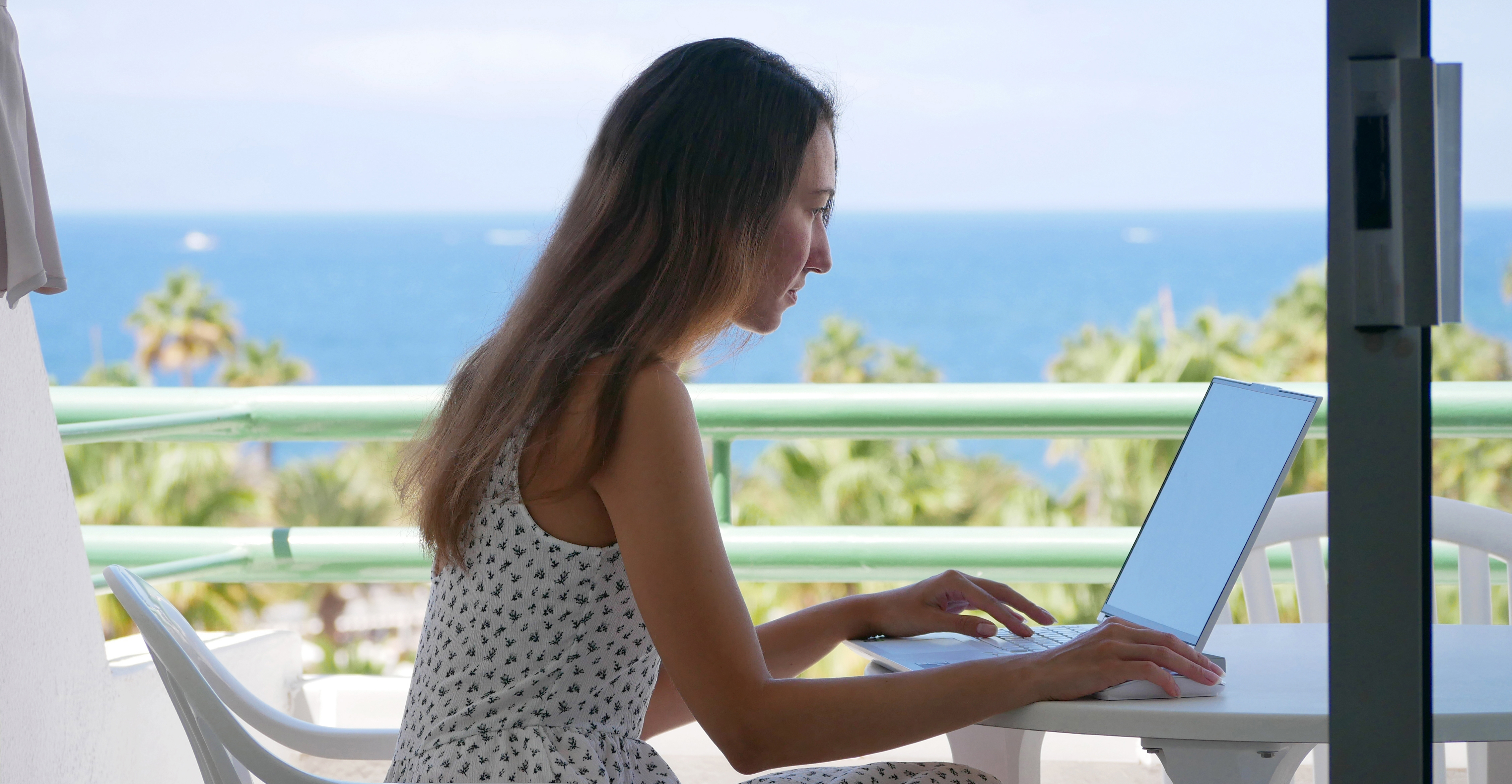
Launched in 2022, Montenegro’s digital nomad visa aims to enhance the country’s global image and attract talented professionals to spend their money here. Remote workers and freelancers receive a residence permit for up to two years, which can be extended for the same period. To qualify, applicants must rent a home in Montenegro, obtain health insurance, and prove that their work is remote and that they have sufficient funds to cover their living expenses.
When the program for remote workers launched, the Montenegrin government announced that it would run until the end of 2026. It’s still possible to apply for and receive a residence permit, but it’s unclear if this will be possible in early 2026. Therefore, digital nomads typically choose other countries with established programs. Spain is a popular choice among European countries, while those who aren’t tied to a specific region prefer the UAE.
What is Montenegro Digital Nomad Visa, and what are the eligibility requirements?
Digital Nomad Visa Montenegro is a special type of residence permit for foreigners working remotely. The visa is suitable for:
- freelancers;
- IT specialists;
- businesspeople;
- accountants;
- editors;
- business consultants;
- translators;
- people of any other profession who can perform their duties using only a phone or computer and the internet, without being tied to a workplace.
The main requirement is that the income must come from a foreign source, not a Montenegrin one.
In addition to the Digital Nomad Visa, you can obtain a Montenegro residence permit by registering your own business. This option is popular among those who want to settle in Montenegro long-term and work with foreign and local clients. IT specialists, marketers, and consultants, for example, often open small companies (DOOs, which are similar to LLCs) to legally issue invoices in euros, rent an office, hire employees, and pay taxes under a simplified system.
Now, let’s consider the differences between a digital nomad visa and a tourist or regular work residence permit:
| Comparison criteria | Digital Nomad Visa | Tourist Visa | Work Residence Permit |
|---|---|---|---|
| Duration of stay | Up to 2 years | Maximum 3 months | 1 year |
| Work permit | For foreign companies/clients | No | For Montenegrin employers |
| Legal status | Legal long-term residence | Tourism only | Legal long-term residence |
| Extension of stay | Yes, for 2 years | Only in case of unforeseeable circumstances | Yes, for up to 2 years |
| Tax benefits | Yes | No | No |
You can move to Montenegro as a Digital Nomad with your family. After receiving your residence permit, your immediate family can join you:
- spouse;
- minor children under 18 (including your partner’s children).
Current visa requirements in 2026
To move to Montenegro as a digital nomad, you must:
- Work for a foreign company or conduct business outside of Montenegro.
- Perform your duties remotely (without being tied to an office).
- Rent or buy a home in Montenegro.
- Obtain health insurance (tourist insurance is acceptable).
- Have sufficient income to cover living expenses in the country.
- Not have a criminal record for serious crimes carrying a prison sentence of at least six months.
A remote worker’s income must be at least three times the minimum wage established by the Montenegrin government. In 2026, the minimum wage will be EUR 600 or EUR 800, depending on the level of education (vocational or bachelor’s degree or higher). Therefore, your income must be between EUR 1,800 and EUR 2,400.
What documents are required for the application?
To apply for a digital nomad visa in Montenegro, please prepare the following:
- a valid passport;
- a completed application in Montenegrin or English;
- medical insurance for two years of residence in Montenegro;
- proof of housing in Montenegro, such as a lease agreement or property title deed (list nepokretnosti);
- a certificate of good conduct from your country of citizenship;
- a bank statement or other proof of income for the past year;
- an employment contract or contract with a client confirming remote work is also required.
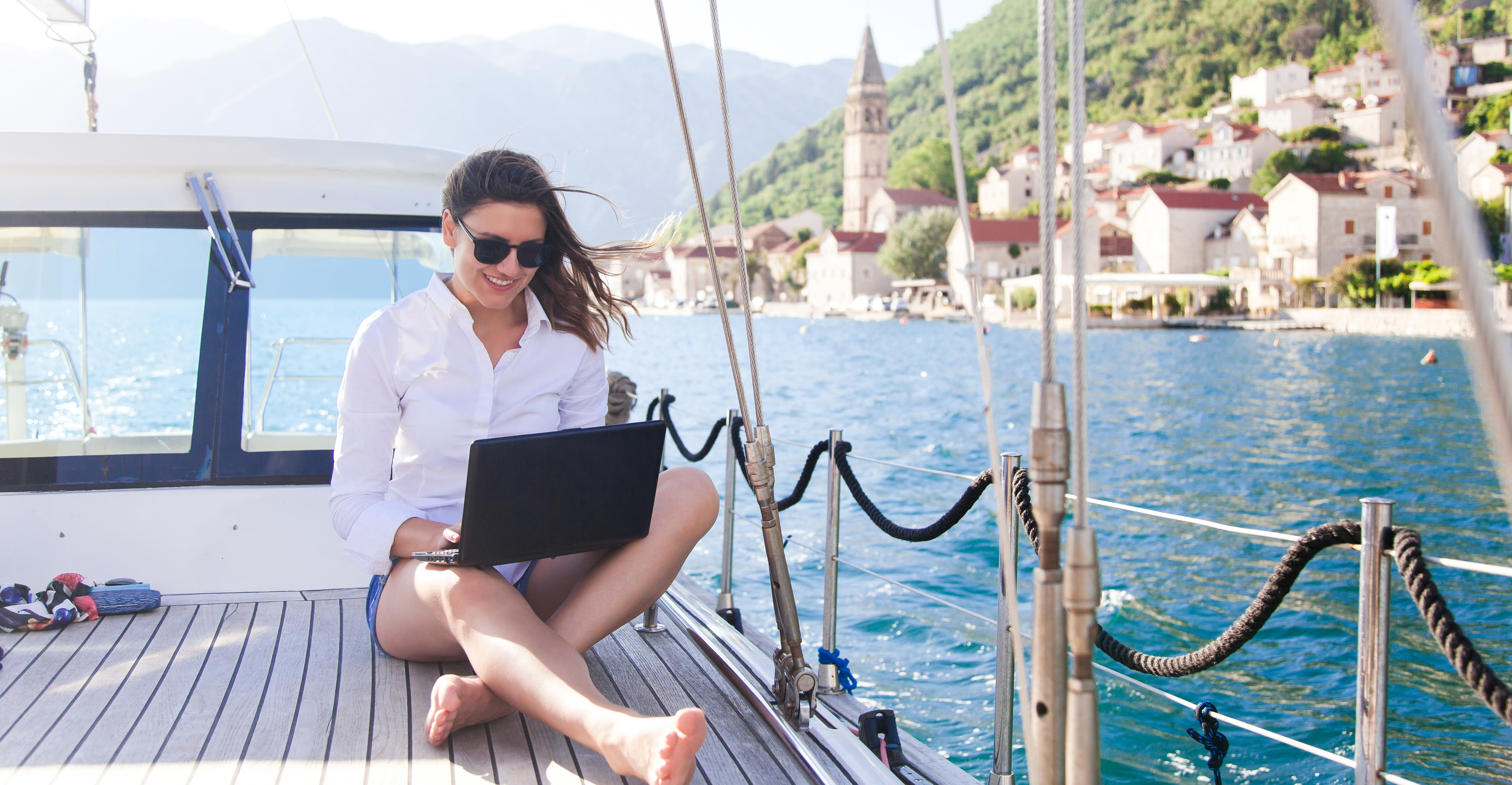
How to obtain a Digital Nomad visa in Montenegro
Applying for a Digital Nomad visa to Montenegro involves 5 steps:
- Document preparation
Gather all the documents according to the current list. Pay particular attention to proof of financial solvency. If you receive income in currencies other than euros, the equivalent in euros or the current exchange rate at the time of deposit must be indicated. A certified translation of all documents into Montenegrin is required.
- Apply for a visa (if required) and enter Montenegro
If you cannot enter Montenegro under the visa-free regime, you must apply for a visa at an embassy/consulate. You do not need a long-term residence permit (category D), you can enter with a tourist visa (type C). The main requirement is that you be legally present in Montenegro when you apply for a residence permit. A visa decision is issued within 10 days, though this period may be extended to 30–60 days.
- Registration
Upon arrival in Montenegro, you must register within 24 hours at a local police station or with the National Tourism Organization. Those staying at a hotel are exempt from this obligation, as the property owner will submit the application on their behalf. After registering, you will receive a «white/registration card», which confirms that you have completed the procedure.
- Obtain a residence permit
Before your visa-free or visa stay ends, contact the local Ministry of Internal Affairs office and apply for a residence permit. During your visit, you will be required to provide biometric data, including a photo and fingerprints. If you submit your application on time, you may remain in Montenegro until a decision is made (which takes 40 days), even if your permitted stay has expired.
- Obtain a residence card
Employees of the Ministry of Internal Affairs will notify you of the decision by mail or phone and inform you of the date when you can receive your residence card. You must visit the government office in person to receive it.
In total, processing your digital nomad visa will take approximately 2 months. If you want to expedite the process, consider Spain or the UAE, as these countries offer digital nomad visas in about 10 days.
- Selecting the most suitable country;
- Consultations and turnkey processing;
- Guaranteed results under the contract.
Visa costs
Applying for a digital nomad visa to Montenegro incurs the following costs:
| Expense item | Cost, € |
|---|---|
| Visa (if required) | 35 |
| Residence permit application | 47 |
| Residence permit extension | 27 |
| Health insurance policy (for 2 years) | 760 |
| Document translation (per copy), notarized | From 19 |
Residence permit renewal and future prospects
A residence permit for freelancers in Montenegro can be renewed after 2 years. To do so, an application must be submitted to the local police station no later than one month before the current card expires. If all documents are in order, a new permit will be issued for up to 2 years.
A residence permit can only be renewed once, so in total, you can live in Montenegro for up to 4 consecutive years with a digital nomad visa. Those who wish to remain in the country longer must leave for at least 6 months after this period. After that, they can renew their residency. However, there is currently no official information regarding whether residence permits will be available for remote workers in the future.
Taxes for digital nomads in Montenegro
Digital nomads do not pay income tax to the Montenegrin treasury on salaries received from a foreign source. This is enshrined in Article 32d of the Law on Personal Income Tax. Digital nomads pay all mandatory tax contributions in the country where they are officially employed or conduct business.
Also, you can find more detailed information about the country’s tax specifics and other important aspects in our article about Montenegro citizenship.
Advantages and disadvantages of the program
Today, independent experts rank Montenegro third among the best countries for digital nomads, behind Spain and the UAE. Remote workers are increasingly choosing the country due to:
- The low cost of living — an individual spends an average of EUR 620 per month;
- Affordable housing — you can rent a one-bedroom apartment in the the capital for EUR 460–700;
- Tax exemption — digital nomads do not pay income tax in Montenegro;
- The availability of coworking spaces — for EUR 12 per day, you can rent a fully-equipped workspace in a comfortable office.
However, there are also disadvantages. Initially, the digital nomad program was launched until 2026. It is not yet known whether or not it will be extended, or if freelancers will be able to continue living in the country and renew their residence permits regularly, or if newcomers will receive the status for 2 years immediately.
If stability is important to you, it would be wise to consider other countries with similar ongoing programs. Spain is one such example, as, unlike Montenegro, freelancers there are able to work to a certain extent in the local market.
Consulting with iWorld is the best way to help you find the right solution.