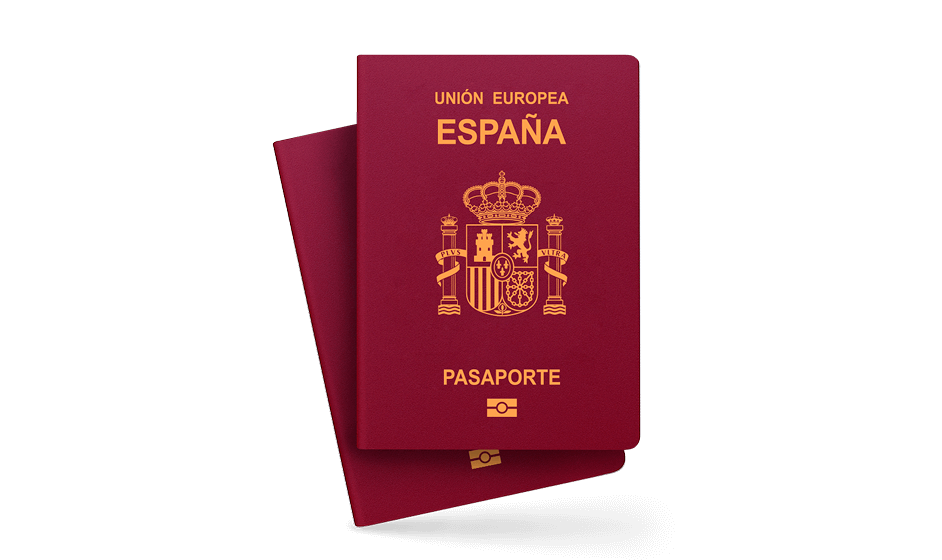


Spanish citizenship confirms your status as an EU citizen, allowing you to live, work, do business, and study in any country of the European Union without additional permits. A Spanish passport provides visa-free entry into 175 countries worldwide, including the entire European Union, Great Britain, Japan, and nearly all of Latin America.
However, obtaining Spanish citizenship is not easy. To naturalize, you must live in Spain for 10 years, pass language and culture exams, and demonstrate your integration into Spanish society. Additionally, there are some accelerated options, though they are not suitable for everyone. These options are available to spouses of Spaniards, refugees, immigrants from Latin American countries, and individuals with exceptional merits. Children born in Spain can obtain citizenship within a year, but giving birth in Spain does not give parents any privileges.
Advantages and disadvantages of Spanish citizenship
The main advantage is the opportunity to live and work in Spain and other EU countries without a residence permit or additional permits. If you want to live in an EU state for more than 3 months, you only need to register your address.
Other benefits of Spanish citizenship include:
- For the family: After receiving a passport, you can obtain citizenship for your children «by choice», through a simplified procedure. Spouses can become naturalized within a year.
- Visa-free travel: The Spanish passport allows visa-free or electronic authorization entry into approximately 175 countries, including Canada, the United Kingdom, Japan, and countries in Latin America.
- Education: Spaniards and other EU citizens can study at European universities for less than foreigners can. For instance, a course at the Technical University of Madrid costs EUR 1,015 for citizens and EUR 6,823 for non-citizens.
- Social guarantees: Spanish citizens receive EU retirement benefits and social security even if they live in another EU country. The European Health Insurance Card (EHIC) provides emergency medical care in all EU countries, as well as in Iceland, Liechtenstein, Norway, Switzerland, and the United Kingdom.
- Banking: As an EU citizen, you can use EU banks without any problems. In contrast, non-EU citizens usually need a residence permit from a specific country to open a loan or even a bank account.
- Protection from the state: Spaniards can seek assistance from the embassy of any other EU country. As a citizen, you cannot be deported from Spanish territory.
- Quality of life: Spain has a mild climate, developed infrastructure, and relatively low prices. According to Eurostat, the cost of living in Spain is 10-15% lower than in France or Italy.
Although the disadvantages of Spanish citizenship are minor, they are still important to consider:
- Renunciation of existing citizenship. This rule applies to immigrants from Ibero-American countries (Latin America), Andorra, Portugal, the Philippines, and Equatorial Guinea. Spanish Sephardic Jews are exempt from this requirement.
- The long path to citizenship. You often need to live legally and continuously in the country for 10 years, for example, as an entrepreneur or a financially independent person.
- Spanish language proficiency. You must pass a language test confirming your level is at least A2. You must also pass the Spanish Constitution and Sociocultural Realities (CCSE) test.
Requirements for obtaining citizenship
The requirements for obtaining Spanish citizenship are outlined in articles 21–22 of the Civil Code:
- Long-term legal residence: 1 year, 2 years, 5 years, or 10 years, depending on your personal circumstances.
- Age of majority: The affairs of minors must be handled by a legal representative.
- Law-abiding: A person should not have a criminal record in their home country or Spain.
- Integration: It is necessary to master the Spanish language at a basic level and study the main provisions of the Constitution and the specifics of the local culture.
To obtain citizenship through accelerated naturalization, an individual must meet additional requirements, such as being married to a Spanish citizen or holding Argentine citizenship.

Different ways to obtain Spanish citizenship
Spanish citizenship may be acquired in several ways: by birth, through naturalization, marriage, repatriation, or refugee status. In rare cases, citizenship may also be granted to foreign nationals for exceptional merit or by special government decision.
After 2025, it is no longer be possible to obtain Spanish citizenship by investment (after the «Golden Visa»). Nowadays, the most common reasons for foreigners to immigrate to Spain are business, financial independence, and working as digital nomads. These are currently the most affordable ways to obtain a residence permit on the path to citizenship.
By birthright (jus sanguinis and jus soli)
Children of Spanish citizens are automatically granted Spanish citizenship by blood (jus sanguinis) regardless of their birthplace. This applies to adoption as well.
In Spain, the right of soil (jus soli) is not unconditional, unlike in Latin American countries. However, there are several cases where a child born in Spain is entitled to citizenship:
- their father or mother was born in Spain, regardless of their nationality;
- the parents are stateless or cannot transmit their country’s citizenship to the child due to Spanish law;
- the child’s father and mother are unknown.
If any of these circumstances arise after the child reaches adulthood, they have 2 years to apply for Spanish citizenship by choice before turning 20.
Naturalization by residence permit
Naturalization is the most common path to Spanish citizenship for foreigners. Applicants must integrate well into society, learn the language, become familiar with the culture and laws, and successfully pass the required tests.
The main requirement is continuous legal residence in Spain with a residence permit for at least 10 years. The process typically involves the following steps:
- Obtain a temporary residence permit (valid for 1–2 years).
- Renew or apply for permanent residence after 5 years.
- Apply for citizenship after 10 years of residence.
Legal grounds for obtaining Spanish residency:
- Financial independence. You can relocate with your spouse, children, or parents if you have a monthly income of EUR 2,400 plus EUR 600 for each family member. The income must come from abroad, such as rental income, a deposit, or a pension. Working in Spain is not permitted. A residence permit is initially issued for 1 year and can be extended for 2 years after spending at least 6 months in the country.
- Work. You can obtain a work permit at age 16. You must find a job in your field independently and sign a contract. Residency is granted for 1 year and can be renewed for up to 4 years. Highly qualified specialists can apply for an EU Blue Card, which is issued for up to 3 years and is renewable.
- Family reunification. Spaniards and residents can invite their relatives to the country, including spouses, children, parents over 65, and other dependents. The resident must have spent at least 1 year in the country and held a residence permit for the same period. The monthly income of both spouses must total at least EUR 900, plus EUR 300 for each additional family member. Residence permits for relatives of Spanish citizens are issued for 5 years, while residence permits for family members of residents depend on the sponsor’s status. Residency is renewable.
- Entrepreneurship. You can obtain a residence permit by registering a business in Spain or working as a self-employed individual. You must demonstrate that your education and experience support your project. The residence permit is initially issued for 1 year and can be renewed for up to 4 years.
- Education. You must be enrolled in a Spanish university or college. The minimum required income is EUR 600 per month. The residence permit is valid for the duration of the program of study. It can be modified to a work or entrepreneurial permit. You may also come to Spain to study local languages for a maximum of 2 years.
- Based on settlement. Those who have lived here for at least 2 years and have a valid reason to stay are eligible for a residence permit. This includes individuals who are well-integrated into society, have relatives in Spain, have previously worked in the country, and wish to continue working there. These residents can own a business or work.

The easiest option is to obtain a Spanish residence permit based on financial independence. You won’t need to look for a job, enroll in a university, or start your own business. Not everyone has family in Spain. You just need to prove your existing passive income.
The following categories are eligible for a quicker path to Spanish citizenship:
- 5 years for refugees;
- 2 years for immigrants from Ibero-American countries, Andorra, Portugal, the Philippines, Equatorial Guinea, and Sephardic Jews;
- 1 year for individuals born in Spain who did not exercise their right of choice in a timely manner, as well as for spouses and widowers of Spanish citizens and ethnic Spaniards.
Citizenship status is available to Argentines, Mexicans, and Chileans after just 2 years.
Citizenship through marriage
This is an accelerated naturalization process. Spouses of Spanish citizens can obtain citizenship 1 year after marriage. You must legally reside in Spain for this year, so you must apply for a residence permit through family reunification or another basis for relocation.
The requirements for spouses of Spanish nationals are the same as for other naturalization candidates: you must demonstrate language proficiency and pass a test on Spanish culture and legislation. It is important that the marriage lasted at least 1 year.

Widows or widowers of Spanish nationals can also apply for citizenship. To qualify, you must have lived in Spain for at least a year and prove that you were in a relationship with your spouse at the time of their death, living together and not in the process of divorce.
The Spanish authorities may verify that your marriage is legitimate and that you are a genuine couple, not married for the sake of residency or citizenship. You may be asked to provide personal information about each other, such as how long you have been together and whether you have children together. For example, if you have a child together, attach their birth certificate to your citizenship application immediately to avoid potential delays.
Citizenship by descent (repatriation)
Until October 21, 2025, Spanish citizenship could be obtained through a special procedure called repatriation, which allows one to acquire citizenship by descent. This procedure is based on the Democratic Memory Act of 2022. The following individuals may apply for citizenship by repatriation:
- Children and grandchildren of forced emigrants born abroad. If your parents or grandparents left Spain for political, ideological, or sexual orientation/identity reasons and consequently lost their Spanish passport.
- Children of women who lost their citizenship through marriage. Until 1978, Spanish women who married foreigners automatically lost their citizenship. Now, their children born abroad can apply for repatriation.
- Adult children of individuals who have already received repatriation benefits. If your parents received Spanish citizenship by descent, you are also entitled to apply for a Spanish passport.
The repatriation program to Spain does not require prior residence in the country or any tests. However, it was launched in 2022 and will only be available for 3 years, so no further applications will be accepted.
Naturalization for special merit
Spanish citizenship may be granted to foreigners who have demonstrated exceptional merit to the country. The immigrant must submit their own application and justify their claim to a Spanish passport.
Citizenship is most often granted for exceptional achievements in sports, science, or culture; humanitarian reasons, such as being a victim of political or religious persecution; or for victims of terrorism. For instance, 3 athletes (a fencer and 2 figure skaters), received passports through this procedure in 2025. The government makes the decision to grant citizenship at its sole discretion. Afterwards, a royal decree and a letter of naturalization, Carta de Naturaleza, are issued.

Citizenship by investment (Golden Visa)
It is not possible to obtain Spanish citizenship directly through investment. There has never been a CBI program in Spain. Until 2025, investors could obtain a Spanish passport through a «Golden Visa». They were issued a residence permit and, after 10 years, could apply for citizenship by naturalization under the general conditions. However, on April 3, 2025, the Visado de residencia para inversores en España program shut down, and applications are no longer being accepted.
The previous «Golden Visa» program in Spain allowed for one of 4 types of investments:
- EUR 2 million in debt securities;
- EUR 1 million in other financial assets, such as shares of local companies, investment funds, or deposits;
- EUR 500,000 for the purchase of real estate in the country;
- Any amount for creating a business project.
In return, the investor received a 1-year visa and could then apply for a renewable 3-year residence permit. This residence permit also serves as a work permit in Spain.
From 2013 to 2023, 14,576 «Golden Visas» were issued based on the purchase of real estate in Spain. This was the most popular immigration option among investors. However, high demand led to rising prices and a severe housing shortage in many regions, resulting in the program’s closure. However, given the economic benefits of the «Golden Visa» program for Spain, this situation may change, and investor residence permits may return.
Currently, you can obtain a residence permit through investment in other EU countries, such as Greece, Portugal, and Cyprus, which can lead to EU citizenship. Sign up for a free consultation with immigration specialists to learn more about existing programs.
Business immigration and startup visas
Business immigration is one of the simplest ways to move to Spain and subsequently obtain citizenship. Foreign entrepreneurs don’t need to find a job, enroll in university, or have relatives in the country. They can simply open a company in Spain or invest in an existing one to obtain a residence permit and the right to Spanish citizenship.
The easiest way to immigrate to Spain is currently through a startup, as residency is granted within 20 business days. This program is ideal for entrepreneurs looking to launch an innovative company. The only requirement is that the business must generate economic benefits for Spain. To obtain a project evaluation, submit a business plan to ENISA, a state-owned entity.
There are no investment requirements for the program. You simply need to provide a detailed financing plan for your business and confirm that you have sufficient funds to support yourself (at least EUR 2,368 per month).
Entrepreneurs can move to Spain as digital nomads. A digital nomad residence permit is issued within 20 business days. You must be employed by a company outside Spain or be a freelancer. This permit does not grant the right to work in Spain, but freelancers can take on up to 20% of their projects in the country.
You must have the education and experience necessary to perform your work, as well as 3 months of work experience in your current position. You must also prove that you earn at least EUR 2,368 per month.
First, you can apply for a 1-year digital nomad visa to Spain, then apply for a 3-year residence permit. After that, you are eligible to participate in the Spanish naturalization process under the general terms and conditions. For more information on the digital nomad visa, consult immigration specialists who work directly with the program.
Refugee status
Spain grants refugee status to foreigners unable to return to their home country due to serious or persistent persecution. This could be due to reasons such as being tortured or threatened with the death penalty because of their race, nationality, religion, political beliefs, membership in a particular social group, or sexual orientation.
If the application is approved, the individual is granted permanent residence in Spain with work rights. After 5 years, refugees are eligible to apply for citizenship.
Government Decision (posesión de estado)
Spanish citizenship can be granted to individuals who have mistakenly believed themselves to be citizens for 10 years.
For example, a foreigner may apply for a Spanish passport through naturalization. If their application is approved, they are granted citizenship. They used the passport for 10 years and voted in elections. However, they later discovered that their naturalization application should not have been approved.
In this case, the person retains Spanish citizenship. However, such situations are extremely rare.

Application procedure and processing times
If you have received a residence permit and have met the residency requirements, you can begin the process of applying for Spanish citizenship.
- Testing.
You must contact the Cervantes Institute to take 2 tests: the CCSE (Constitution and Culture) and the DELE A2 (Spanish Language Proficiency). Do this in advance, as the language test results will be available in approximately 90 days. You will receive a notification and be able to view your scores in your personal account on the Institute’s website. If you receive a passing grade, you can pick up your diploma in 90 days. CCSE test results will be available in 20 days. You can view your score and download the certificate in your personal account.The total processing time is approximately 6 months, excluding preparation time.
- Collecting documents.
Prepare the general documents for naturalization, as well as documents confirming your grounds for shortening your period of residence, if applicable. For example, a marriage certificate for Spanish spouses. Documents issued in foreign languages must be translated into Spanish. Apostilles or legalization are required for certificates of good conduct and civil registration.The preparation time is from 1 week to several months.
- Submitting the application.
You can submit your application online through Ministerio de Justicia España (the Ministry of Justice) website or in person at any civil registry office (Registro Civil) in Spain. The application fee is EUR 104.05. Download form modelo 790 026, complete it, and pay at the bank.The application process takes one day.
- Processing the application.
There is no fixed timeframe for processing citizenship applications. If your application is missing documents, you will be given 3 months to provide them. Failure to do so will result in rejection of your application. If your application is approved, you will receive notification via the method and address specified in your application.The processing time is approximately 1 year.
- Taking the oath.
You must take an oath of allegiance to Spanish citizenship at the civil registry office within 180 days of your application being approved. You must also renounce your previous citizenship, except if you are a foreigner from a country that permits dual citizenship with Spain. The civil registry office will then register your acquisition of Spanish citizenship in the Spanish Civil Registry.This process takes up to 180 days.
- Obtaining a passport.
To apply for a Spanish passport (DNI) or an international passport (pasaporte español), you must schedule an appointment on the National Police (Policía Nacional) website. Bring a form of identification, a color photo measuring 3.2 x 2.6 cm, your residence permit, and a registration form from the city council. If you are under 30 years old, your DNI will be valid for 5 years. If you are older than 30, your DNI will be valid for 10 years. The fee is EUR 12 for a Spanish passport and EUR 30 for an international passport.Processing time is approximately 2-3 weeks.
If your citizenship application is denied, you can file an appeal. You must submit documents refuting the reason for denial. However, it is best to work with lawyers immediately, as they can help you prepare a strong case and minimize potential risks.
Any questions?
Ask them for free to an immigration lawyer

Required documents
The list of required documents varies depending on the program chosen (naturalization, marriage, etc.).
The following are the basic documents always required when applying for Spanish citizenship:
- A completed application form. The form is available on the Ministry of Justice website.
- A residence permit, permanent residence card, or other identification document issued in Spain.
- A foreign passport: current and previous, if the document was changed during residence in the country.
- A birth certificate.
- A certificate of no criminal record issued in the applicant’s home country. A consular certificate may be substituted.
- Certificates issued by the Instituto Cervantes confirming successful completion of the citizenship tests, or documentation proving exemption from the examinations (such as a passport from a country whose nationals are not required to take the tests, or a certificate authorizing the teaching of Spanish as a second language).
Minors and incapacitated individuals must submit a copy of their legal guardian’s identification with their application. Children must have a certificate confirming their eligibility for integration, available from school.
Those born in Spain must provide a birth certificate registered with the local civil registry.
Spouses of Spanish citizens must attach the following to their application:
- the birth certificate of the Spanish spouse;
- a marriage certificate issued in Spain;
- a certificate of cohabitation or joint residence.
Widowers of Spanish citizens require the following certificates for naturalization:
- иirth certificate of the Spanish spouse;
- ф marriage certificate issued in Spain;
- вeath certificate of the spouse;
- ф certificate of cohabitation or joint residence on the date of the spouse’s death.
Refugees must prepare the following:
- An identity card confirming refugee status.
- A blue passport issued under the 1951 Geneva Convention, if available.
- A certificate from the Ministry of Internal Affairs’ Office for Refugees and Asylum containing personal information (valid for 6 months only).
Those who have not exercised their right to citizenship by choice in a timely manner may need to provide:
- A birth certificate for the father or mother.
- A court decision on adoption.
- Documents confirming the child’s placement in guardianship or custody.
Repatriates must provide birth certificates of their ancestors.
In accordance with Article 1 of Law 12/2015, Sephardim may obtain citizenship upon presenting documents confirming their Sephardic status. These documents may include certificates issued by the president of the Permanent Commission of the Federation of Jewish Communities of Spain, the president, or an equivalent official of the Jewish community in the applicant’s district or hometown of residence. Additionally, applicants must submit a certificate from a rabbinical authority officially recognized in their country of residence.
Get an analysis of your case and a complete list of documents required to apply for a residence permit and citizenship in your specific case
Citizenship exams
To obtain Spanish citizenship, you must pass 2 tests: one on the Constitution and Sociocultural Realities (CCSE) and one on the Spanish language (DELE). Both tests are administered by the Instituto Cervantes or one of its representatives.
To take the CCSE test, pre-register on the institute’s website. Upon registration, you must pay EUR 85 (which entitles you to 2 attempts). The 45-minute test consists of 25 questions, primarily true-or-false. To pass, you must answer at least 15 questions correctly.
Register for the DELE test on the institute’s website or at an exam center in your country of residence. The cost of the language test depends on your country of registration and level. You are given one attempt; retaking the test requires re-registration and payment. The test is designed to evaluate your reading, writing, listening, and speaking skills. To pass, you must score 60 out of 100 points.
The institute’s website provides sample questions and exam descriptions to help you prepare. Tests are held according to a predetermined schedule.
Testing is waived for those who completed secondary or higher education in Spain in Spanish. Those who cannot read or write may be partially (they will take an adapted test) or completely exempt from the language exam, depending on the extent of their ability.
Reasons for refusal and revocation of citizenship
Any error when submitting an application for Spanish citizenship may result in refusal. The most common reasons for refusal are:
- Incomplete application. It is important to provide a complete list of the documents required for your case. Substituting them with alternative documents, such as a language proficiency certificate obtained outside the Cervantes Institute, is also not recommended. If errors are made, applicants will be notified and given three months to correct them. However, it is best to avoid this situation, as the review of your application will be delayed indefinitely, which could cause you to miss the deadline.
- Insufficient length of residence. Residence in the country is confirmed by a residence permit card and stamps in your passport. If they do not reflect the full period of residence for some reason, look for alternative documents. For example, you can contact the immigration service for a certificate confirming that you were a resident for a certain period.
- Integration difficulties. It’s important not only to pass the CCSE and DELE tests but also to pass them with a satisfactory grade. Otherwise, naturalization will be denied.
- Law violations. Not only are administrative and criminal offenses taken into account, but tax evasion is as well. If you have tax debts, it’s important to pay them off before applying for naturalization.
- Sham marriage. Be prepared to undergo additional verification, during which you may be asked about your spouse’s personal information, your relationship history, and whether you have lived together. If you have children together, include their birth certificates with your application to avoid additional checks.
Spanish citizenship may be revoked in the following cases:
- A person has lived abroad for more than 3 years and acquired another citizenship. To avoid revocation, submit a declaration to the civil registry office within three years expressing your desire to retain your passport. You will not be stripped of your Spanish citizenship if you become a citizen of an Ibero-American country, Andorra, the Philippines, Equatorial Guinea, or Portugal.
- If a person fails to declare their desire to retain their citizenship by descent in a timely manner, their citizenship may be revoked. This applies to a child who inherits citizenship from a Spanish father and/or mother born abroad. The child is also born and lives abroad and receives a foreign passport. In this case, they must apply to the civil registry office within 3 years of reaching adulthood and declare their desire to retain Spanish citizenship; otherwise, it will be revoked.
- Enlisting in the military abroad may also result in the revocation of Spanish citizenship. A Spaniard may be stripped of their citizenship if they do so despite a prohibition from the Spanish authorities.
- If citizenship was obtained through fraud, falsification, or concealment of the truth, it will be revoked. In this case, citizenship is simply stripped away. An appeal can be filed by providing evidence refuting the accusation of fraud or falsification.
Dual citizenship in Spain
Most countries require citizens to renounce their native citizenship to obtain a Spanish passport. However, this rule does not apply to citizens of Ibero-American countries (Latin America, where Spanish or Portuguese is spoken), Andorra, the Philippines, Equatorial Guinea, or Portugal, as Spain allows dual citizenship with these countries.
However, even if you retain your native citizenship, you will be considered exclusively Spanish in Spain. Your rights as a citizen of another country will not be considered.
Get advice
If, after receiving a Spanish passport, you wish to apply for citizenship in another country, though, you will not have to renounce your native citizenship. In some cases, you will only need to submit an application to the civil registry office stating your desire to retain your Spanish citizenship.
Assistance with obtaining citizenship
Obtaining Spanish citizenship requires a lengthy process, including obtaining a residence permit, living in Spain for the required period, and meeting other naturalization requirements. One of the most important steps is obtaining a residence permit. The iWorld team can help you complete the process quickly and smoothly.
Here’s what you’ll gain by working with iWorld lawyers:
- 15 years of experience working with immigration programs. Due to their extensive experience, our lawyers are well-versed in preparing your application and know which documents to include in each case. They can also assess the likelihood of refusal in advance and find solutions to avoid it.
- A personalized approach. We select the best relocation option for your needs and take care of all related tasks. For example, for startup immigration, we help you develop a business plan and advise you on finding investments.
- Save time and reduce stress. For inexperienced immigrants, collecting documents and correctly completing applications can take months. Our lawyers can complete these tasks in just a couple of weeks.
- Transparency in cooperation. We discuss the list of services in advance and include all the details of our cooperation in the contract. Therefore, clients know what they will receive and how much it will cost. However, our initial consultation is free and will help you understand what to expect from the iWorld team.
The first mandatory step toward Spanish citizenship is obtaining a residence permit. With the help of iWorld lawyers, you can complete the process quickly and smoothly. Then, you can move on to fulfilling your residency requirements and obtaining your passport. Sign up for a consultation to determine which citizenship path is best for you and which documents to prepare.
Start your journey to Spanish citizenship
- The right to live and work in any EU country
- High-quality medical care
- A well-developed social support system
- Access to European-level higher education

Leave an application and get a consultation specialist